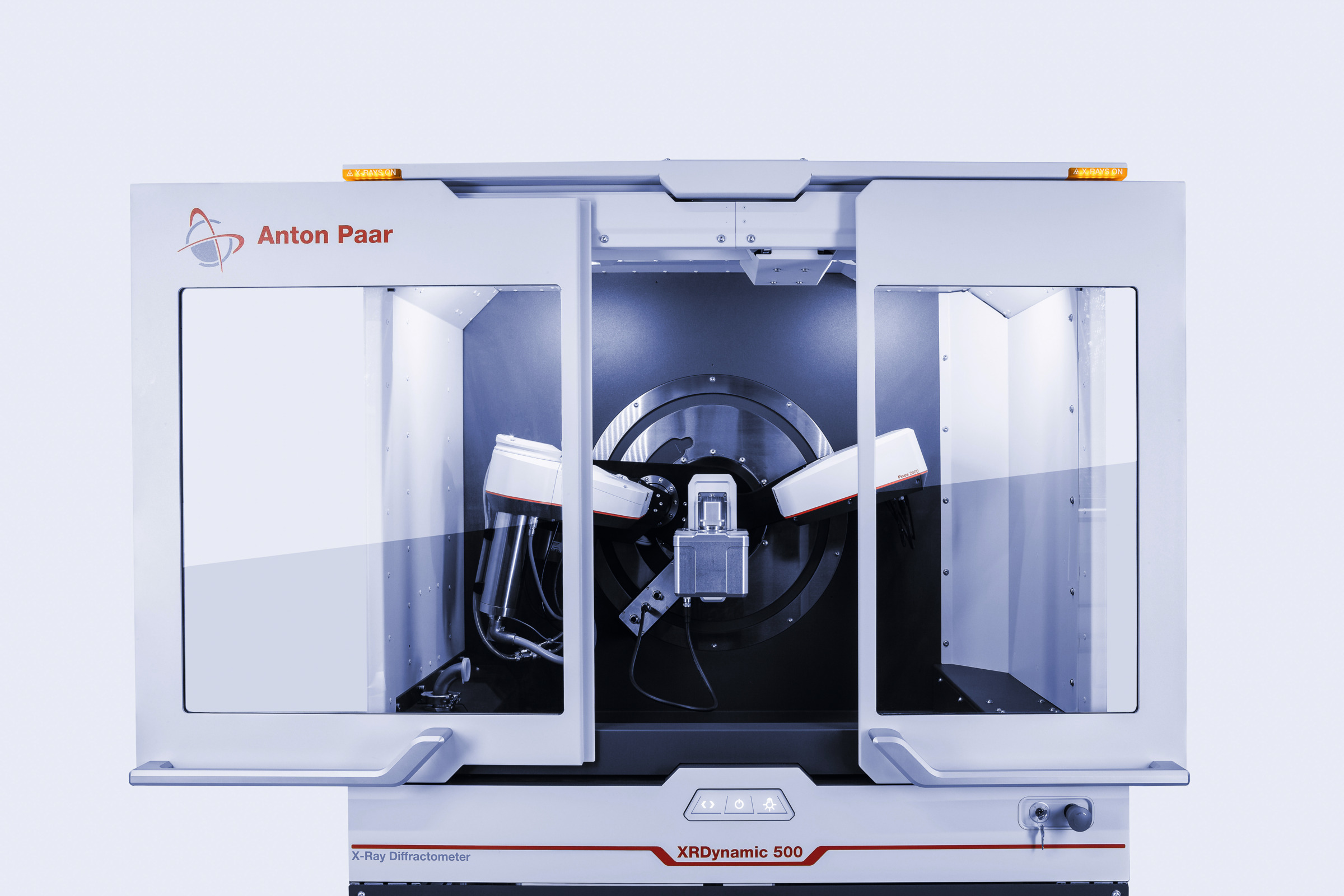
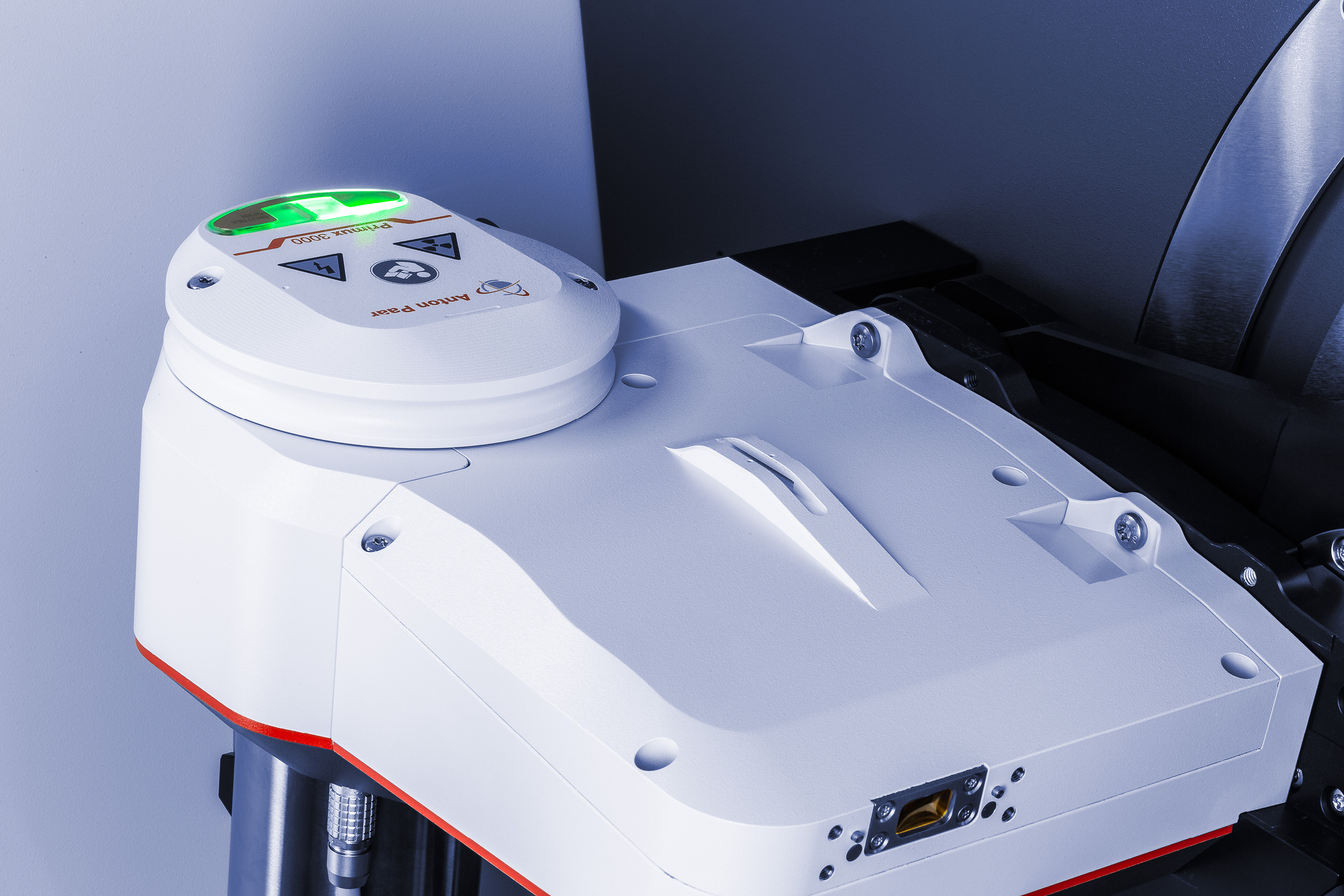
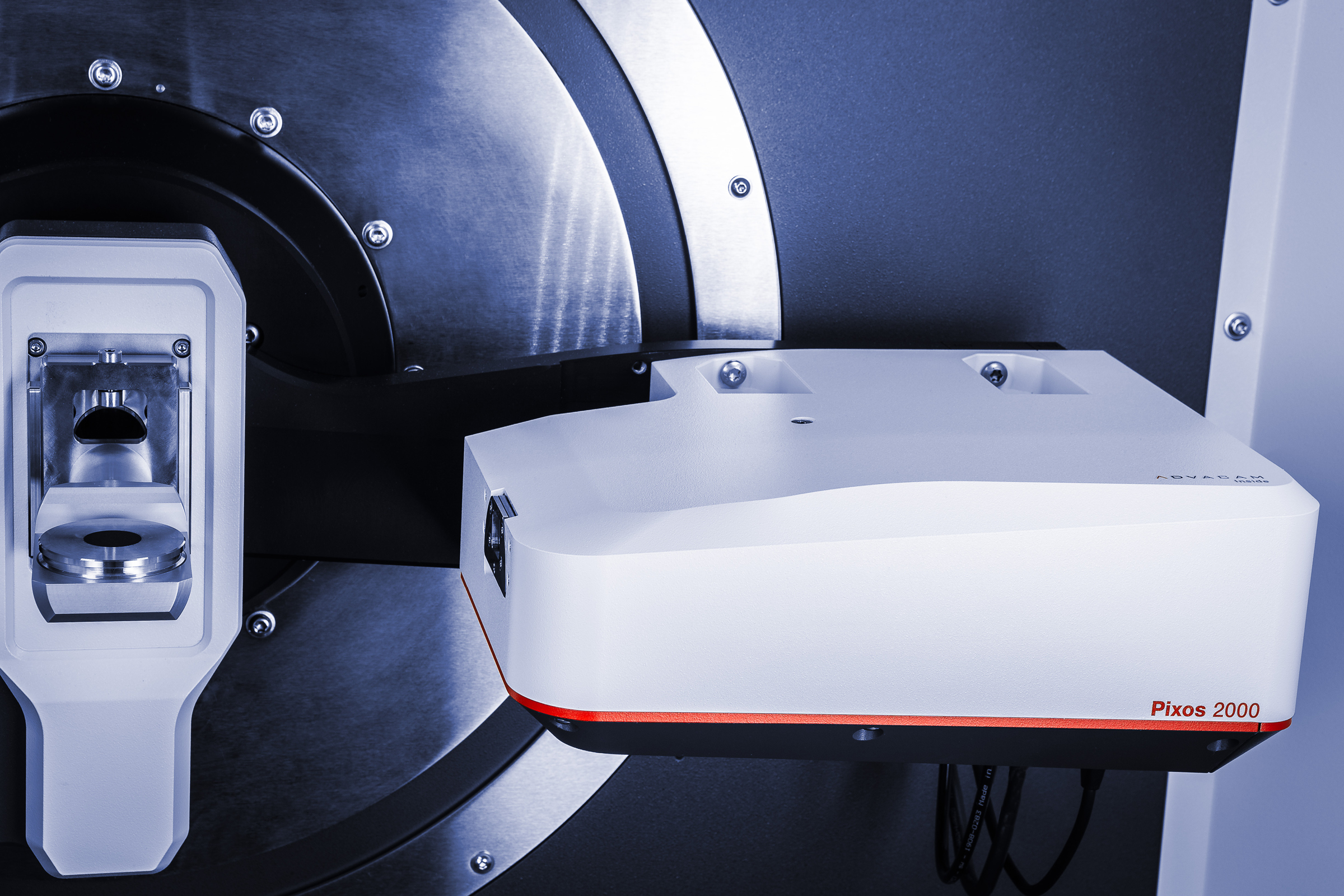
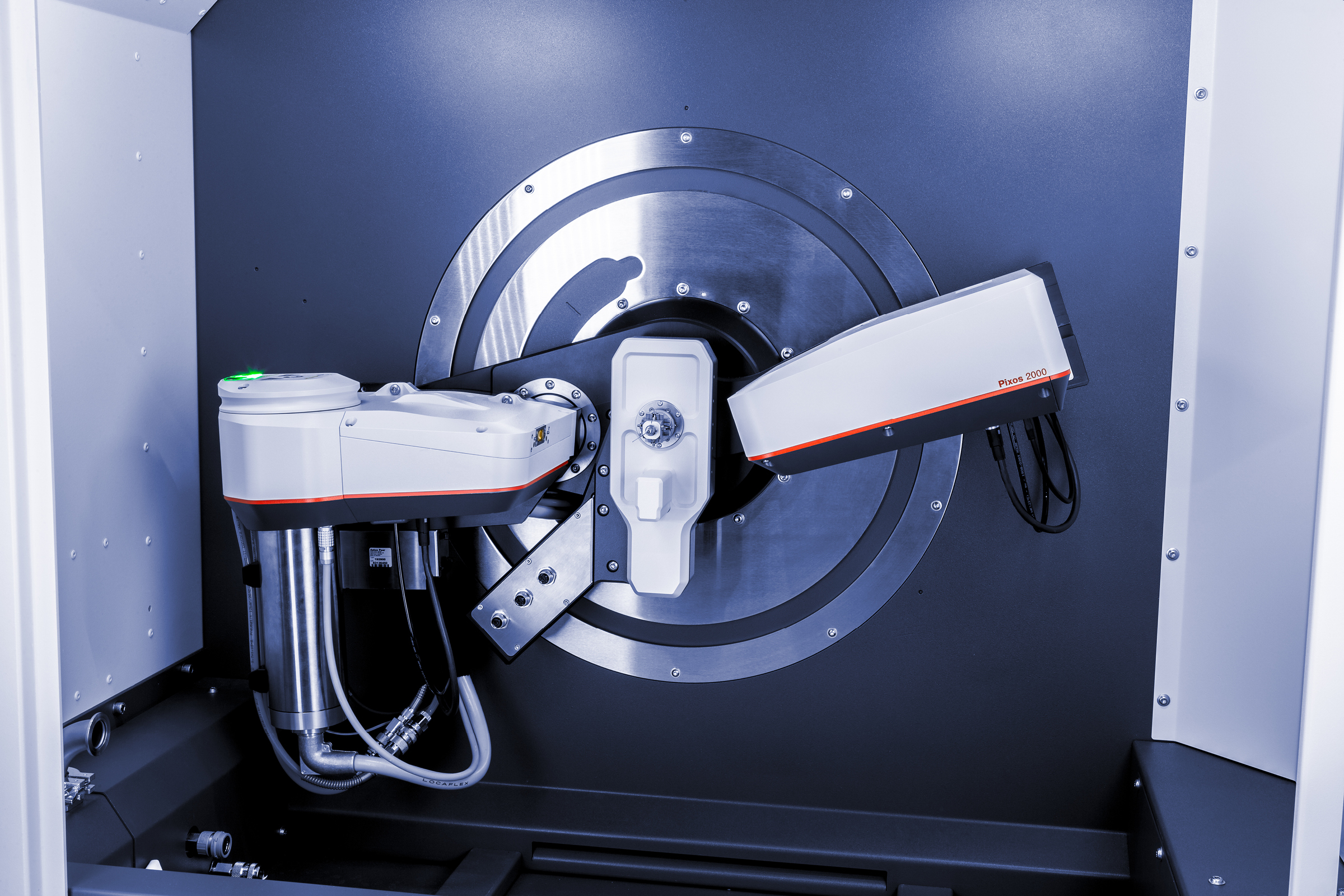
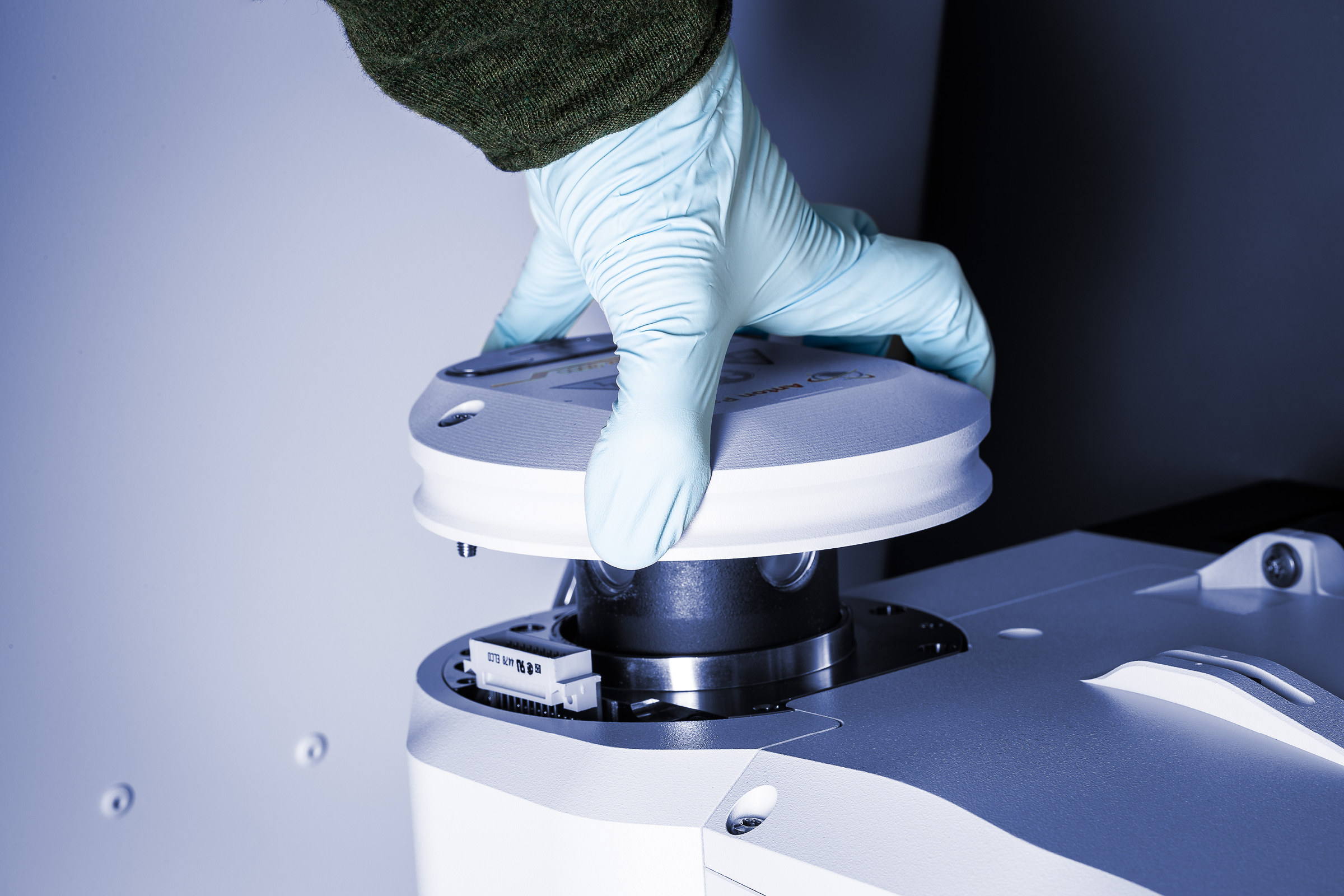
With XRDynamic 500 you generate high-quality total scattering data which can be used to generate data for pair distribution function (PDF) analysis in your own lab. This way, local atomic structure in crystalline, nano, and amorphous materials can be quickly studied without long waiting times for beamtime at large- scale facilities. A large goniometer radius, evacuated beam path, dedicated Kα1,2 mirrors, and the Pixos 2000 CdTe detector deliver strong high-Q statistics and high Q-resolution. Automated tube/optics alignment and Soller-slit control reduce setup effort and cut typical scan times down to around one hour for many materials, while keeping standard XRD and PDF options, in a single, repeatable workflow.


Learn moreDownload Application Report

X-ray PDF fundamentals and benefits

X-ray pair distribution function analysis (total scattering) complements conventional diffraction by resolving short- and medium-range order.

What X-ray PDF tells you

The X-ray pair distribution function shows how atoms are arranged locally – how far they are from each other and how that order changes over short and medium ranges. This reveals why a catalyst is active, why a battery electrode fades, or why an amorphous formulation remains stable. You can determine atomic structure without the need for sharp Bragg peaks, so you can act earlier with fewer trial-and-error loops.

When to use it

Choose X-ray pair distribution function analysis when the structure property relationship  depends on the local order of a material: nanomaterials, catalysts, battery electrodes, metallic alloys, pharmaceuticals, glasses and other amorphous or disordered systems. The method complements conventional XRD by explaining behavior that long-range crystallography alone cannot.

Q, Qmax, and resolution

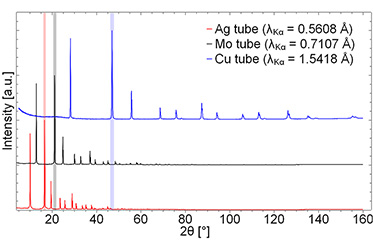
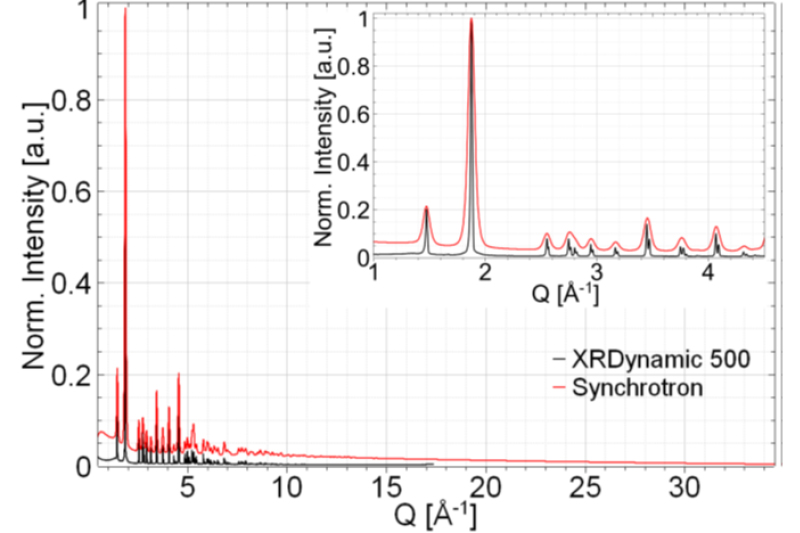
A higher Qmax improves the detail you can resolve in the PDF; strong signal-to-noise at high Q keeps the result reliable. XRDynamic 500 supports Mo and Ag Kα to collect data with a wideQ range while maintaining high Q-resolution. The latter helps resolve features which persist to larger r so you can assess domain sizes and subtle structural changes.

Laboratory diffractometer configuration for PDF analysis

The system combines the right X-ray source, optics, detector, and automation so teams obtain consistent total scattering data for PDF analysis in practical timeframes.

Sources and optics

Switch between Mo and Ag Kα to balance intensity and maximum achievable Q range. Mo provides strong intensity for efficient day-to-day scans; Ag extends Qmax when higher real-space resolution is needed. Automatic instrument alignment and modular optics make switching straightforward and reproducible.

Detection that shortens scans

The CdTe detector raises quantum efficiency at hard X-ray energies, improving high-Q statistics. This means cleaner PDFs with less noise and shorter total scan times compared to standard Si detectors used for routine measurements.
 

Low background, high stability

An evacuated beam path reduces air scattering so diffuse signals coming from the sample stand out. A large goniometer radius and focusing mirrors support high Q-resolution, which helps decrease Q-dampening leading to preserved PDF features at larger r-ranges.
 

Time and cost impact

For some samples a roughly one-hour scan yields data that can generate fit-ready pair distribution functions, enabling same-day decisions. Longer scans and Ag Kα radiation remain available for more complex cases. Consolidating standard XRD and PDF analysis on one platform avoids hassle with external measurements, including scheduling and travel, and allows streamlining training and maintenance.

X-ray PDF analysis on crystalline and amorphous materials

Representative outcomes show how X-ray PDF supports confident material and research choices and method qualification.

Crystalline example (CaF₂): fit quality you can trust

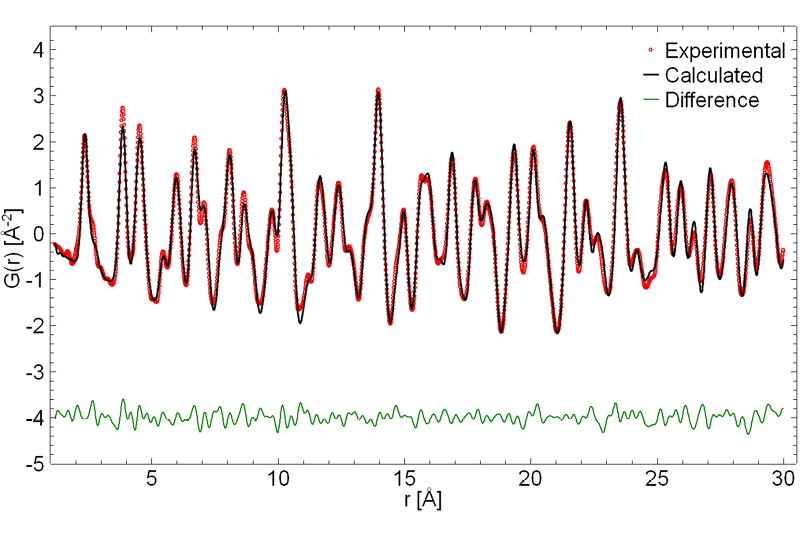
PDFs from CaF₂ fit standard structural models with low residuals and stable lattice parameters, indicating correct alignment and robust statistics. For decision-makers this means predictable workflows and fewer repeats when scaling to more samples or sites.

Amorphous example (SiO₂ glass)

Even without sharp diffraction peaks, the PDF can resolve Si–O, O–O, and Si–Si bond distances and shows features converging at around 9 Å, consistent with the lack of long-range order. Teams can confirm whether modifications in the production process influence the short-range structure in hours, not weeks.
 

XRDynamic 500: Enabling PDF analysis with a laboratory diffractometer

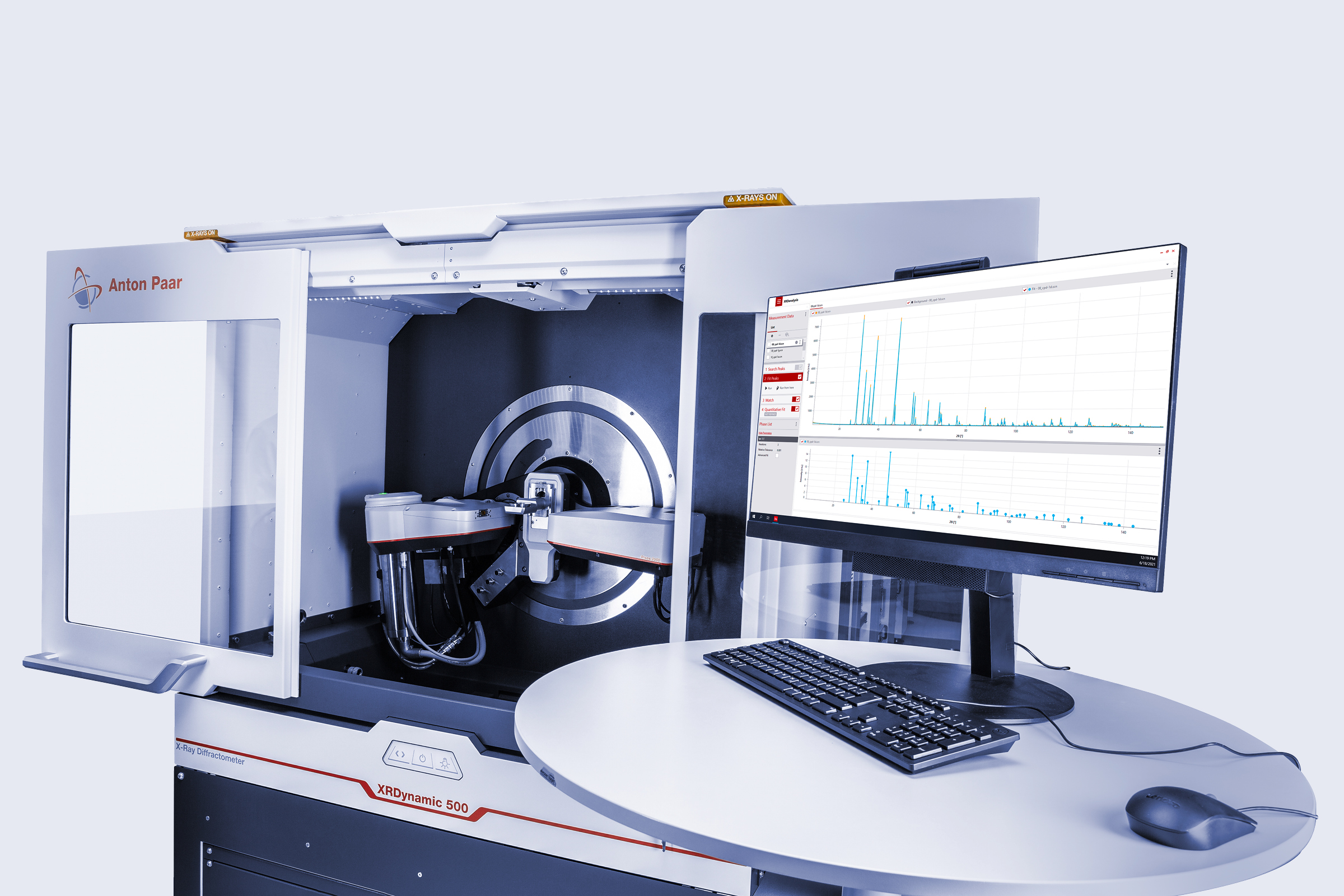
XRDynamic 500 is a laboratory X-ray diffractometer configured for collecting high-quality total scattering data ideal for pair distribution function (PDF) analysis. A large goniometer radius, an evacuated beam path, and focusing Kα optics deliver high Q-resolution; Mo and Ag tubes extend Qmax for resolving finer real-space detail. The CdTe detector maintains high-Q statistics, reducing total scattering data collection time needed for obtaining G(r). 

Find out more

See local structure clearly and make faster, lower-risk material decisions – on one instrument.

Talk to an expert