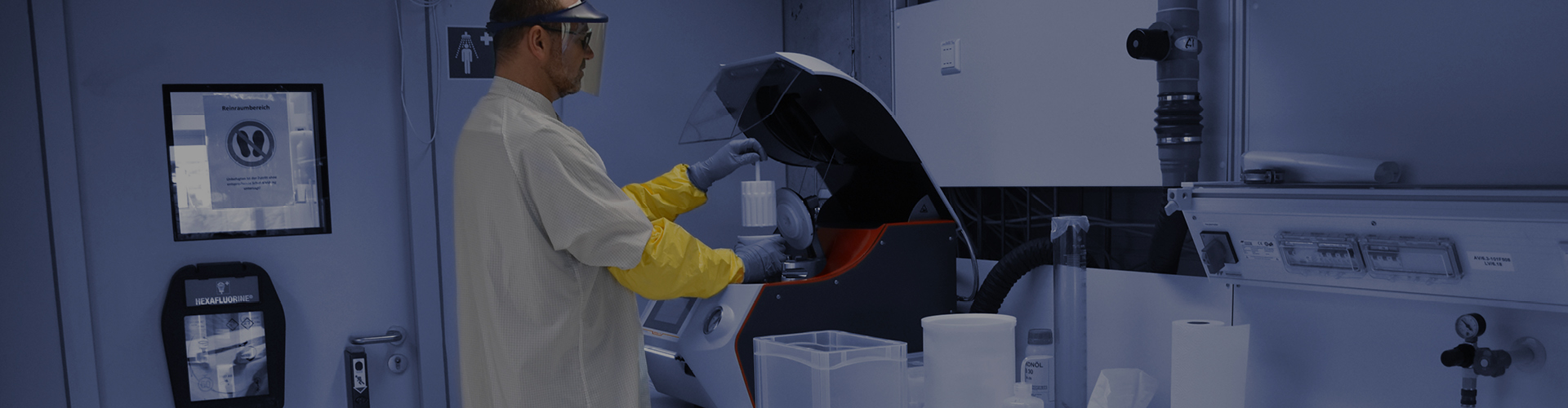
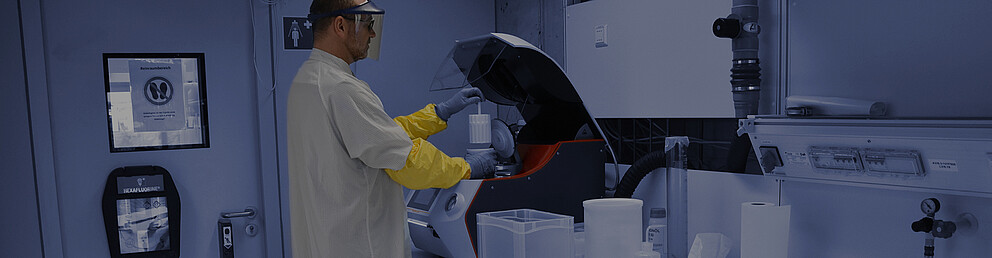
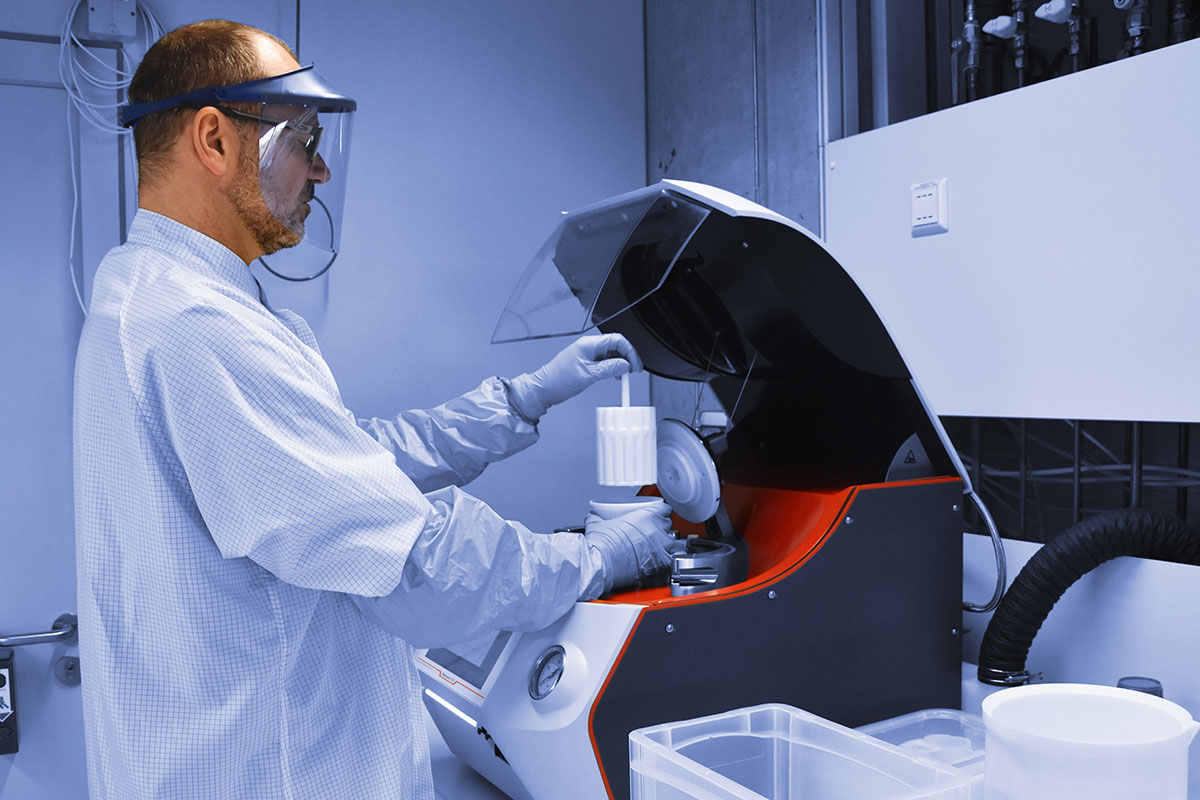
At the Geo and Environmental Center of the University of Tübingen, the isotope geochemistry research group investigates geological samples such as minerals, rocks, meteorites, sediments, soils, water, and atmospheric materials to better understand the formation of the Solar System and the Earth, processes within the Earth's interior and surface reservoirs, past climate fluctuations, and anthropogenic pollution.
To answer these research questions, the group relies on advanced mass spectrometric techniques to determine major and trace element compositions as well as isotope abundances. This requires complete and reliable sample decomposition before analysis.
Challenges in digesting geological samples
Mineral and rock digestion is demanding. Resistant minerals such as zircon, rutile, ilmenite, spinel, and garnet often require acid digestion above 250 °C and at pressures greater than 50 bar. These must be fully decomposed because they may contain high concentrations of specific trace elements.
Beyond complete dissolution, representative sampling is equally important. Sufficient sample quantities are required to avoid the “nugget effect” from rare minerals and obtain representative element and isotope data. At the same time, contamination from the digestion system must be minimized, especially for trace element isotope analysis.
High-pressure microwave digestion with Multiwave 7501
Anton Paar’s Multiwave 7501 addresses these challenges through its pressurized digestion cavity principle. Multiple samples can be digested simultaneously in cost-effective PTFE-TFM vials at temperatures up to 300 °C, typically around 270 °C, in less than two hours.
Before heating, the sample vials are pre-pressurized with nitrogen to between 60 bar and 100 bar, preventing the decomposition acids from boiling. This keeps volatile components in solution and enables complete dissolution of resistant minerals at higher temperatures.
Efficient digestion with reduced contamination
Compared with conventional digestion bombs, Multiwave 7501 enables faster digestion, higher throughput, and better control of digestion conditions. Conventional systems often require several days, handle only a few samples, and may introduce contamination from hot stainless-steel components.
With Multiwave 7501, the steel shell around the pressurized cavity is water-cooled during decomposition. This helps prevent metal contamination by diffusion and supports the clean sample preparation required for isotope geochemical analysis.