Vaccine injectability
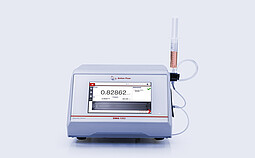
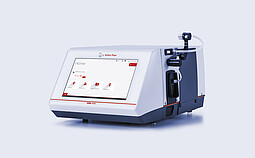
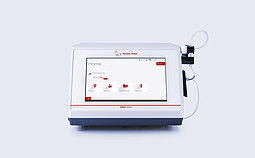
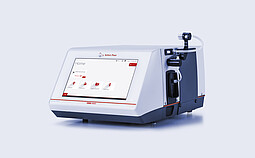
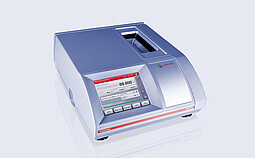
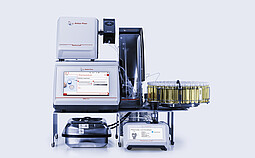
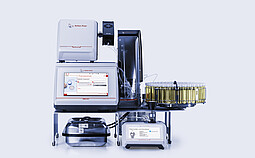
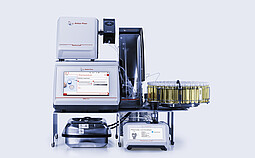
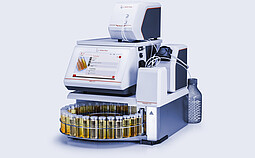
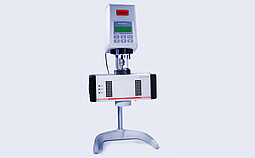
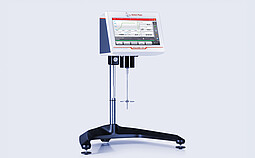
A key aspect of vaccine delivery from the patient point of view is comfort during the injection. Developing a vaccine formulation that has and maintains a low enough viscosity that can be easily delivered with a syringe is key. Many vaccine formulations often have a high concentration of lipids, sugars, active agents, and other excipients, and this often results in a highly viscous liquid that is difficult and painful to inject. Thus, analyzing vaccine formulations for their viscosity is a needed step in both vaccine formulation development and quality control.
Read more
mRNA/Liposome-based vaccines
mRNA-based vaccines are often formulated in a lipid-based liposome carrier that helps to protect the RNA from RNA-cleaving enzymes. They also assist in delivering the mRNA molecules into the target cells.
Ensuring consistent liposome size is critical when formulating vaccines. Dynamic light scattering (DLS) is a useful technique for measuring the size and size distribution of liposomes, which ensures that the liposomes in the formulation are both consistent in size and stable over time.
Additionally, care must be taken to ensure that the lipid bilayer thickness is appropriate for the specific vaccine application. Some formulations require a simple, single-layer liposome, whereas others may require double or triple layers of lipid. Small-angle X-ray scattering (SAXS) provides valuable structural information related to mRNA and its complexes with lipids. Specific information provided includes lipid-bilayer thickness, mRNA/lipid interactions, and orientations.
Data integrity solutions
Vaccine production must conform to stringent pharma regulations on data integrity, traceability, and compliance, including 21 CFR Part 11 and ALCOA +.
A key factor for this is organizing, managing, and reviewing relevant data and metadata from materials, production, and quality control checks. With the Anton Paar Connect Pharma edition, we provide you a tool that simplifies these processes.
AP Connect is a software solution for connecting laboratory instruments to data management systems to enable digital and error-free data flow. Based on a central database measurement, data is available for analysis on every PC in the network of the customer. The use of the software increases productivity by eliminating manual working steps, ensures quality of data in the laboratory, and provides fully automated or on-demand data transfer to IT systems (e.g., LIMS, ERP, or file storage). Dedicated features for the pharmaceutical industry in the Pharma Edition satisfy pharma industry regulation and data integrity requirements.
Read more