|
Instrument |
Samples |
Measurement |
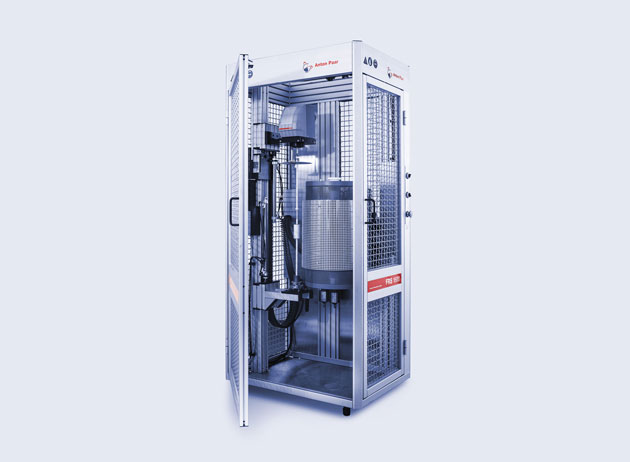 |
High temperature furnace rheometer system, to measure the viscosity
of materials like glass, ceramics, and metals with a high melting
point of up to 1,700 °C.
Show
product details
|
|
Rheometry |
(Thixo-)casting and rheocasting of metals: Determine the lowest
possible process temperature where material shows sufficient flowability
but minimized shrinkage
Coal combustion for energy production: Find out the temperature
and composition at which a predefined viscosity (viscosity for flow down
the reactor wall) is reached
|
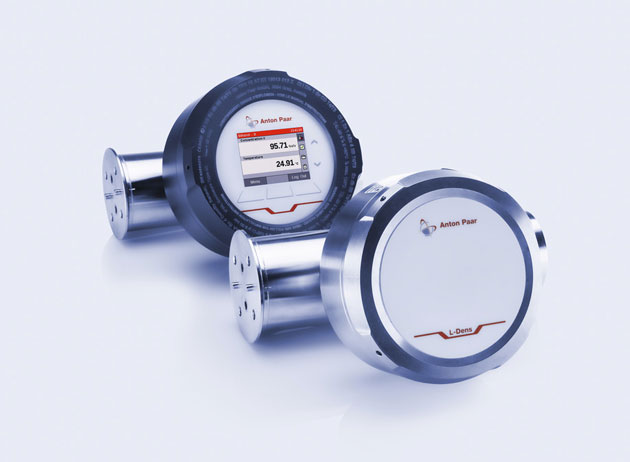 |
The L-Dens 7400 inline density meter combines accuracy, compact
design, and flexibility. It is ideal for highly accurate inline
concentration measurements in the precious metals refinery, and for
improving the yield of precious metals. It’s integration into the
pipeline is simple and provides flexibility by the use of different
adapter solutions. Wetted parts such as Tantalum or Hastelloy
guarantee longevity and drift-free measurement.
Show
product details
|
-
Mining, ore (post-work up)
|
Concentration Measurement |
Platinum mining: Concentration measurement of HCl,
HNO3, and diluted H2SO4 in the PMR
|
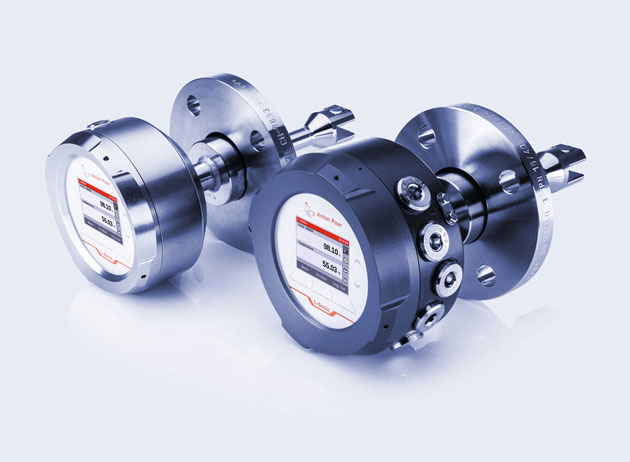 |
The L-Sonic 5100 inline concentration meter series is durable,
accessible and is simple to integrate. This inline meter is the
first and most accurate choice for maintenance-free inline
concentration measurement of acid and bases with an unbeatable
accuracy of up to ±0.02 % or better. High-tech wetted parts such as
Hastelloy or 24k plated gold guarantee longevity even for the
toughest chemical applications. The inline sound velocity meter can
be installed in a tank or a pipeline without the need for any
bypasses, pumps or extra adapters.
Minimum effort meets maximum efficiency.
Show
product details
|
-
Mining, ore (post-work up)
|
Concentration Measurement |
Gold mining: HCl dilution control for calcium removal (carbon
regeneration)
Gold mining: Lixiviant concentration measurement (Au-leach)
Uranium mining: H2SO4 concentration
measurement (U-leach)
Uranium mining: Oxidant concentration measurement (U-leach)
Uranium mining: NaOH precipitant concentration measurement
(U-leach)
Platinum mining: H2SO4, NaOH,
Na2SO4 concentration measurement (BMR, PMR)
Copper mining: H2SO4 concentration
measurement (acid plant)
Nickel mining: H2SO4 concentration
measurement (acid plant)
|
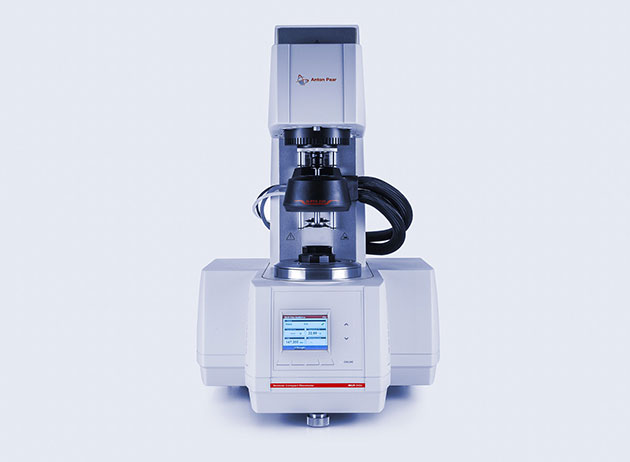 |
Modular Compact Rheometer:
MCR
Perfectly equipped for all types of rheological quality control and
high-end analysis with the modular compact MCR rheometer family.
Show
product details
|
-
Crude oil, drilling fluid, fracking fluid
- Mining, ore
(post-work up)
- Sludge
|
Rheometry |
Hydraulic fracturing: Predict the flow behavior of the mixture of
water, chemicals and sand used for fracking at high pressures and
various shear rates
Slurry transport (ore and tailings): Analyze and lower the yield
point of ore slurry to avoid downtime of the processing plant and assure
an efficient transportation process
Slurry storage (ore and tailings): Determine the necessary shear
rate to keep mineral particles suspended during storage
Dilution of tailings slurry: Efficiently dilute tailings to
enable pumping, while minimizing discarded material
|
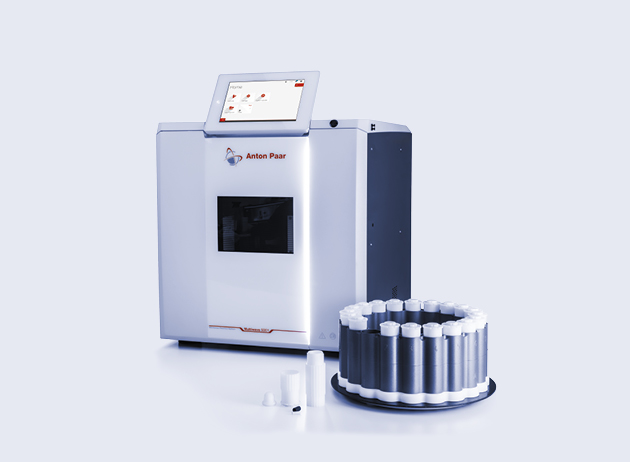 |
Microwave digestion
system:
Multiwave 5001 + 20SVT50
Multiwave 5001 microwave digestion platform: 64 samples in 1 run,
digestion and more, a customizable interface, >600 pre-installed
programs, sensor technology, a hands-free door.
SVT vessels for Multiwave 5001 have been designed to withstand the
highest temperatures and pressures while the tool-free handling of
the three-part vessel helps you save valuable time.
Show
product details
|
-
Mining, ore (pre-work up)
-
Mining, ore (post-work up)
-
Coal, graphite
-
Sludge
|
Microwave Digestion |
Mining and excavation: Dissolve rocks containing elements of
interest prior to subsequent analysis (ICP, AAS, etc.)
Refinining, extraction, smelting (=purification) of various ores:
Perform fast and trouble-free acid digestion with high throughput,
without contamination or loss of analyte
Quality control: Perform fast and trouble-free acid digestion
with high throughput, without contamination or loss of analyte
Caustic leaching of bauxite: Simulate the industrial Bayer
process on a lab scale to determine optimum conditions for the
industrial process
Extraction, refining and quality control of coal and graphite:
Reliably digest highly reactive samples such as coal, coke and graphite,
which require high temperatures
Exploration of possible mining sites: Analyze metal content in
mineral samples from exploration
Sludge analysis: Perform
robust and easy-to-use acid digestion of sludge prior to environmental
trace analysis of toxicologically and environmentally relevant elements
(ICP, AAS, etc.).
|
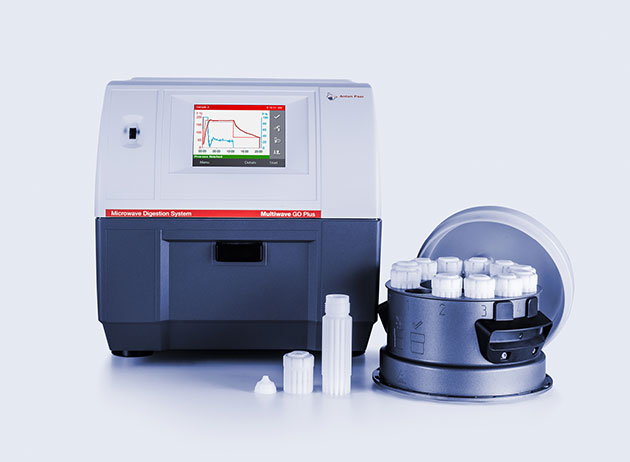 |
The Multiwave GO Plus microwave digestion system with the patented
Directed Multimode Cavity (DMC) provides the best of both monomode
and multimode microwaves.
Show
product details
|
-
Mining, ore (pre-work up)
-
Waste/process/treated water
|
Microwave Digestion |
Exploration of possible mining sites: Analyze metal content in
mineral samples from exploration
Waste water
quality determination: Perform microwave digestion on waste
water so that it is ideally prepared for further elemental analysis
|
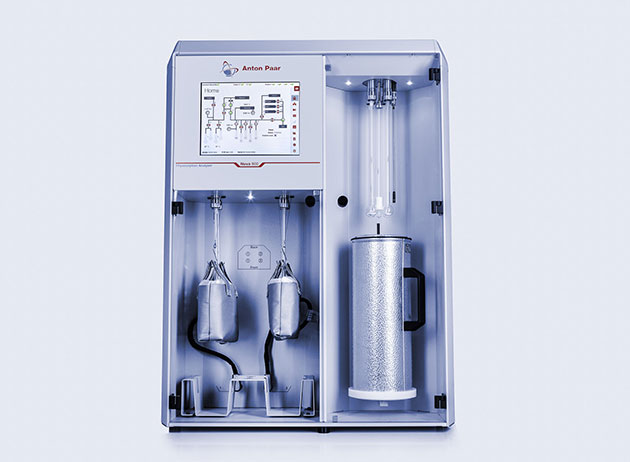 |
All-in-one Nova BET analyzer series: Up to 4 analysis and 4 degassing
stations; up to 4 BETs in 20 mins, 4 isotherms in 8 hours; 2 %
reproducibility with ≥2 m2 total measurement surface area.
Show
product details
|
-
Mining, ore (post-work up)
|
Vacuum Volumetric Gas Sorption Analysis |
Slurry stabilization: Calculate the proper amount of
dispersant/stabilizer to reduce costs by eliminating unnecessary, excess
dispersant/stabilizer
|
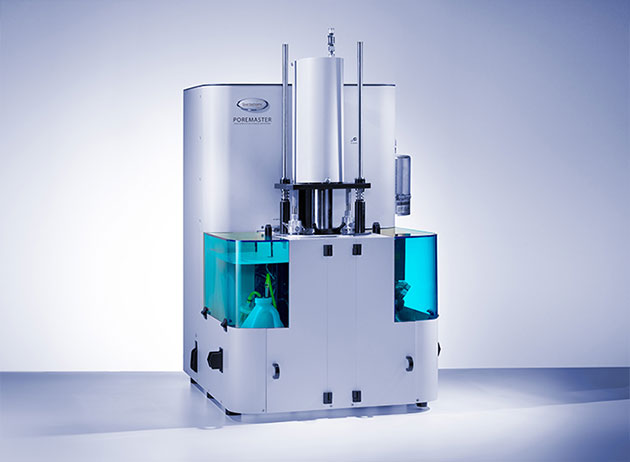 |
Mercury intrusion porosimeters to determine the size distribution and
volume of the macropores in materials. Safe and convenient
operation.
Show
product details
|
-
Mining, ore (pre-work up)
|
Mercury Intrusion Porosimetry |
Site evaluation: Evaluate groundwater movement and pollution by
quantifying pore size
|
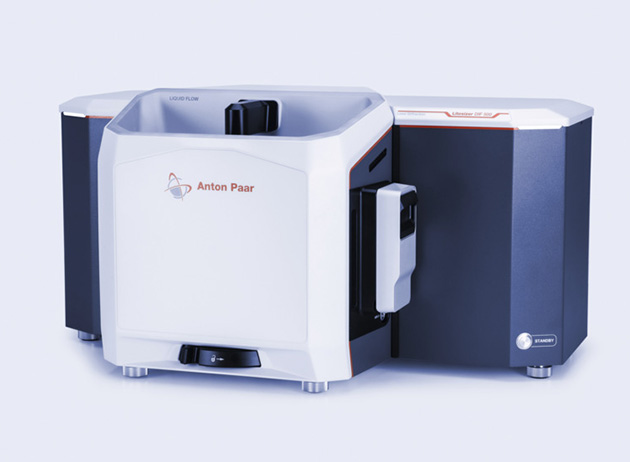 |
The Litesizer DIF series measures the particle size of dry powder and liquid
dispersions from the micrometer to the millimeter scale with laser
diffraction technology.
Show
product details
|
-
Crude oil, drilling fluid, fracking fluid
-
Drilling mud
-
Cement
-
Mining, ore (pre-work up)
-
Oil & refrigerant (OCR)
|
Laser Diffraction |
QC of drilling fluids: Maximize the (re)usage of drilling muds by
detecting low-gravity solids (LGS) as they build up, via monitoring of
particle size distribution (PSD)
Ore grinding: Prevent energy wastage on unnecessary grinding, by
determining and thus eliminating fine and ultrafine particles
Ore grinding and separation: Produce uniform particle size to
prevent ore separation bias, via particle size optimization to control
the separation behavior
Quality control of processed ore: Determine and monitor the
particle size distribution of processed ore to ensure consistent quality
of the final product
|
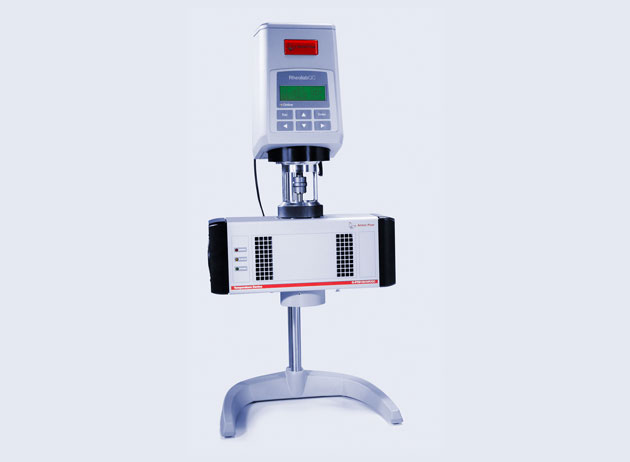 |
The RheolabQC rotational rheometer from Anton Paar puts high-end
R&D technology to use for convenient routine rheological tests
in quality control.
Show
product details
|
-
Crude oil, drilling fluid, fracking fluid
|
Rotational Rheometry |
QC of drilling fluids: Smoothly transport drilling muds via
determination of viscosity at rest and during pumping of bentonite
|
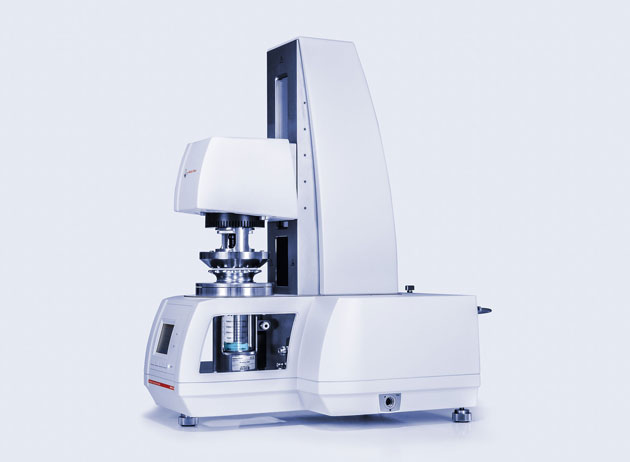 |
Powder Cells for
MCR:
Shear Cell & Flow Cell
The complete powder rheology setup with the powder shear cell and the
powder flow cell gives you all the possibilities you need for the
characterization of your powders and granular media.
Show
product details
|
-
Mining, ore (pre-work up)
-
Mining, ore (post-work up)
|
Powder Rheometry, Rheometry |
Ore transport: Avoid issues during transport and storage of
powdery materials by simulating mechanical transport
Processed ore transport: Improve the pneumatic transport of
processed powders by determining fluidization behavior
|
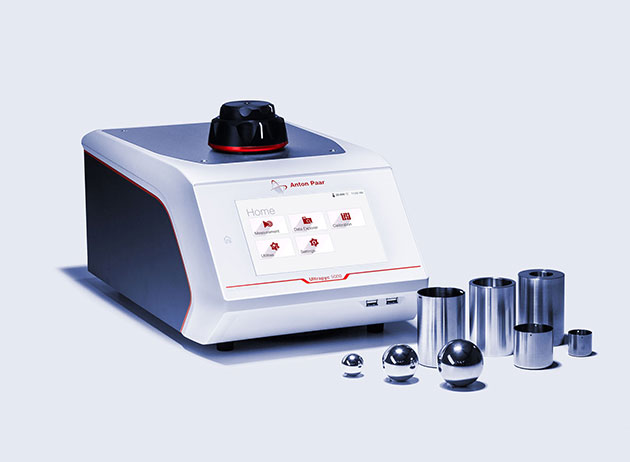 |
Anton Paar’s Ultrapyc gas pycnometers measure the true density of
solid materials, powders, and foams. They are the most accurate and
precise automated gas pycnometers available.
Show
product details
|
-
Mining, ore (pre-work up)
-
Cement
-
Drilling mud
-
Mining, ore (post-work up)
-
Coal, graphite
-
Solid waste, landfill
|
Gas Pycnometry |
Site evaluation: Evaluate groundwater movement and pollution by
quantifying rock porosity
Formulating well cement: Calculate target solid % and improve
accuracy of Blaine measurement, to produce a cement with proper support
and thermal insulation
Formulation of drilling fluids: Obtain the optimum density for
hydrostatic pressure and circulation
Ocean transport of ore fines: Perform safety calculations to
avoid loss of vessel at sea via evaluation of the risk of liquefaction
for a particular load
Settling tank/pond/basin design: Calculate the sedimentation
times of tailings/washings for more efficient operation and lifecycle
management to reduce overall costs and land use
Froth flotation (separation of beneficial minerals): Optimize the
slurry concentration from pulp density by determining the size and
number of flotation cells for a given capacity
Coal washability test: Maximize the economics of separating coal
from rock and minerals by optimizing the density of fluids in float-sink
tanks
Quality control, packaging and transportation: Receive the
correct volume of pulverized rock (ore)
Tailings dam safety: Measure the density of dry tailings,
saturated tailings, fines and slime for improved risk assessment
Waste gypsum: Determine the suitability of recovered waste
material for use in mortars, and calculate formulation
|
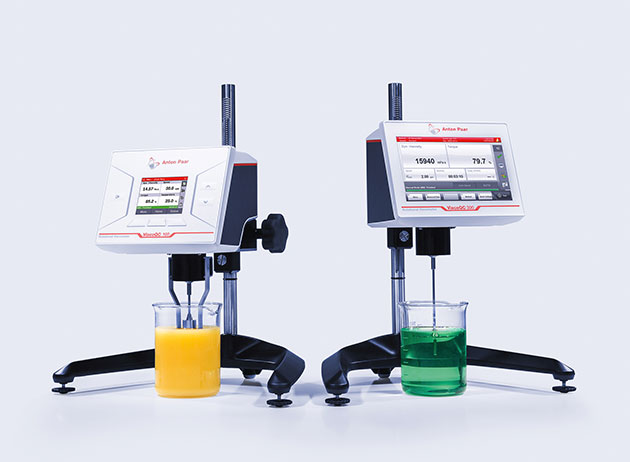 |
Viscometer for quality control with a choice of spindles. Easiest
operation by delivering fully traceable results and eliminating risk
of user errors.
Show
product details
|
-
Crude oil, drilling fluid, fracking fluid
|
Rotational Viscometry |
QC of drilling fluids: Smoothly transport drilling muds via
determination of viscosity at rest and during pumping of bentonite
|
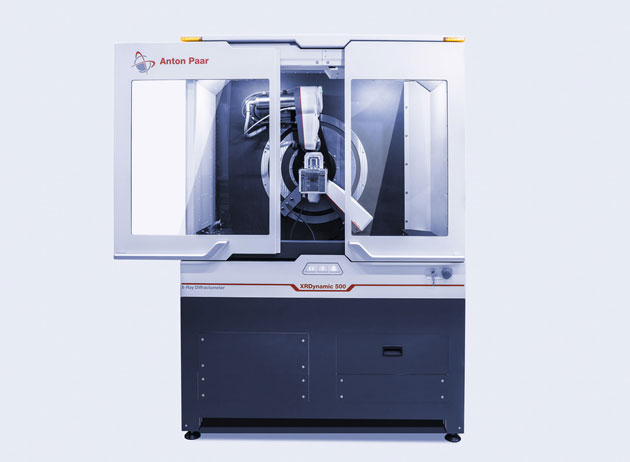 |
Intuitive to use, with fully automated optics and alignment routines,
it allows everyone, from novices to experts, to collect top-quality
XRD data quickly while minimizing errors.
Show
product details
|
-
Mining, ore (pre-work up)
-
Mining, ore (post-work up)
-
Solid waste, landfill
|
X-Ray Diffraction |
Exploration: Optimize the mining process and effectively plan
downstream processing requirements by identifying high-value deposits
and the mineral forms present
Exploration: Discover possible recovery losses ahead of time, to
optimize the extraction process, by identifying non-extractable ore
forms
QC and grade control: Increase efficiency and stabilize plant
conditions by selecting the optimal grade
Ore processing: Optimize the operational efficiency of the mining
process and the beneficiation process of the ore by rapidly analyzing
the qualitative and quantitative mineral composition of the mined
material
Ore processing: Reduce the costs and environmental impact of ore
processing by identifying the iron oxidation state via phase analysis of
the mineral ore
Quality control: Continuously monitor the processed ore quality
in order to quickly respond to changes
Tailings analysis: Reduce wastage and potential environmental
damage by identifying compounds of value that can be recovered from
tailings
|