Our answers to every challenge in academia and industry
Inspired by 60 years’ experience in X-ray diffraction (XRD), small-angle X-ray scattering (SAXS), and advanced X-ray optics, Anton Paar provides X-ray analysis solutions for every challenge. Our state-of-the-art X-ray instrumentation is used by customers across a large number of fields in both academia and industry. Discover how Anton Paar’s X-ray characterization analysis solutions can help you.
Pure Brilliance – Anton Paar’s New SAXS Systems
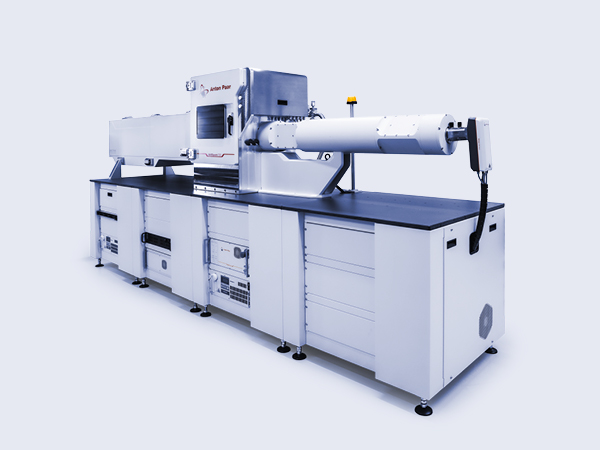
Anton Paar is proud to announce the latest generation of SAXS instrumentation: SAXSpoint 700 and SAXSpoint 500.
SAXSpoint 500 empowers you to take on difficult samples and analyze nanoscale structures thanks to innovative X-ray technology and a best-in-class beam delivery system.
Go one step further with SAXSpoint 700, which offers flexible analysis of almost any material under ambient or non-ambient conditions – even air. With its spacious measurement chamber, this SAXS system provides endless experimental possibilities
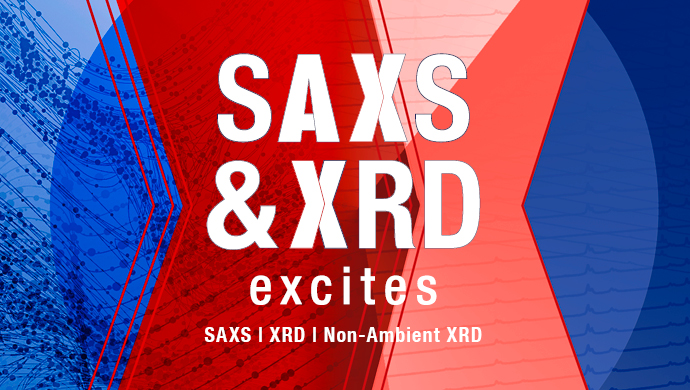
The 2028 SAXS excites and XRD excites symposia will be held in April in the wonderful Austrian city of Graz. Join renowned experts, young researchers, and opinion leaders in X-ray analysis to discuss the latest advances in SAXS, XRD, and non-ambient XRD.
Unmatched data quality with the highest efficiency
Maximum measurement flexibility combined in one platform
TruBeam™ concept with evacuated and fully automated optics
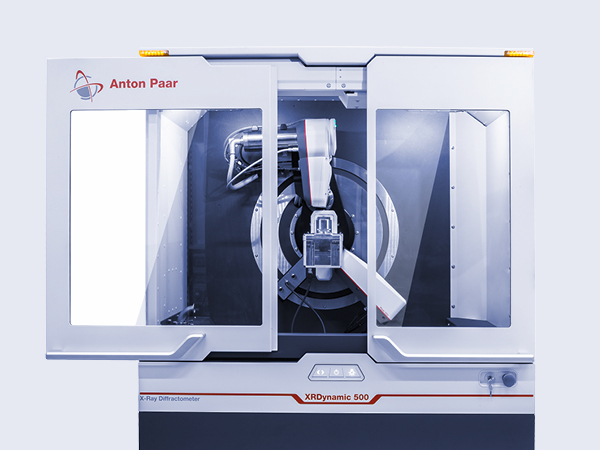
With XRDynamic 500, Anton Paar has taken XRD to the next level. A fully automated, multipurpose powder X-ray diffractometer, XRDynamic 500 combines unbeatable data quality and unrivalled measurement efficiency, and offers a high degree of automation. Thanks to a wide variety of sample stages, components, and non-ambient attachments, XRDynamic 500 offers solutions for powder XRD, non-ambient XRD, PDF analysis, and SAXS.
Laboratory instruments with the highest data quality
Utmost flexibility for your applications
Anton Paar’s SAXSpoint 700 and SAXSpoint 500 small-angle X-ray scattering systems employ brilliant X-ray sources and optics to produce an X-ray beam of extremely high spectral purity and flux. In combination with the system’s scatterless beam collimation and state-of-the-art hybrid photon-counting (HPC) detectors, you can count on a high signal-to-noise ratio and synchrotron-like data quality from our SAXS instrumentation.
Unbeatable accuracy in temperature measurement and homogeneity
Quality driven by experience
Since the 1960s, Anton Paar has been the market leader for non-ambient X-ray diffraction attachments and has built up exceptional expertise in this special field of XRD. A broad state-of-the-art portfolio allows you to investigate your samples under, e.g., varying temperature, pressure, and relative humidity. Our stages can be easily mounted onto almost any diffractometer with complete integration into the system.
Our latest innovation, the HTK 1500 high-temperature chamber, is the new benchmark in environmental heaters. The HTK 1500 allows for homogeneous heating of all types of sample materials, including crystalline powders and bulk samples up to 1,500 °C.
Global leaders in multilayer optics and monochromator fabrication
Sub-atomic precision for X-ray fluorescence reference samples
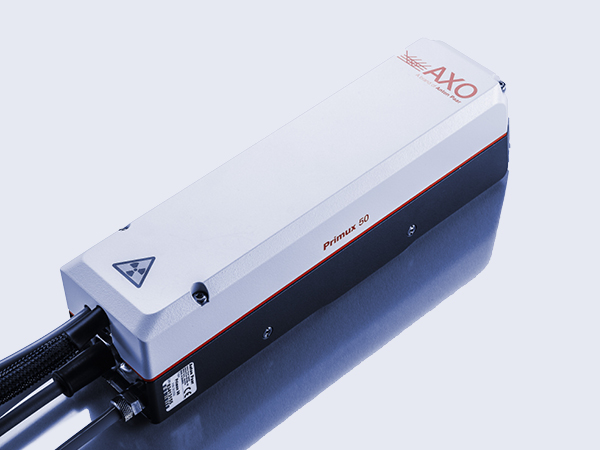
In 2019, AXO DRESDEN joined the Anton Paar group. A global leader in the production of multilayer monochromators and X-ray mirrors, AXO has more than 20 years of experience in state-of-the-art coating technology. With strong links to research groups worldwide and the flexibility to design tailored solutions, AXO is an experienced inventor of X-ray analysis systems. Drawing from Anton Paar’s strength in the fabrication of X-ray sources and measuring instruments, AXO DRESDEN provides on-point solutions for your experiment tasks.
Anton Paar´s X-ray instruments are used to perform cutting-edge research in a wide variety of application fields. Here’s a selection of some recent publications citing our X-ray analysis instruments:
XRD:
Thermal evaluation of polymorphic transitions in layered hybrid organic-inorganic perovskites for energy storage applications. Salgado-Pizarro, R., Navarro-Rivero, M. E., Ding, Y., Barreneche, C. & Fernández, A. I.. J. Energy Storage 100, 113483 (2024).
Ag-MnxOy on graphene oxide derivatives as oxygen reduction reaction catalyst in alkaline direct ethanol fuel cells. Wolf, S. et al.. Catalysts 12, 780 (2022).
SAXS:
Deciphering the allosteric regulation of mycobacterial inosine-5′ monophosphate dehydrogenase. O. Bulvas, et. al.: Nat. Commun. 2025, 15, doi.org/10.1038/s41467-024-50933-6
AXO DRESDEN:
Laboratory setup for scanning-free grazing emission X-ray fluorescence. Jonas Baumann et. al.: Analytical Chemistry, 2017, 89, 1965-1971. doi.org/10.1021/acs.analchem.6b04449
Experimental verification of the individual energy dependencies of the partial L-shell photoionization cross sections of Pd and Mo. Philipp Hönicke et. al.: Physical Review Letters, 2014, 113, 163001-163005. doi.org/10.1103/PhysRevLett.113.163001
Anton Paar Wiki pages
X-Ray Diffraction (XRD)
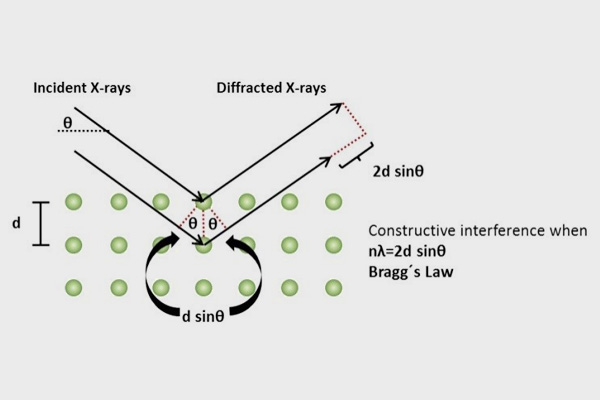
X-ray diffraction is an important non-destructive analysis method to study a huge variety of materials. Some of its most significant applications are phase identification and quantification, microstructure analysis, and crystal structure analysis, amongst many others.
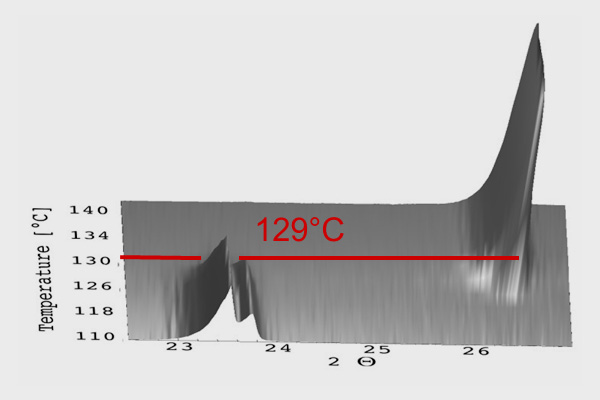
Varying non-ambient parameters (temperature, pressure, atmosphere, humidity etc.) adds a further dimension to your XRD experiment, as materials of any kind tend to change their chemical and physical behavior under varying conditions.
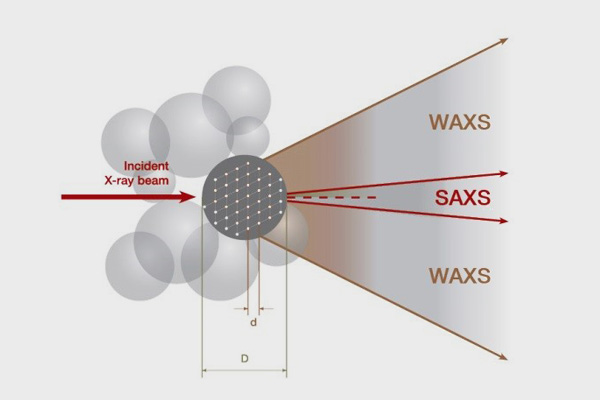
SAXS is a non-destructive method for investigating nanostructured samples, e.g. proteins, macromolecules, or nanoparticle dispersions. The technique requires practically no sample preparation and therefore analyzes a material in its original state.
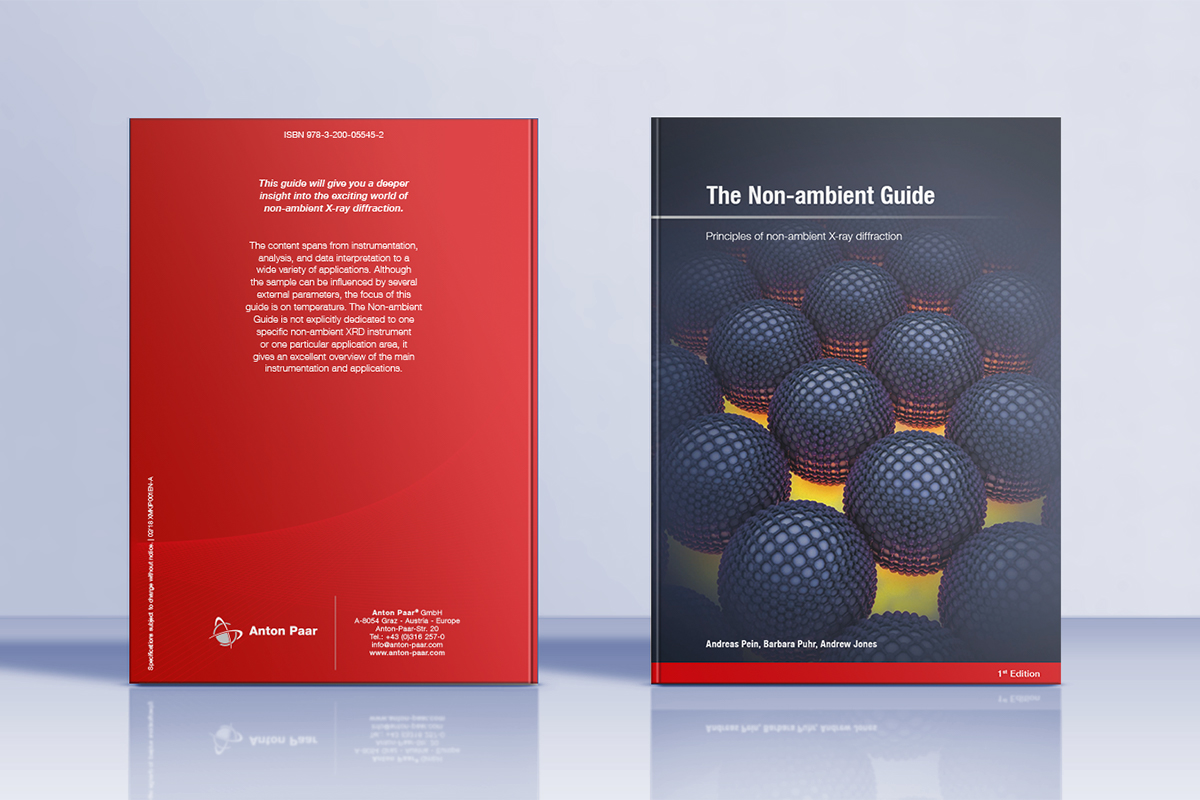
This handy guidebook provides you with a general introduction to the field of non-ambient X-ray diffraction (NA-XRD). The content spans from instrumentation, analysis, and data interpretation to applications and much more.
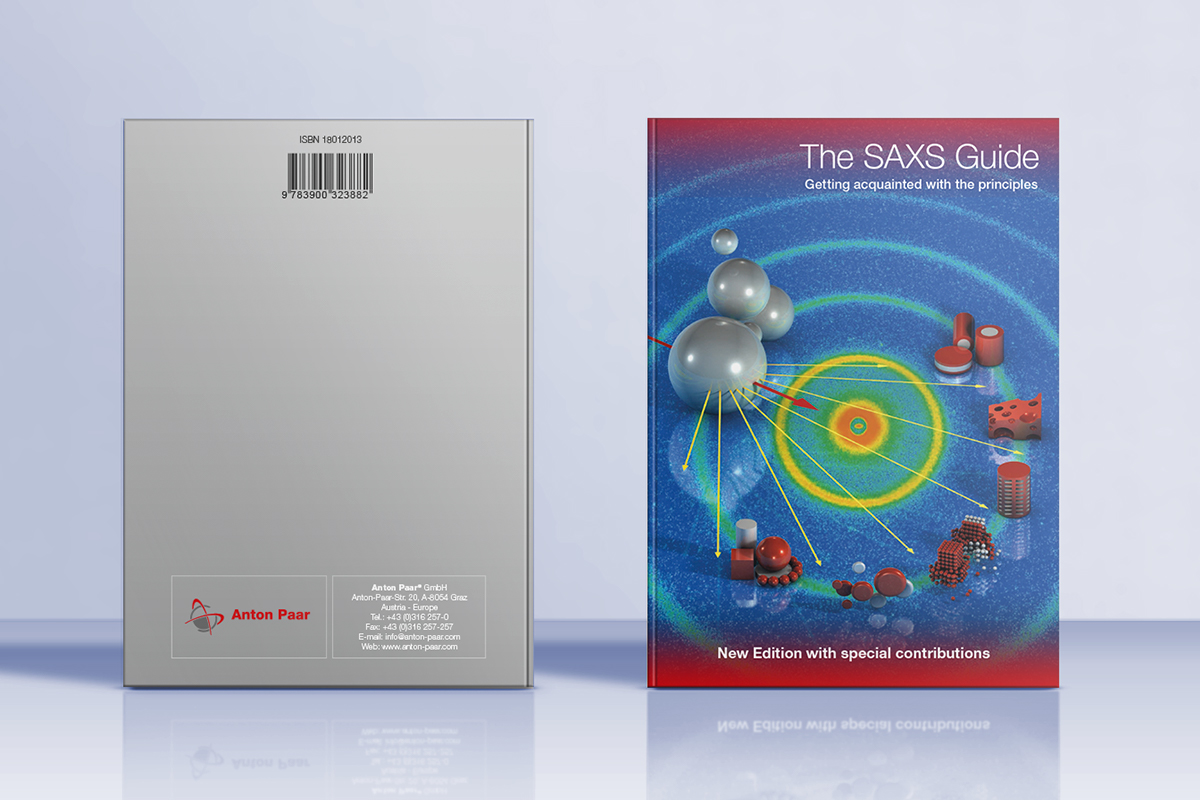
Are you new to the field of small-angle X-ray scattering, or do you want to deepen your knowledge? Do you have beam time coming up at the synchrotron or any in-house SAXS instrument? Learn about basic principles, instrument setups, practical aspects, applications, and more.
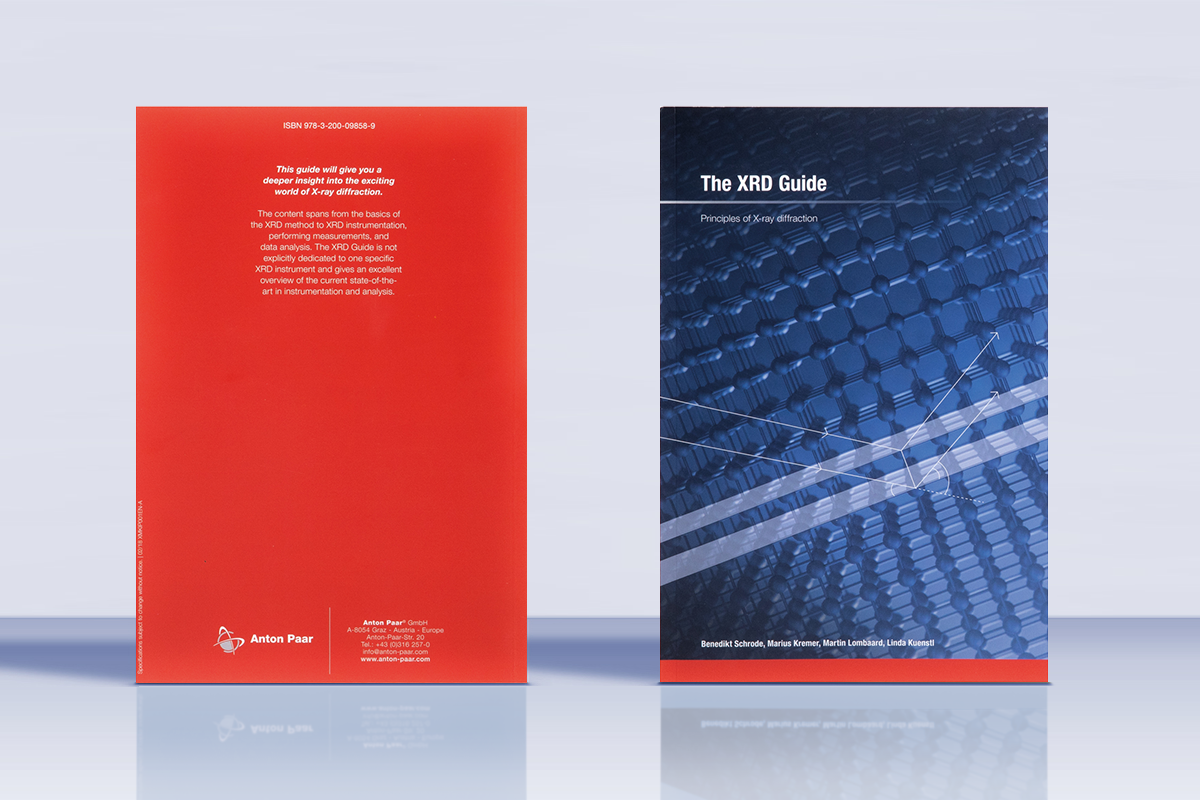
This free guide gives you an introduction to the principles of X-ray diffraction (XRD). It explains how to configure an X-ray diffractometer, how to perform XRD measurements, and how to analyze the measured data. It is intended to provide those who are new to the field of XRD with an overview of the method.
We use cookies on our website. Some of them are necessary (e.g. for the shopping cart), others help us make our online content better and easier for you over the long term via analysis, external media, and marketing services. We also use third-party cookies from providers in the USA like Google or Facebook if provided with your consent (Art. 49(1)(a) GDPR). Your data may be transferred to the USA which does not have a data protection level comparable to GDPR. In this case your data may potentially be accessed by US Authorities for surveillance purposes and you may not be able to exercise effective legal remedies. You can accept or reject all cookies by clicking on the respective button or define your cookie settings using the link "Customize your cookie settings".
If you reject all cookies, only technically required cookies will be used. You can also withdraw your consent at a later time by accessing the Cookie Settings.
Marketing cookies are used by third parties or publishers to show you personalized advertising. They do this by tracking which websites visitors go to.
Content from video platforms and social media platforms is blocked by default. If you accept cookies from external media, accessing these contents no longer requires giving manual consent.
After being informed of potential risks for my data (including transfer to the USA and potential access by US authorities) in the Cookie Banner and Privacy Policy I accept the cookies from US-providers.