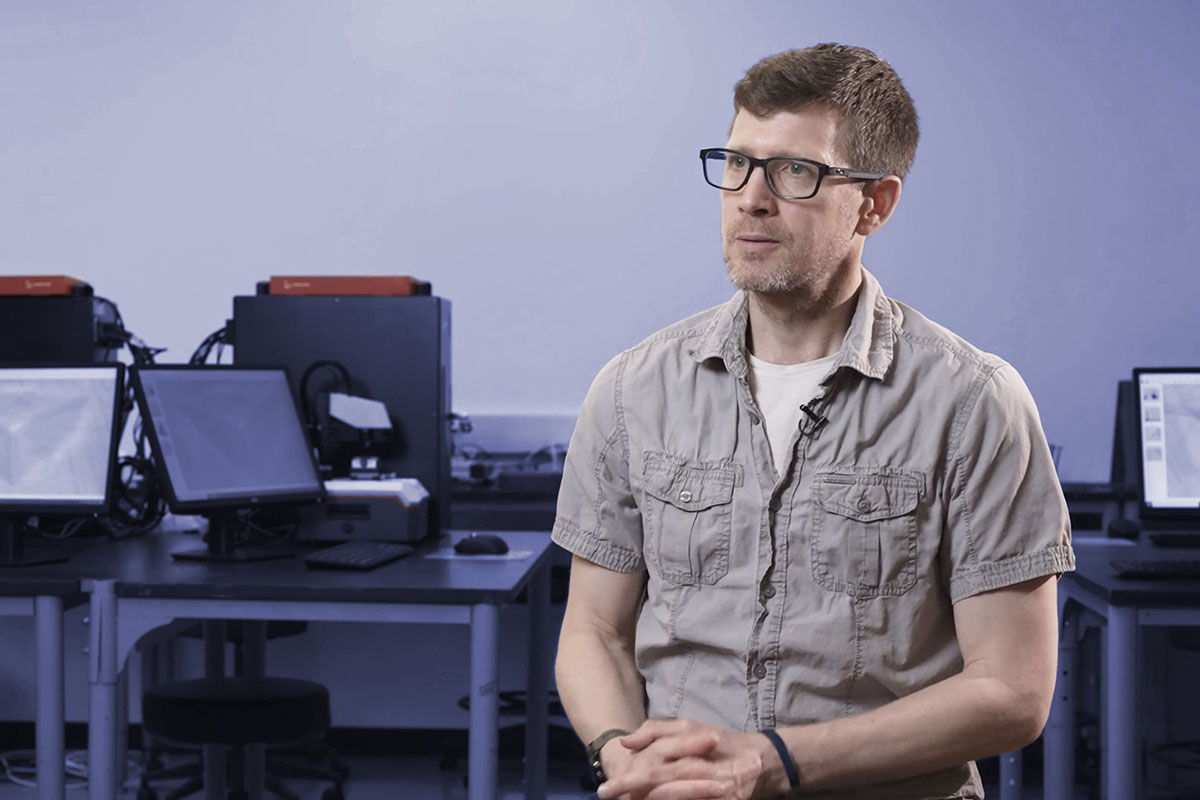
Rice University’s mechanical engineering undergraduate lab gives around 70 students per year hands-on exposure to solid mechanics and stress analysis. The goal is to complement classroom theory with practical experimentation and prepare students for real-world engineering work.
To strengthen this practical component, Rice has integrated six Anton Paar Hit 300 nanoindentation instruments into the lab, so students can work directly with industry-standard tools and measure mechanical properties at the microscale through nanoindentation testing.
Hands-on testing with industry workflows
The Hit 300 instruments are used directly by students during coursework. Students place samples, adjust parameters such as load time and hold time, and run their own tests.
Using previous equipment, experiments did not fully reflect the tools and workflows students would encounter in industry. Hit 300 closed this gap by enabling students to explore complex materials and connect theoretical concepts with measured data.
Active and immersive learning
Students actively run experiments, change parameters, and interpret results. This makes the learning experience more immersive and gives them a clearer understanding of material behavior.
The instruments also make it possible to perform complex nanoindentation tests that were not feasible with the older equipment, giving students stronger practical preparation for both industry roles and graduate studies.
Robust tools for an educational setting
Rice University uses Hit 300 because it is robust, intuitive, and well suited to student labs. Its automated functions, adjustable load, unload, and hold parameters, and durable design allow detailed testing without a steep learning curve. The instrument is now central to the university’s future lab strategy, helping the department align teaching with industry practice and improve experiential learning.