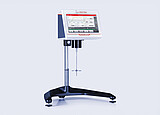
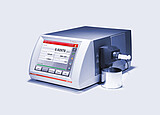
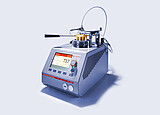
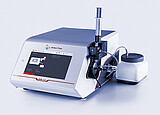
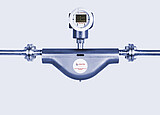
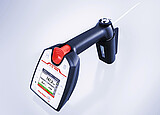
Lubricant analysis plays a vital role in extending equipment life and preventing unplanned failures. By regularly monitoring in-service oils for oxidation, wear metals, and contamination, it provides operators with deep insights into equipment health and lubricant condition, enabling precise forecasting of maintenance needs, while minimizing unexpected downtime and reducing mechanical wear. The result is longer asset life, optimized service schedules, and better use of maintenance resources – all of which contribute to substantial time and cost savings.
In standards-driven industries, lubricant testing is particularly important for ensuring compliance with international frameworks such as SAE, ASTM, ISO, and DIN. These frameworks support consistent, traceable, and comparable test results – whether you're managing lubrication across a single facility or multiple global sites. Meeting these standards allows companies to strengthen their internal quality systems, support documentation for audits, and maintain alignment with customer and regulatory expectations.
For R&D and formulation teams, lubricant analysis provides critical support in driving innovation in base oils, additive systems, and bio-lubricants. Real-world performance data allows for faster iteration, more accurate formulation adjustments, and confident validation of new lubricant technologies – whether that’s developing synthetic fluids or environmentally friendly alternatives. This enables science-based decisions that not only support faster formulation cycles and more efficient go-to-market decisions but also enhance long-term product performance.
Across production environments, lubricant analysis is equally important for optimizing operational performance and ensuring fluid reliability. Continuous monitoring of metalworking fluid quality control or transformer oil stability, for example, ensures fluids meet functional and safety standards under real-world conditions. This reduces the risk of process disruptions, protects equipment, and supports consistent, high-quality output across industrial systems.
Ultimately, lubricant analysis delivers more than just lab results – it supports smarter decision-making and long-term operational efficiency. By combining predictive insights, quality assurance, and R&D validation, it can be used as a strategic tool for improving reliability, reducing waste, and increasing profitability. In short, it helps you run cleaner, leaner, and more confidently – no matter your industry.




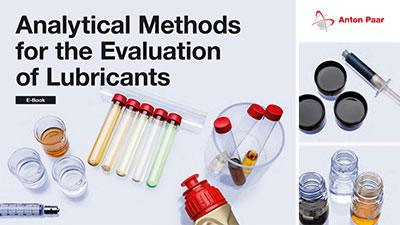 Gain in-depth insights into lubricant analysis across all sample types – from engine oils to food-grade lubricants. Our free e-book offers structured application know-how, recommended methods, and instrument solutions tailored to real-world workflows.