









Anton Paar offers solutions for all diesel analysis needs, from biodiesel in diesel content through flash point, distillation, viscosity density and cloud point analysis up to oxidation stability testing. Keep fuels safe, stable, and fit for engines with streamlined routine QC, fewer manual steps, consistent operator-independent workflows, and reliable data for blending, incoming goods inspection, terminal operations, and product release.

Diesel parameters that drive release decisions

From biodiesel blend control and volatility profile to cold-flow behavior, fuel-system performance, safety, and storage stability, diesel analysis depends on fast, reliable, and compliant measurement of parameters that show whether a fuel is consistent and ready for use. 

FAME content

FAME in diesel quantification verifies biodiesel blend content in diesel fuel, helping ensure specification compliance, blending control, correct product labeling, and consistent fuel quality across production, distribution, storage, and use.

Flash point

Flash point is a key diesel safety parameter used to detect contamination with volatile components that can increase fire and vapor risks in handling, storage, transport, and distribution.

Distillation behavior

Distillation behavior shows how diesel evaporates across its boiling range, providing a practical quality signal for detecting light- or heavy-end contamination, and assessing combustion, starting, and engine performance.

Viscosity and density

Viscosity and density measurements help assess fuel flow, lubrication, atomization, energy content, blending control, and product consistency, providing a fast, practical quality check for diesel performance and handling.

Cloud point

Cloud point marks the first formation of wax crystals as diesel cools, helping guide winter fuel selection and reduce the risk of filter blocking, poor flow, and operational downtime in cold conditions.

Oxidation stability

Oxidation stability indicates how well diesel resists degradation during storage and use, reducing the risk of acids, gums, sediments, deposits, and filter-plugging, especially in fuels containing biodiesel components. 

Anton Paar solutions for diesel analysis

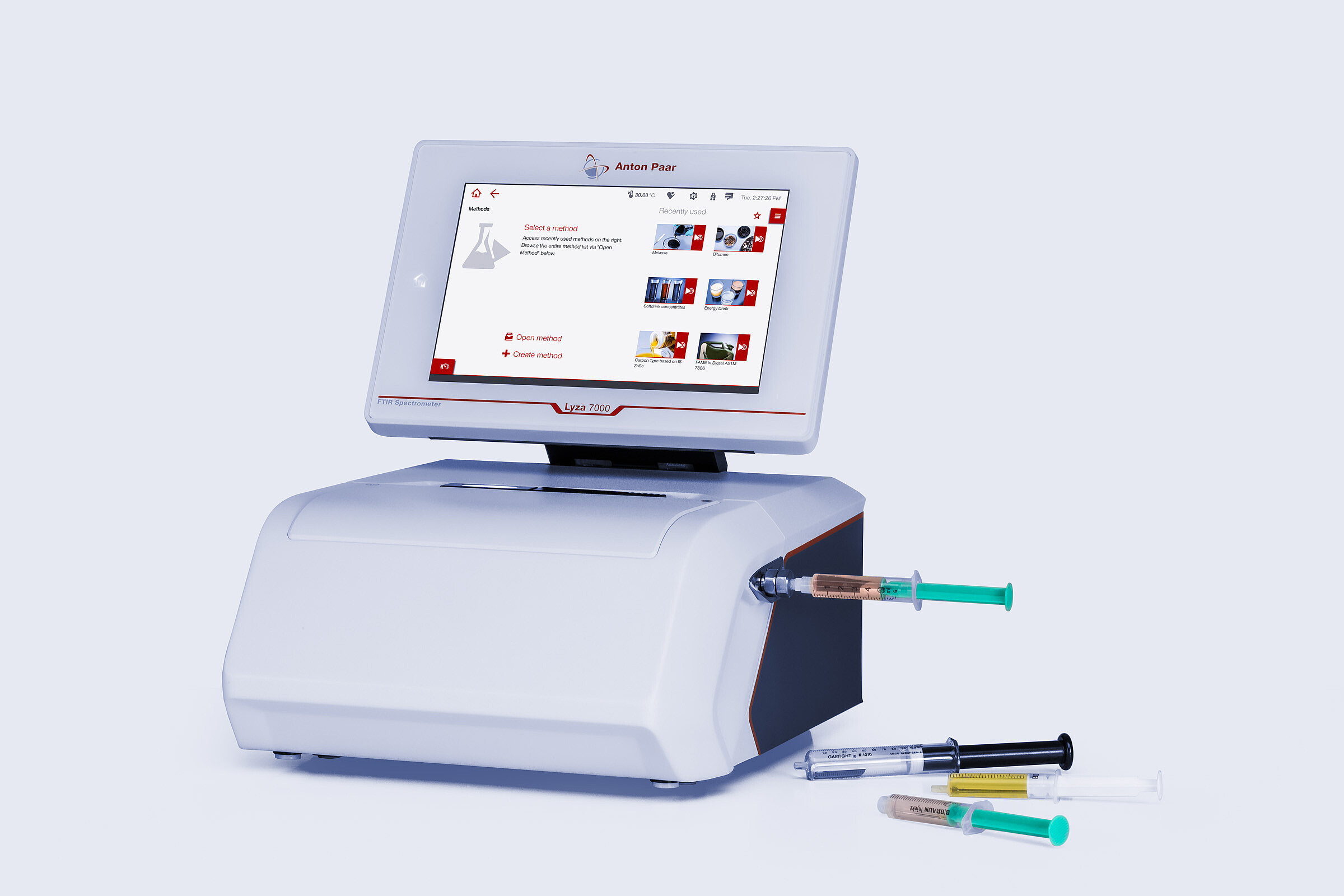
Anton Paar Lyza 7000 FTIR spectrometer with touchscreen, connected flow cell, and several syringes on a light gray background.

FAME content: Lyza 7000 with Flow Cell Modules

FTIR identifies FAME through its characteristic infrared absorption and converts the signal into a quantitative biodiesel result. Dedicated ATR and transmission flow cell configurations support standard-specific workflows, including V-ATR ZnSe, 100 µm ZnSe transmission, and 50 µm CaF2 transmission cells. Embedded evaluation, pre-installed presets, and automation-ready design help routine labs reduce setup effort and keep blend checks consistent for diesel analysis.

Find out more

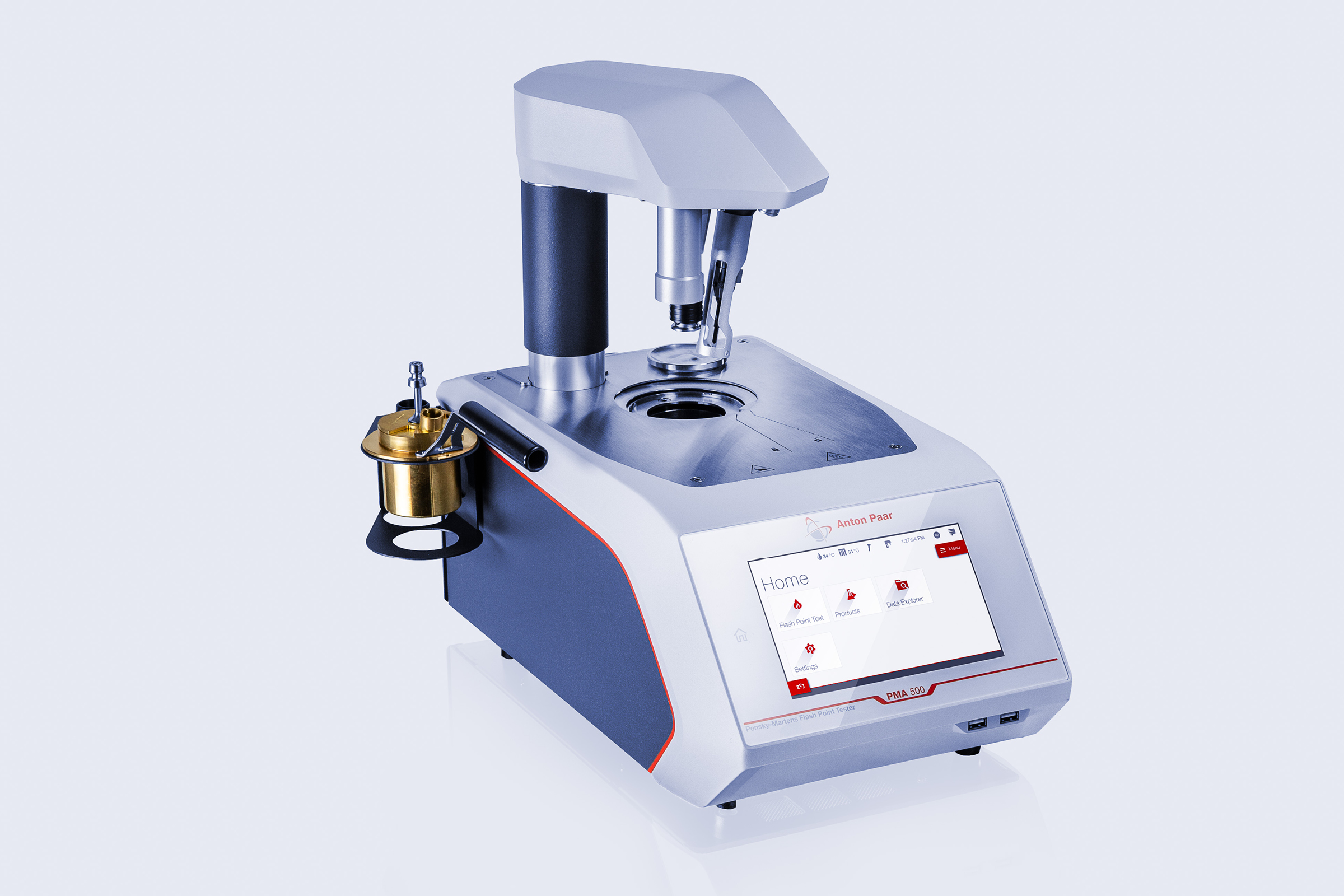
Anton Paar PMA 500 Pensky-Martens flash point tester with touchscreen, open test cup, and automated ignition assembly.

Flash point: PMA 300 and PMA 500

Pensky-Martens closed-cup testing determines the lowest temperature at which vapor above the sample can ignite under defined conditions. This result helps confirm safety before storage, transport, or production handover. Automated heating, electric ignition, flash detection, and guided operation reduce operator influence while ensuring repeatable, high-throughput fuel QC.

Find out more

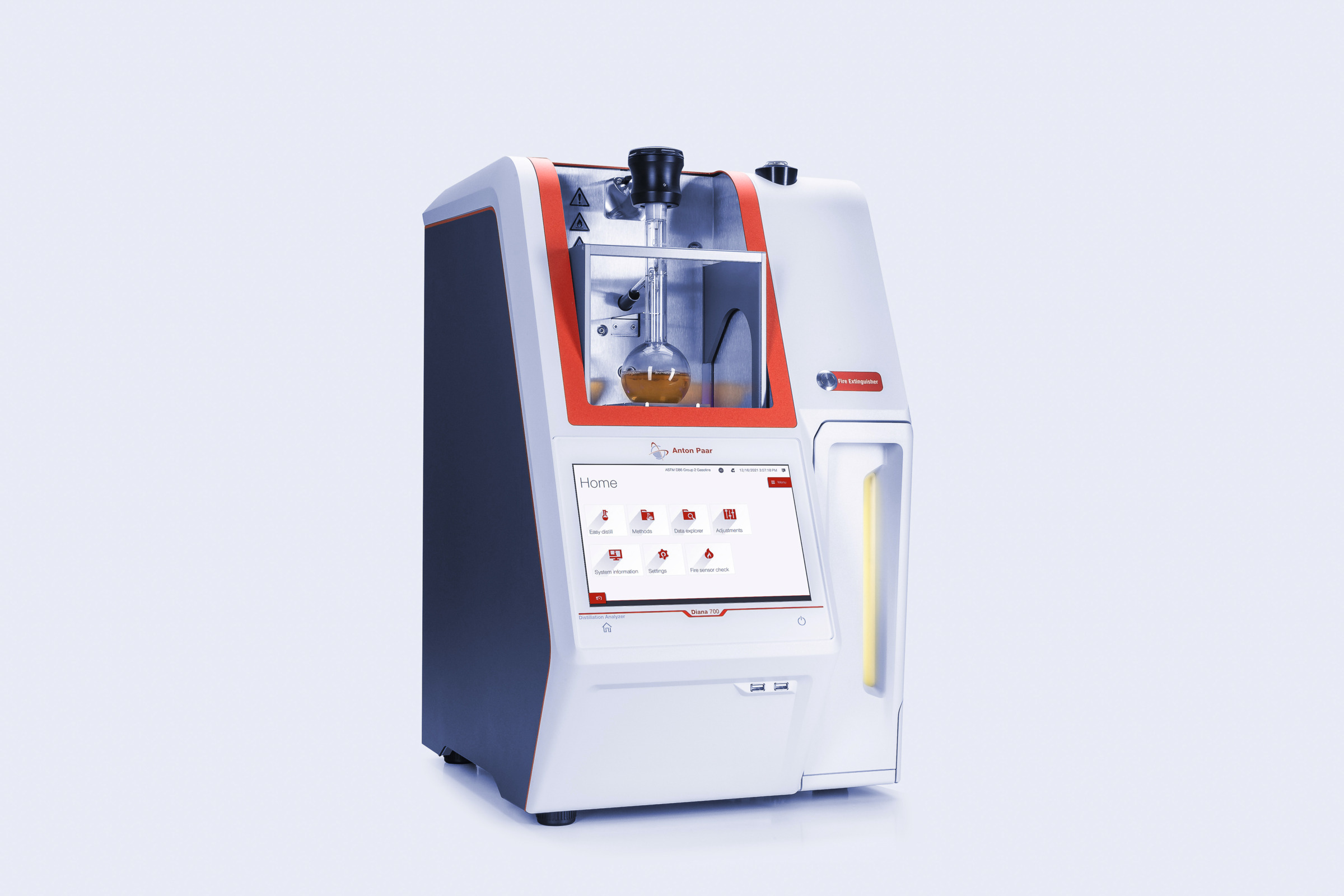
Distillation behavior: Diana 300 and Diana 700

Atmospheric distillation analyzes how a diesel sample evaporates across its boiling range. The distillation curve reveals volatility behavior linked to storage, starting, warm-up, evaporation losses, and combustion. Automated heating control, vapor-temperature measurement, and volume detection turn this traditionally manual, operator-sensitive method into a reproducible workflow for routine release and product optimization.

Find out more

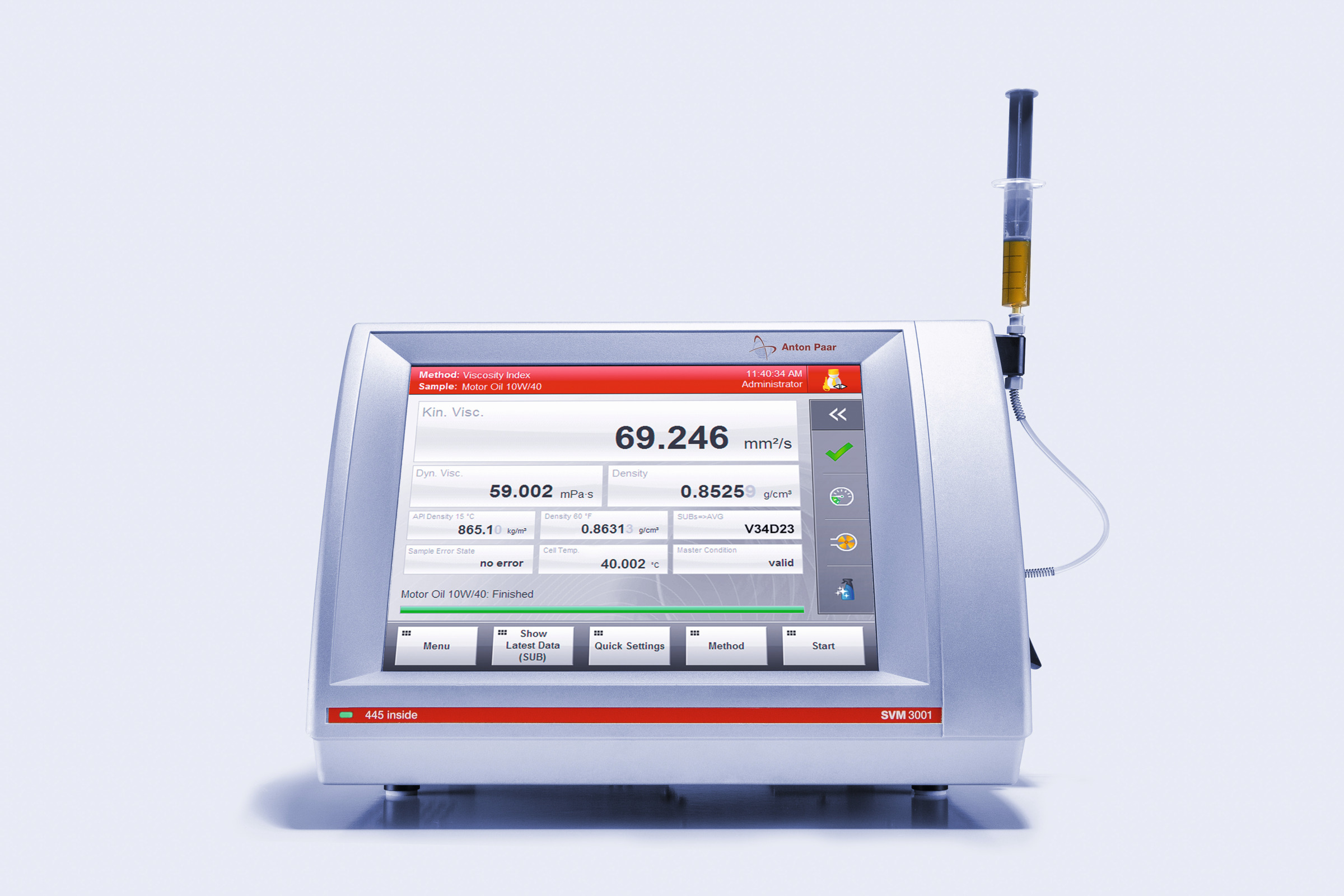
Viscosity, density, and cloud point: SVM 3001 Cold Properties

Kinematic viscosity describes flow and injection behavior, density reflects blend consistency, and cloud point indicates when wax crystals first appear as fuel cools. Measuring these physical fuel properties in one diesel analysis workflow helps laboratories assess specification compliance, cold-weather usability, and batch consistency with less sample handling, fewer separate methods, and faster routine release decisions.

Find out more

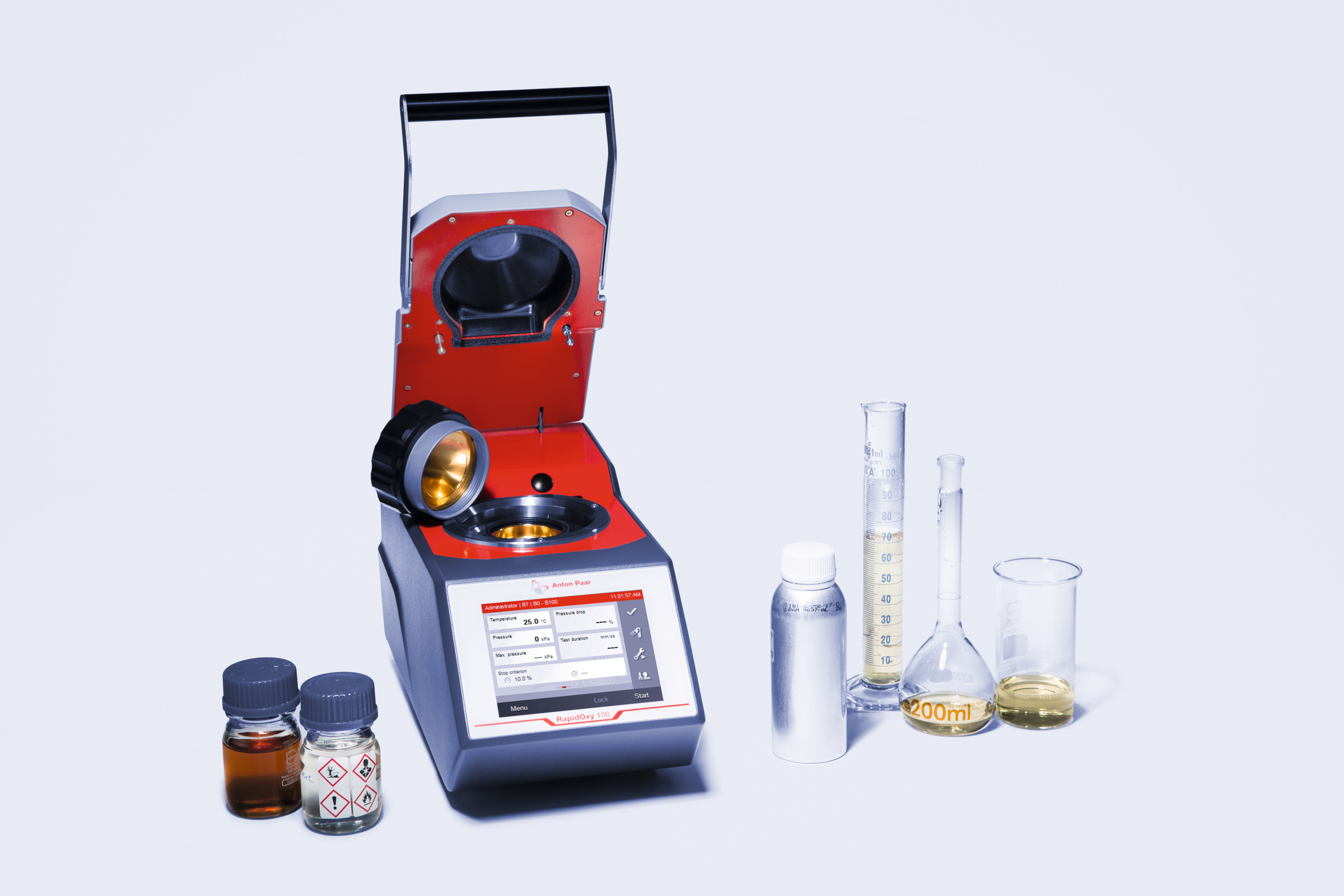
Oxidation stability: RapidOxy 100 Fuel

The Rapid Small-Scale Oxidation Test (RSSOT) accelerates fuel aging with elevated temperature and oxygen pressure, then evaluates the oxidation response. The result gives rapid insight into storage stability, antioxidant performance, and release readiness across fossil diesel, biodiesel, renewable diesel, and blends. Full automation and simple wipe cleaning reduce handling effort and help replace long conventional stability tests.

Find out more

Standards table

ParameterStandardAnton Paar solution Benefit
FAME contentASTM D7371Lyza 7000 FTIR + Flow Cell Module V-ATR ZnSe Innovative V-ATR design is optimized for B0–B20 to reduce calibration workload for routine analysis.
FAME and TAG contentASTM D7806Lyza 7000 FTIR + Flow Cell Module TRA ZnSe 100 μmEmbedded models with automatic decision tree ensure ideal model selection for accurate results. 
FAME contentDIN EN 14078Lyza 7000 FTIR + Flow Cell Module TRA CaF2 50 μmB-range compatible cell avoids dilution steps for B3 to B20.
Flash pointASTM D93 Procedure A;
EN ISO 2719 Procedure A
PMA 300 and PMA 500Fast cooling, automated testing, and long-life electric ignition turn a mandatory safety check into a high-throughput routine task.
Atmospheric distillationASTM D86 Group 4;
ISO 3405 Group 4
Diana 700Automated setup checks, Peltier cooling, and optical volume detection reduce the operator influence of a traditionally manual method.
ViscosityASTM D6751;
ASTM D7467;
ASTM D975
SVM seriesNo capillary swaps, low handling effort, and digital results help labs turn specification viscosity into a fast routine screen.
Viscosity and densityEN 590;
EN 16734;
EN 16709;
EN 15940;
EN 14214
SVM seriesViscosity and density from one sample injection help labs check multiple diesel types with less handling and solvent use.
Cloud pointASTM D2500;
ISO 3015 correlation
SVM 3001 Cold PropertiesIntegrated Peltier temperature control enables fully automatic measurements from 100 °C to subzero temperatures without external cooling.
Oxidation stabilityEN 16091;
ASTM D7545
RapidOxy 100 FuelOne RSSOT platform covers B0 to B100 and reduces test time to just 60 minutes.

Learn more about diesel analysis with application examples:

Investigation of viscosity, density and cloud point of diesel and biodiesel blends
Oxidation stability determination of diesel fuels
Flash point of diesel fuel according to ASTM D93
Atmospheric distillation of diesel according to ASTM D86

Need the right diesel analysis setup? Our experts will help you choose.

Get in touch