


BÜFA needed a reliable way to understand curing reactions in polyester resin systems. After comparing FTIR and Raman spectroscopy, the company selected Anton Paar's Cora 5001 for its clear, interpretable spectra. Today, the instrument supports product development, troubleshooting, and the analysis of production samples, with plans to expand its use into quality control and incoming goods inspection.


The challenge: Understanding reactive systems

BÜFA Composite Systems is a leading European manufacturer of polyester resin specialties, supplying complete solutions and application know-how across the composites industry.
To ensure consistent resin performance, the company's laboratory analyzes polyester resin systems, solvent mixtures, and raw materials while carrying out rheological testing, curing studies, aging investigations, color adjustments, and purity determination.
One persistent challenge was reliably determining the chemical structure after curing and assessing whether crosslinking had proceeded as expected. DSC measurements, for example, did not always show whether a homogeneous polymer network had formed or whether all reaction partners had participated in crosslinking as expected.
"What really stands out to me is the simplicity of both sample preparation and measurement."
Matthias Rastede, M.Sc., Senior Scientist - BÜFA
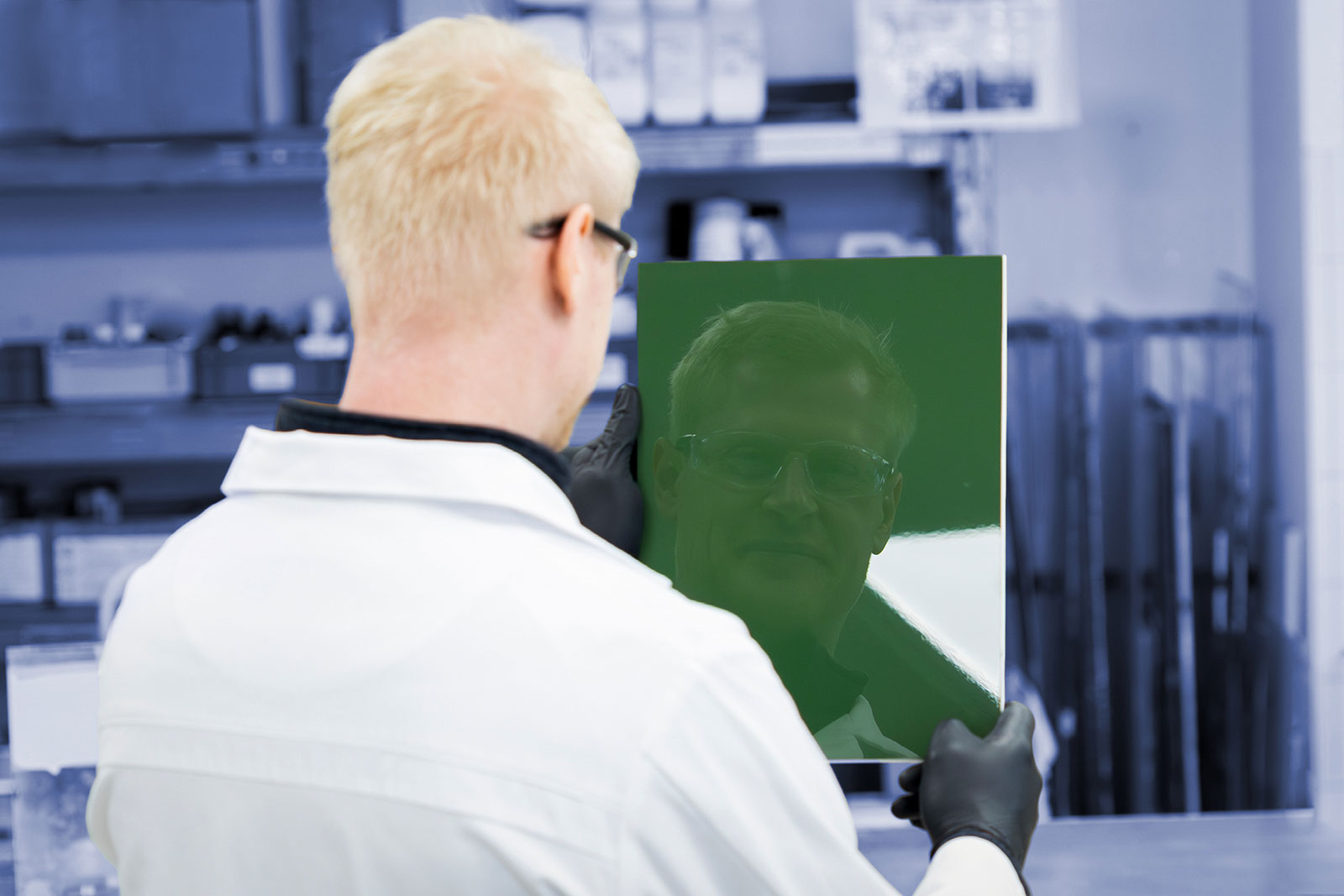
The solution: Raman spectroscopy with Cora 5001
As Matthias Rastede, Senior Scientist and Project Manager at BÜFA Composite Systems, explains, the team needed a method that could reliably assess both the chemical structure and the degree of conversion in reactive resin systems.
BÜFA initially focused on infrared spectroscopy before comparing FTIR and Raman spectroscopy using its own samples during an application demonstration with Anton Paar. The comparison showed that Raman spectroscopy produced clearer, more structured spectra in the relevant wavenumber range, allowing important signals to be identified more easily. Based on these results, BÜFA selected the Cora 5001 Raman spectrometer. Straightforward sample preparation and measurement enabled the team to move quickly from evaluation to routine use, and within a few weeks Raman data was already supporting development decisions and the identification of promising reaction conditions.
The impact: Development, troubleshooting, and quality control
Today, Cora 5001 is used several times a week in product development and troubleshooting to investigate bonding states, compare curing conditions, and analyze production samples such as solvent mixtures and potential foreign substances. Beyond the instrument itself, BÜFA highlights the value of the application support and technical guidance received during the evaluation and implementation process.
With routine use established, the company now plans to extend Raman spectroscopy into quality control, incoming goods inspection, and purity determination as additional methods are developed and validated.
Interested in achieving similar results?
Get in touch with our team to explore how we can support your goals and help you move your project forward.