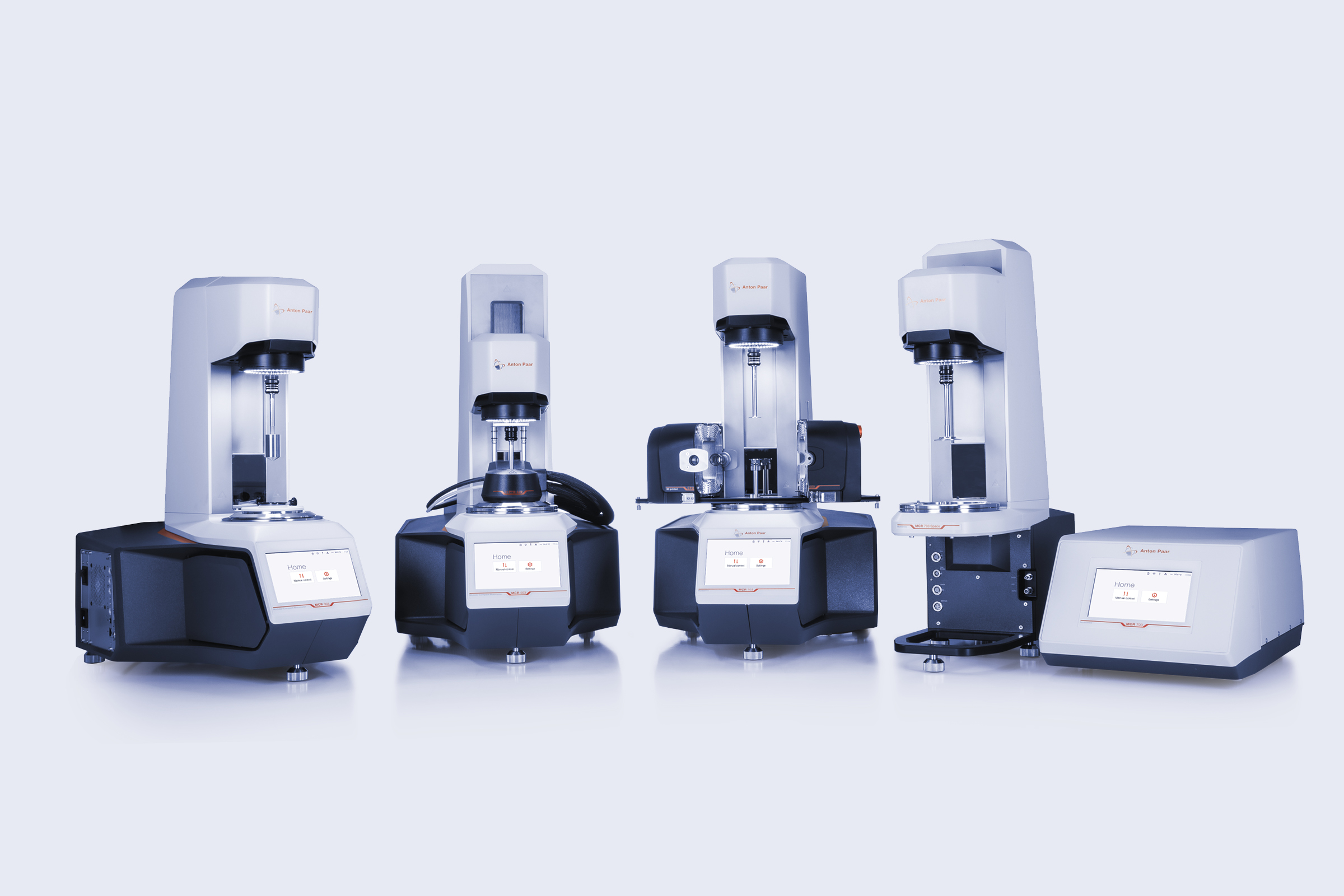
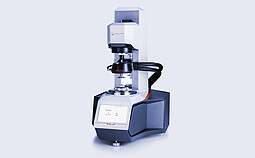
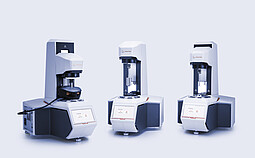
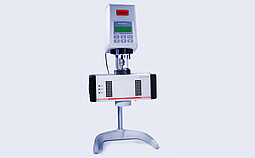
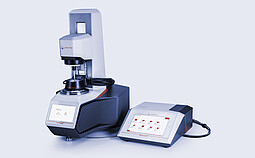
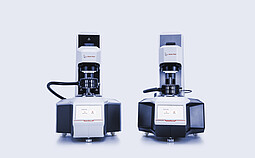
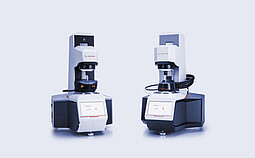
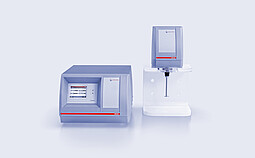
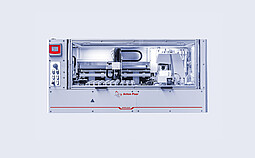
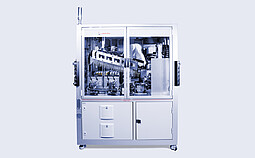
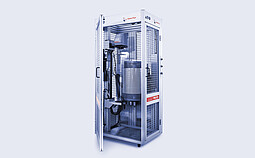
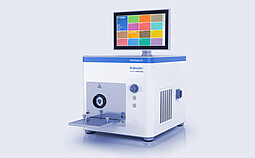
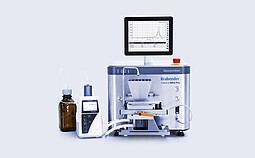
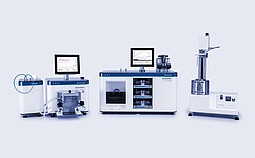


Rheology clarifies how materials respond to real-world stresses during mixing, pumping, filling, coating, processing, and storage. Anton Paar’s rheology instruments convert that behavior into precise, actionable data – enabling faster formulation refinement, tighter process control, and consistent quality from the laboratory to production. Across polymers, pharmaceuticals, food, cosmetics, and coatings, key properties such as viscosity, viscoelasticity, yield stress, and structural recovery are quantified to reduce risk, shorten development cycles, and accelerate decision-making.

Discover our rheology instruments

Find the right rheology instrument

Different applications call for different rheological methods. Anton Paar offers rheology instruments for both routine quality control and advanced material characterization, supporting reliable results from daily checks to in-depth analysis.


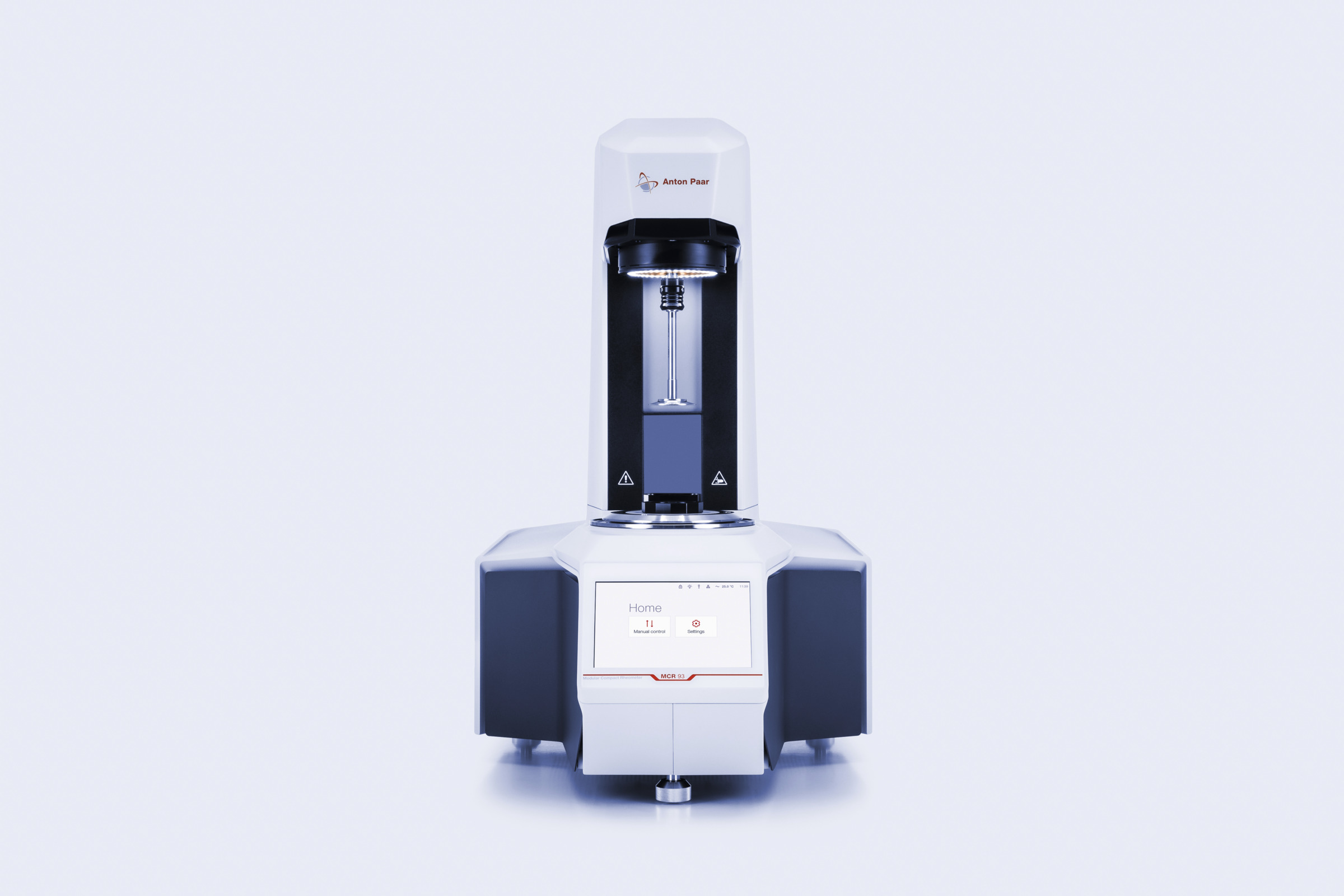
Anton Paar MCR 93 rheometer shown frontally with measuring spindle and touchscreen on a light studio background

Rotational rheometers

Rotational rheometers offer a versatile platform for product development, formulation optimization, and quality control. By measuring torque and rotational angle as a measuring geometry moves in the sample, they deliver accurate rheological data across a wide range of test conditions. 

With cone-and-plate, parallel-plate, and concentric-cylinder geometries, rotational rheometers enable precise viscosity and viscoelasticity analysis in liquids, semi-solids, and soft solids. The result is one flexible solution for both steady-state and dynamic testing – supporting efficient method selection across applications.

Find out more

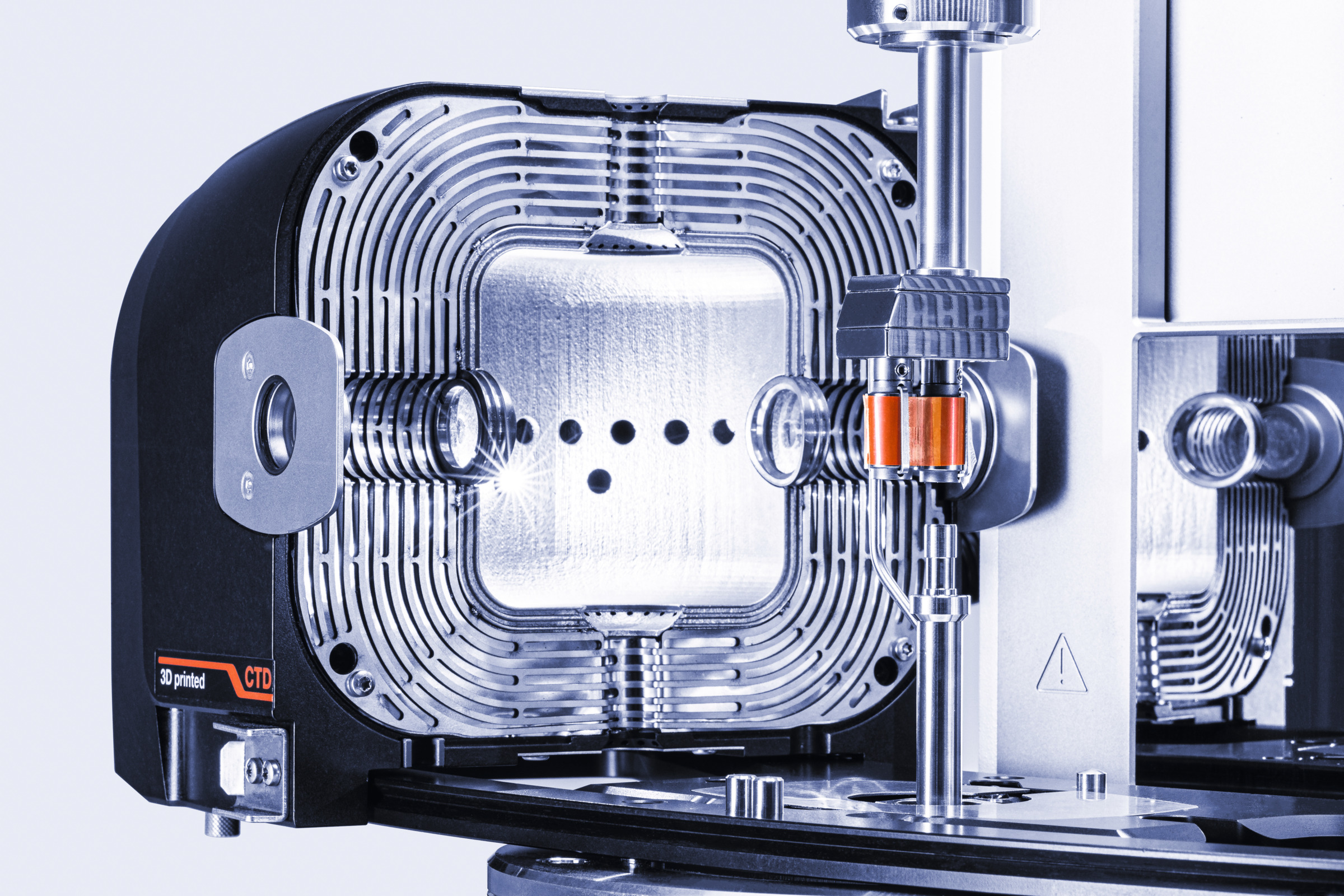
Close-up of an Anton Paar 3D printed CTD temperature device with metal chamber, optics, and measuring geometry

Extensional rheometers

In many industrial processes, materials experience extensional flows, such as stretching during film blowing or spraying.

Extensional rheometers measure the resistance of a material to stretching flows and provide information about properties such as extensional viscosity.

Find out more

Discover our most advanced rheometers

Measurement Methods in Rheology

Modern rheology instruments offer multiple test modes to match material and application needs.

Lab technician in a white coat adjusts a sample on an Anton Paar MCR rheometer beside bottles and a monitor in a laboratory

Rotational tests

Rotational tests are used to determine viscosity as a function of shear rate or stress. Torque or deformation is applied to the sample while the response is measured over time. These tests include:

  • Flow curves
  • Creep and creep recovery
  • Stress relaxation
  • Start-up flow
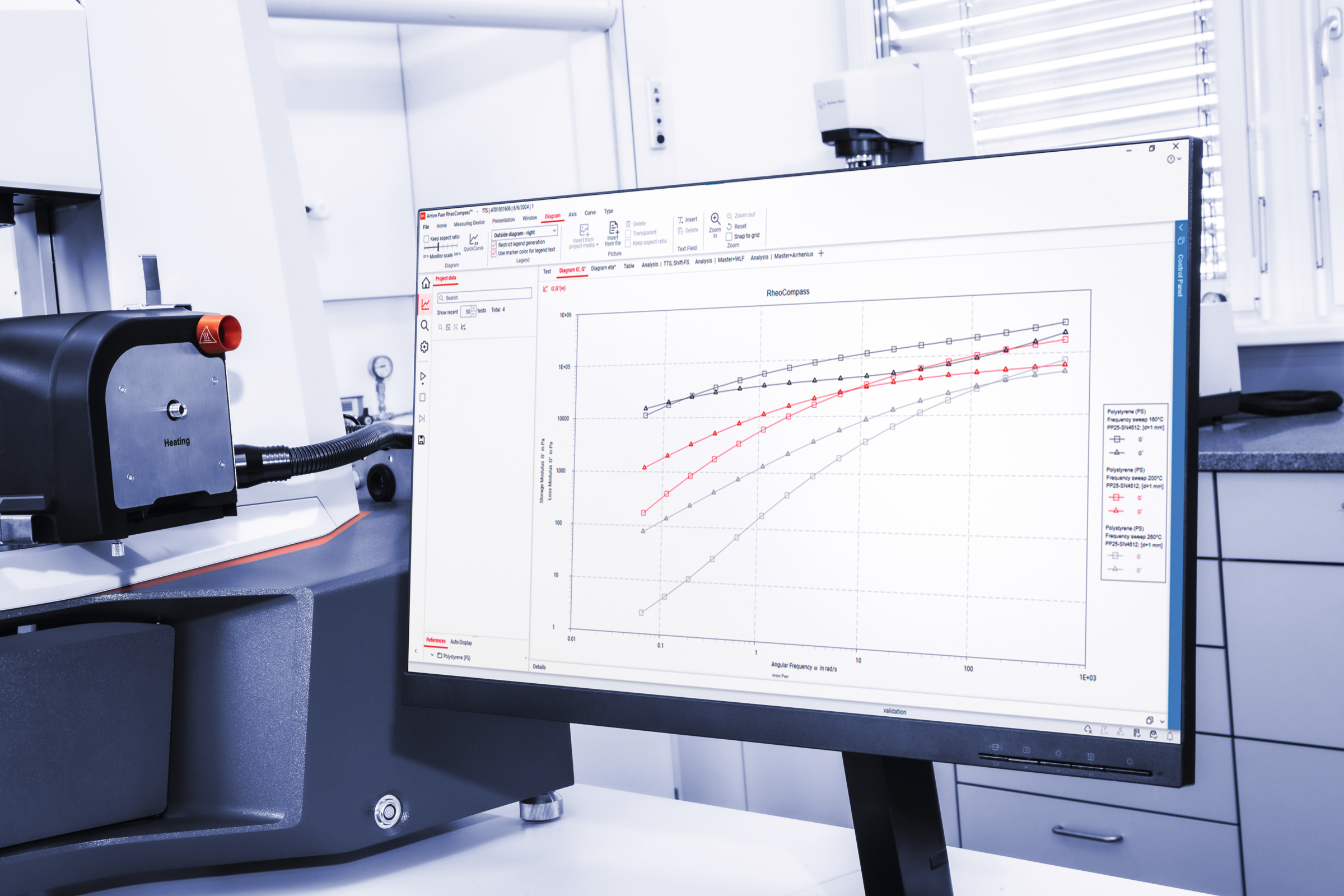
Monitor displaying Anton Paar RheoCompass software with rheology curves beside a partially visible Anton Paar rheometer in a lab

Oscillatory rheology

Oscillatory testing applies periodic deformation to the sample.
Viscoelastic properties such as the storage modulus (G′) and loss modulus (G″) are determined by evaluating the phase shift and amplitude ratio between the applied stress and the resulting strain. Two common modes are:

  • Small-amplitude oscillatory shear (SAOS) – probing linear viscoelastic behavior
  • Large-amplitude oscillatory shear (LAOS) – investigating nonlinear material behavior
     

Industry applications

The right rheology instrument depends on the material, the process, and business goals. Key selection criteria include material type, shear rate range, temperature requirements, process-simulation needs, and the measurement modes required for the application. 
Rotational rheometers are the strongest all-round choice when flexibility is required across research, formulation, and quality control. Capillary rheometers are ideal when high shear rates and processing-relevant conditions are the priority. Extensional methods add critical insight when stretching behavior influences product performance. 

Lab technician uses the touchscreen of an Anton Paar MCR rheometer next to paint samples in a laboratory

Anton Paar supports instrument selection and method setup to fit established workflows, enabling meaningful results, faster decisions, and higher confidence from development to production. 

Explore our rheometry solutions:

Not sure which rheology instrument best fits your workflow? Get in touch with us for individual advice and custom solutions. We work with you to match the right measurement technology to your material, process, and business goals.

Get in touch