Microwave Synthesis

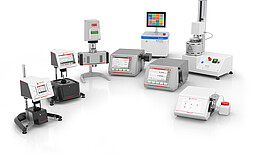
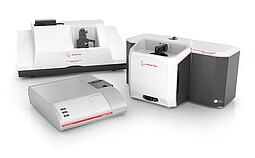
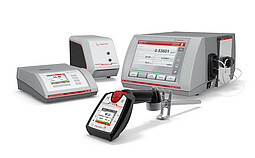
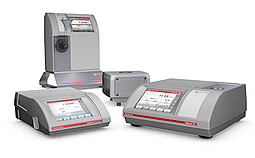
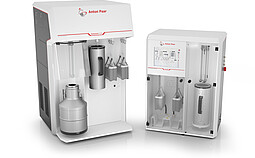
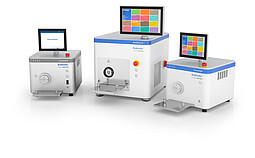
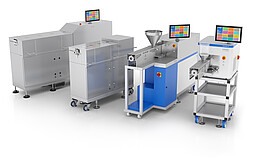
High-end, high-performance reactor for microwave synthesis: Anton Paar’s microwave reactor models provide unique specifications which open new dimensions in method development for microwave synthesis. Anton Paar transfers efficient microwave synthesis to the kilolab. Read more...

Benchtop

Sample Changers

  • Autosampler MAS 24
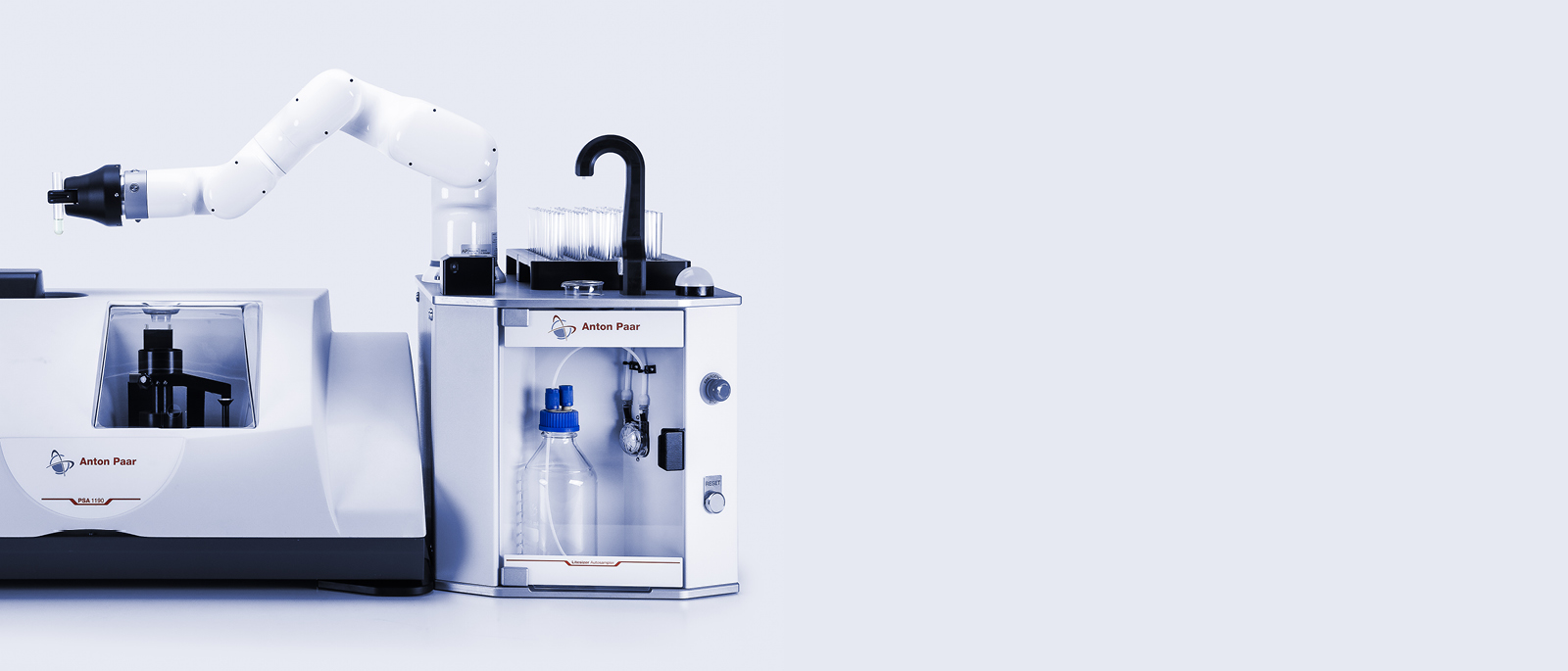
    The autosampler unit MAS 24 for Monowave 300 provides reliable unattended sequential operation of your microwave ...

The microwave synthesis reactors from Anton Paar are powerful solutions which have already replaced traditional methods in many fields. With the powerful magnetron and a specially designed microwave applicator, microwave synthesis produces the highest field densities which allow extraordinary heating rates of solvents. Both polar and frequently used poorly absorbing solvents can be heated well above their boiling points in the shortest time.

Together with the operating limits of up to 300 °C and 30 bar these high-performance features allow the development of new synthesis strategies which further increase the efficiency of microwave synthesis.

Anton Paar: A new dimension in microwave synthesis:

  • Impressive heating rates at maximum filling volume
  • Excellent reproducibility of reactions
  • The highest reliabilitiy of the reactor
  • Intuitive touchscreen-controlled interface; stored, optimized methods are available at all times
  • Consistent quality, purity and yield

Adding an autosampler makes it possible to undertake unattended sequential operation of microwave synthesis on 24 vials. That saves time and money!
Contact us – we are happy to give you a demonstration of our microwave synthesis reactors!

  • Temperature homogeneity is the key issue when performing synthesis in parallel. A once-optimized temperature/time profile should be applied to all

    Read more ...
  • After finding a promising hit during reaction screening processes the following step is often scaffold decoration to optimize the activity of the

    Read more ...
  • Rearrangements are very powerful synthetic techniques to convert certain structures into different moieties by migration of functional groups. The

    Read more ...
  • Microwave irradiation has significantly accelerated the crucial acid-induced hydrolysis step for proteins and peptides, bringing the reaction time

    Read more ...
  • ery often non-polar solvents like dioxane or toluene are preferred in organic transformations. Since these are poor microwave absorbers the heating

    Read more ...
  • Using water as the solvent in organic synthesis has attracted considerable interest in the last few years in terms of Green chemistry. Synthos 3000

    Read more ...
  • Nanoparticles have gained considerable interest in recent years, constituting a bridge between macroscopic materials and molecular structures. The

    Read more ...
  • Multicomponent reactions are among the most beneficial procedures for lead generation. The variety of the desired products can be increased with a

    Read more ...
  • Metal-catalyzed reactions are amongst the most powerful and frequently used transformations in pharmaceutical chemistry. Various valuable scaffolds

    Read more ...
  • Ionic Liquids are a special type of chemical compound, which have attracted considerable interest in recent years. Consisting of rather bulky organic

    Read more ...
  • Heterocycles are part of most pharmaceutically or biologically active compounds. Particularly in the synthesis of natural compounds a smart strategy

    Read more ...
  • The use of gaseous reagents is still a curiosity in the field of microwave-assisted synthesis. Offering reaction vessels which can be pressurized

    Read more ...
  • Esterification reactions are simple and effective transformations utilizing alcohols to convert carboxylic acids or their derivatives into valuable

    Read more ...
  • Cycloaddition reactions are among the most frequently used transformations in organic synthesis. Tolerable for numerous substrates, a broad range of

    Read more ...
  • Combinatorial chemistry is an important concept in pharmaceutical research to reduce time and costs while increasing the efficiency in drug

    Read more ...
  • Carbon-carbon bond forming reactions are one of the most widely used transformations in organic chemistry. Various valuable scaffolds can be

    Read more ...


Microwave Synthesis


Getting started with Microwave Synthesis with Anton Paar's


A Chemist’s Guide to Microwave Synthesis (Extract)

Basics, Equipment & Application Examples


The Principle of Microwave Heating


In contrast to conventional heating, microwave heating directly heats the liquid bulk, while the surroundings (vessels) are only heated due to the hot reaction mixture they contain. Heating with microwaves (electromagnetic waves with a frequency of 2.45 GHz) is based on two mechanisms:


  • Dipolar re-orientation: molecules with a dipolar structure (e.g. water) oscillate in the fluctuating microwave field. This oscillation results in molecular motion which causes friction and therefore heat.
  •  


  • Ionic conductance: molecules with an ionic structure (e.g. salts) align in the electromagnetic field. This alignment also causes molecular motion which results in friction and therefore heat.


top


Why Microwave Synthesis?


Just as they help you in the kitchen to cook faster, microwaves will help to produce your reaction products faster. Dedicated microwave reactors provide a combination of fast and efficient heating as well as a convenient and safe way to superheat solvents far above their boiling point. In addition, the reaction temperature, pressure and the applied microwave power are displayed and recorded during the whole experiment process.


The figure above shows the heating profile of a reaction mixture heated to 300 °C for 10 minutes. The instrument records temperature, pressure and power during the experiment. A typical experiment process consists of three steps: (a) heating, (b) holding and (c) cooling.


Benefits of Microwave Synthesis:


  • Energy-efficient, direct and rapid energy transfer
  • Easy, fast and convenient access to enhanced temperatures and pressures (similar to an autoclave)
  • Faster reactions, higher yields, purer compounds
  • Rapid reaction screening and optimization of conditions
  • Ideally suited for automation and parallel synthesis
  • Excellent control over reaction parameters with dedicated instrumentation
  • Different absorptions allow selective heating of individual compounds


top


Monowave 300 (monomode reactor)


The microwave energy is created by a single magnetron and directed through a waveguide to the reaction mixture. This results in a “standing wave” and the reaction vessel is located in a hot spot where efficient heating of small volumes is possible.


top


Multiwave PRO (multimode reactor)


Two magnetrons create microwave irradiation, which is directed into the cavity through a waveguide and distributed by a mode stirrer. Microwaves are reflected from the walls, therefore interacting with the reaction mixture in a chaotic manner. Additional rotation of the reaction vessel(s) in the cavity prevents temperature inhomogeneities and formation of hot spots.


Depending on the application, either monomode or multimode reactors are employed. The following table summarizes the practical differences of both types of microwave reactors.


Monomode Multimode
Compact caviy Large cavity
Ideal for small-scale runs Ideal for large-scale run
Large-scale runs are time-consuming Small-scale experiments are laborious
High throughput by sequential automation High throughput by parallel synthesis or large single batches
Higher field density in the cavity => lower output power is sufficient Lower field density in the cavity => higher output power is required


 top


History


The first microwave-assisted chemical reactions were performed in 1986 in domestic microwave ovens. As the results in terms of product purity and yield were highly impressive, the number of publications on microwave synthesis increased, especially since dedicated instruments were introduced onto the market in the late 1990s. Nowadays, for scientific and safety-related reasons, dedicated microwave reactors are almost exclusively used for chemical synthesis. In the past 10 years Anton Paar has established a comprehensive product portfolio in this field.


2004: Launch of Synthos 3000


Anton Paar has been involved with microwave technology since the late 1980s and entered the field of microwave synthesis in 2004 with the launch of Synthos 3000. The many years of experience gained in microwave reactor technology from Multiwave 3000 was applied in the development of the microwave synthesis devices.


2006 up to now: Cooperation with the Christian Doppler Laboratory for Microwave Chemistry (CDLMC, head: Prof. C. O. Kappe)


In 2006, a fruitful cooperation has been started with the world’s leading research laboratory on microwave synthesis at the Karl Franzens University in Graz, Austria. The group lead by Prof. C. Oliver Kappe has already gained many years of experience in the practical application of microwave irradiation for organic synthesis and shared this experience with Anton Paar in order to develop next-generation microwave reactors. This successful cooperation was recently rewarded with the Houska award for Austria’s most innovative industry-university collaboration.


2009: Launch of Monowave 300


The cooperation with the CDLMC led to the development of Monowave 300, which provides improved performance, superior to existing monomode microwave reactors. Due to its unique specifications it opens up new reaction pathways in microwave-assisted synthesis in the R&D scale. Since 2010 Anton Paar has also offered an autosampler for Monowave 300. The autosampler MAS 24 handles up to 24 reaction vials automatically and sequentially.


2010: Launch of Masterwave BTR


Masterwave BTR was developed together with global players in the pharmaceutical industry. It covers a niche in microwave-assisted scale-up, since there has always been an urgent need for a reactor that can produce kilogram amounts of target compounds. The patent-pending revolutionary technique allows for highly efficient and convenient scale-up of microwave-assisted reactions which have been optimized in the small scale with Monowave 300.


Contact
Contact a Sales Representative about this product
Contact
 
 
Media Gallery
Videos, eLearning, games and more

Enter the Gallery