Broad range of X-ray optics
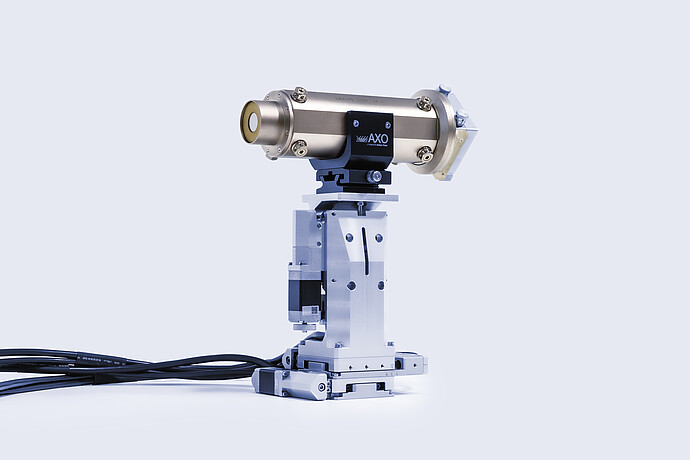
We offer a broad portfolio of advanced X-ray optics tailored to a range of applications. Our parallel beam optics (PBO and Göbel mirrors) provide highly collimated beams with typical sizes between 0.5 mm and 2.5 mm, delivering the low beam divergence required for X-ray diffraction (XRD). For applications demanding concentrated intensity, our focusing X-ray optics convert divergent or parallel beams into thin focal lines or spots – typically 30 µm to 500 µm – ideal for techniques such as XRF, XRD, and imaging.
Two-dimensional X-ray optics (Montel optics)
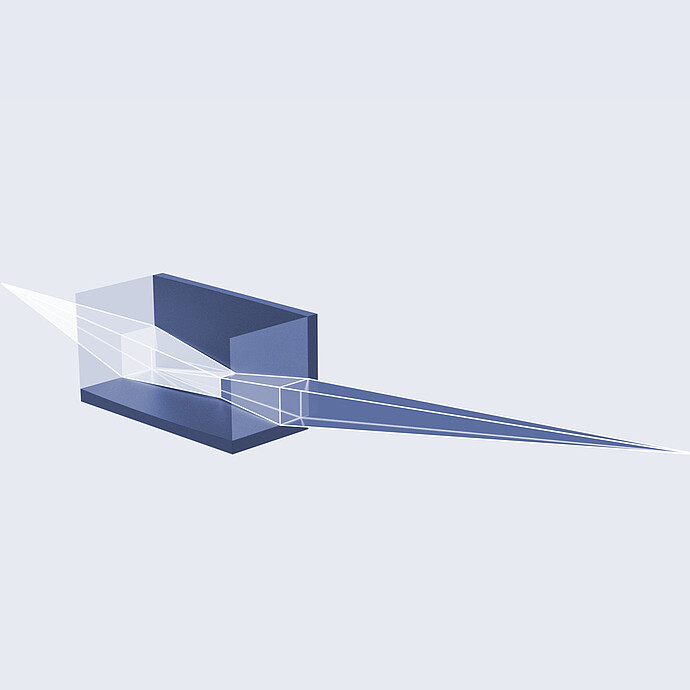
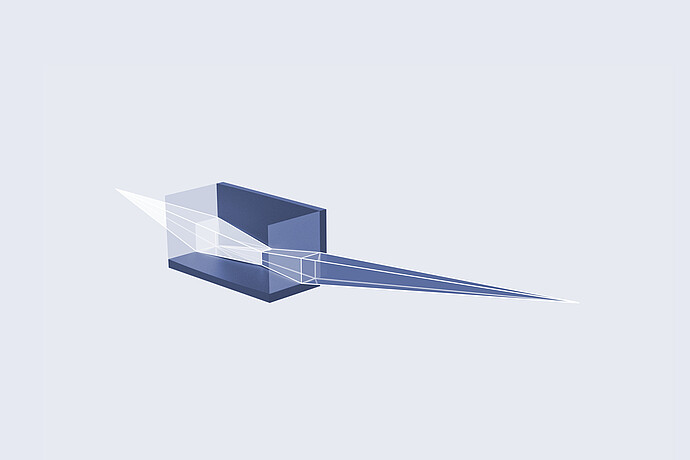
The two-dimensionally collimating optics (ASTIX-c) transform divergent radiation into square-shaped, low-divergence parallel beams with edge lengths of 0.5 mm to 2.5 mm. This is complemented by our two-dimensionally focusing optics (ASTIX-f), which shape high-intensity beams concentrated into focal spots ranging from a few hundred micrometers in diameter (depending on sample size) down to ~30 µm FWHM.
X-ray optical systems
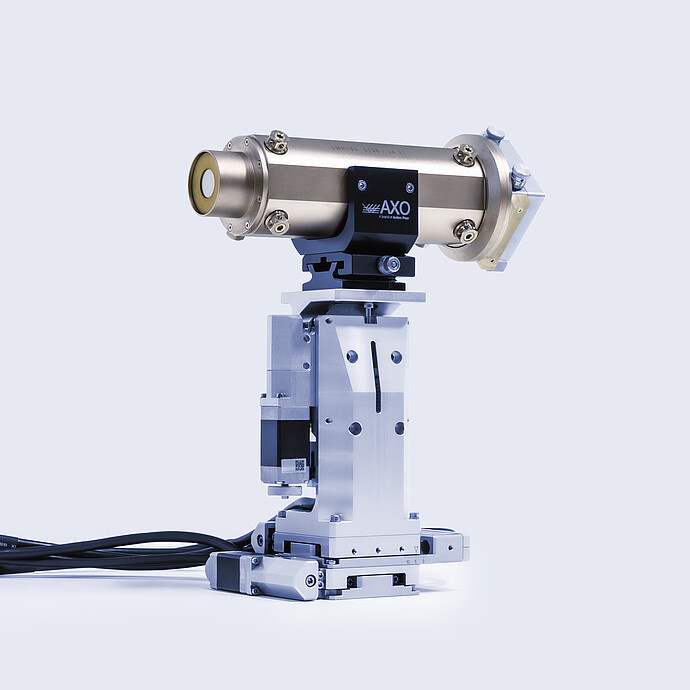
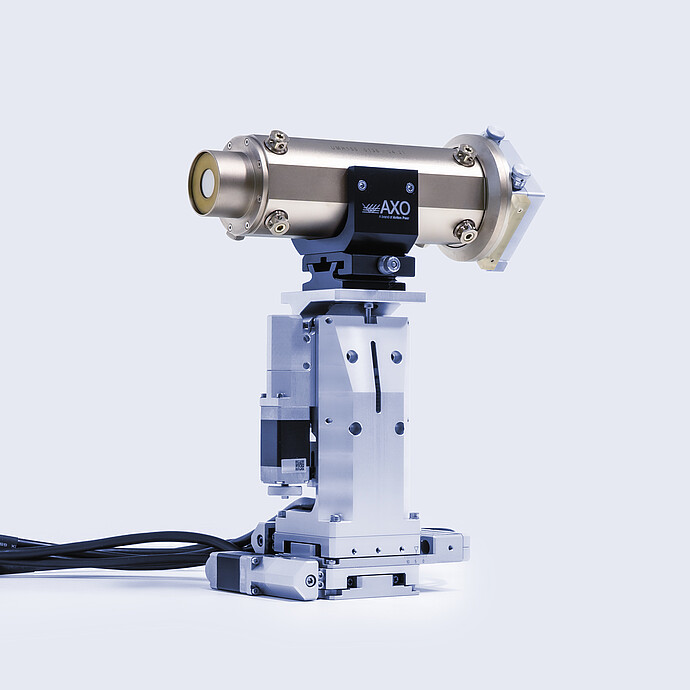
Our versatile X-ray optical systems use multilayer optics – either alone or combined with other X-ray optics – to generate one- and two-dimensional beams in collimated, focused, compressed, or expanded forms, all with monochromatic attributes. One example, the Twin Mirror Arrangement, enables precise X-ray reflectometry over a very high dynamic range. Additional applications include X-ray diffraction, tomography, and synchrotron experiments.
Matching your requirements
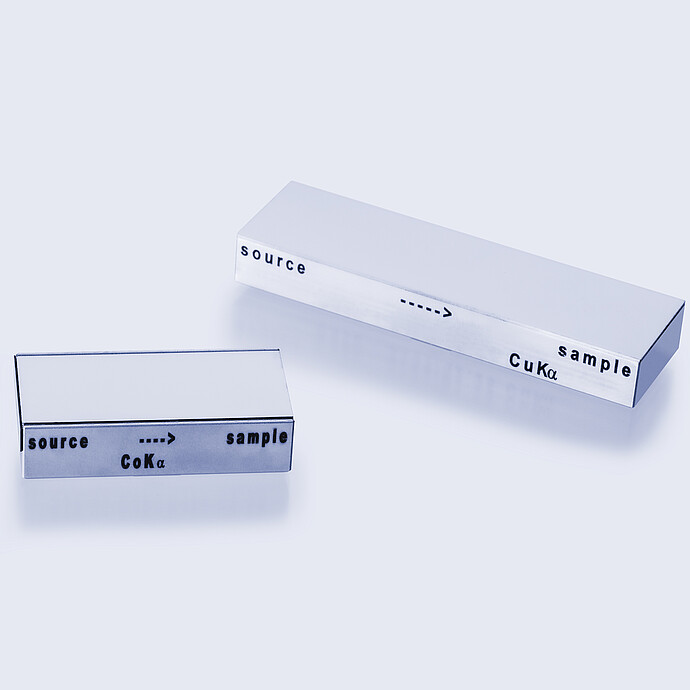
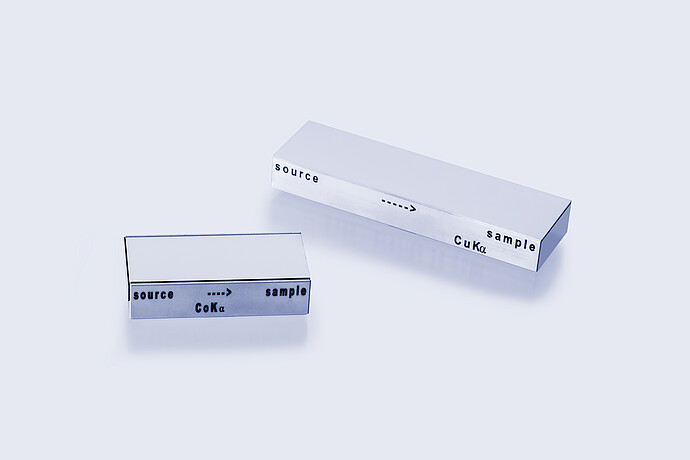
Designed for a wide range of photon energies, our X-ray optics are available for the most commonly used anode materials, including chromium (Cr), cobalt (Co), copper (Cu), gallium (Ga), molybdenum (Mo), rhodium (Rh), silver (Ag), indium (In), and tungsten (W). This supports optimal performance across applications – from Cu Kα for standard diffraction, to Cr and Co for stress analysis, and Mo, Ag, or In for dense samples and high-resolution data. Each multilayer optic is tailored to its corresponding line to ensure maximum flux, spectral purity, and beam quality.
Multilayer mirrors can be custom-designed with specific focal lengths, small beam sizes, or low divergence. Even when the outer geometric parameters are set, the mirror’s spectral performance can be further optimized by adjusting the multilayer coating. Optimization typically targets beam flux, spectral resolution, or broadband reflection—depending on whether photon intensity, energy selectivity, or wide energy coverage (as in synchrotron, plasma, or laser setups) is required.
Monochromator mirrors for synchrotrons, FELs, EUV, and other sources
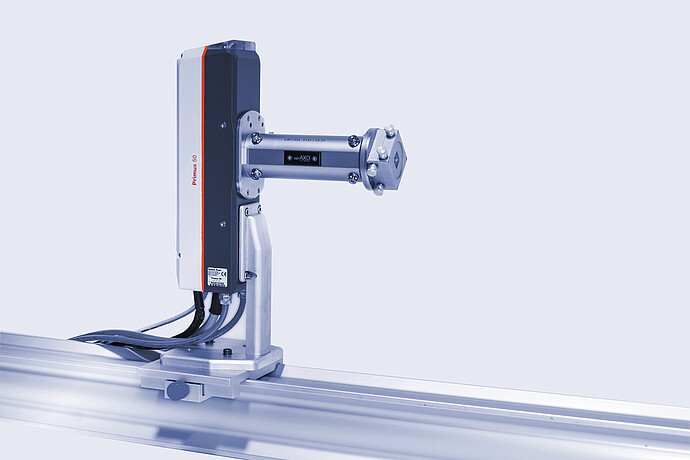
Synchrotron beamlines selecting small or large energy bandwidths require monochromatizing optical devices. Multilayer coatings can be applied in various configurations to provide either high-resolution or high-flux beams, ranging from EUV to hard X-rays up to ~100 keV. Flat, graded multilayers can accommodate divergent beams or be used in analyzer setups. Additional applications include broadband or bandpass designs and polarizer mirrors working near Brewster’s angle.