Inline Concentration Measurement

Inline Concentration Measurement
Real-time precision for maximum process efficiency
Inline concentration measurement is transforming industrial production by enabling precise, real-time monitoring of liquid concentrations. Unlike conventional lab-based methods, it delivers uninterrupted quality control, reduced material losses, optimized resource consumption, improved process efficiency, and minimized downtime. Widely adopted in industries such as chemicals, food and beverage, pharmaceuticals, and petrochemicals, it plays a critical role in ensuring consistent product quality and reliable operational performance.
Real-time concentration measurement: a state-of-the-art approach to process optimization
Laboratory measurement forms the foundation for accurate process control and provides information about your product. Inline concentration measurement delivers real-time, continuous insights without the need for human input – fast and right where your process happens. You optimize quality, cut downtime, economize resources, and make decisions with high confidence. For maximum product safety, quality, and output, with minimal manual effort, the ideal solution is a combination of lab and inline concentration measurement. Anton Paar’s industry-leading instruments are the best for both.

Speed and efficiency
Lab tests require sampling, transportation, and analysis – all of which take time and cause delays. Inline concentration measurement delivers instant results at the process.

Cost reduction
Frequent lab testing requires skilled lab personnel and increases operational costs. Inline monitoring eliminates unnecessary testing and lowers labor, material, and downtime expenses.

Better process control
Real-time monitoring enables automatic process control and immediate operator response to deviations. The result: less waste, reduced costs, and consistently high product quality.
Key industry applications

Chemical industry: Precision concentration control
Precise concentration control of acids, bases, solvents, and salts is essential for safe and efficient chemical manufacturing. Inline concentration measurement using density and sound velocity sensors enables real-time monitoring of critical chemicals like H2SO4, HCl, NaOH, and KOH – minimizing manual sampling and reducing process variability for improved safety, high product quality, and less chemical waste.
View all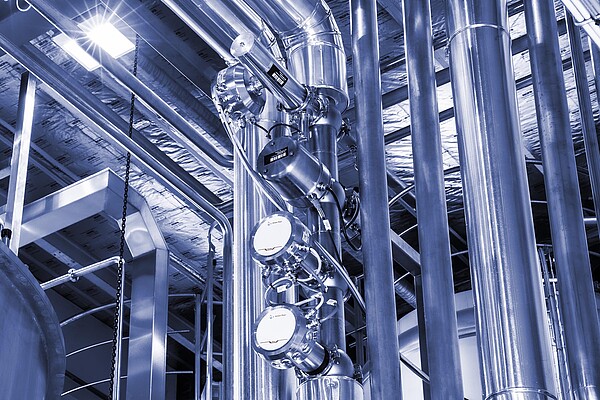
Food and beverage: Consistent results, full compliance
Consistent taste, texture, and quality – every batch, every time. Inline sensors in beverage and food production precisely monitor sugar, extract, alcohol, salt, water, and air content in real time. This minimizes costly lab testing, reduces ingredient waste, and keeps you fully compliant with food industry regulations.
View all
Mining: Increased yield of valuable raw materials
In the mining industry, inline concentration sensors enhance overall process safety, improve raw material quality, boost production efficiency, and increase product yield. These sensors are used throughout critical stages – from copper ore processing and gold production to uranium extraction – providing real-time insights that drive smarter decisions and more sustainable operations.
View all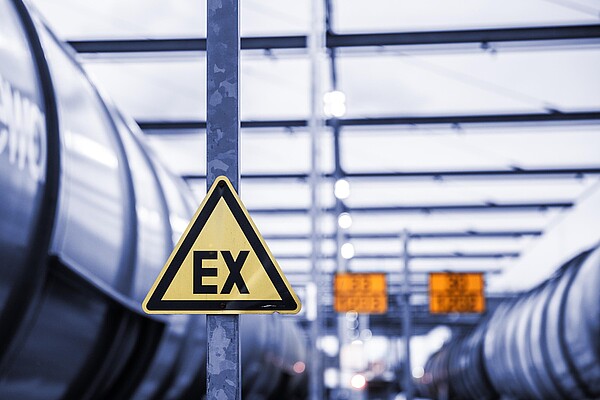
Oil and gas processing: Quality control of hydrocarbons
Process measurement in the oil and gas industry enables accurate crude oil and product density monitoring, reliable water or product phase separation, precise mass flow measurement, additive dosing, and real-time mass balance control – all supported by inline concentration measurement to ensure efficiency, quality, and contract compliance.
View all
Renewable energy and hydrogen production: Efficient electrolysis control
In hydrogen production via alkaline water electrolysis, inline sensors control KOH and NaOH electrolyte concentrations to maintain peak electrolysis efficiency. This ensures consistent hydrogen yield, reduced energy waste, and minimal need for adjustments, making production cost-effective and sustainable.
View all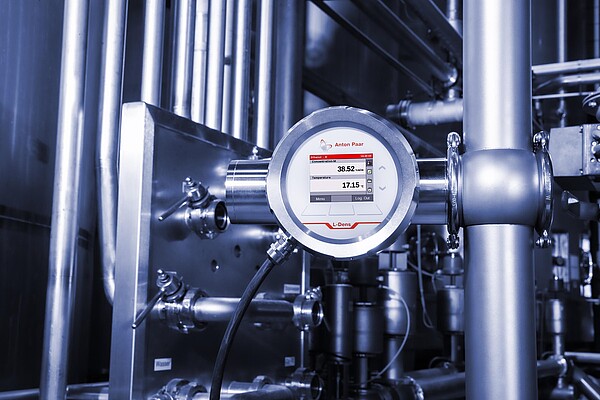
Pharmaceutical and biotechnology: Reliable formulation control
Pharmaceutical production demands highly precise ingredient concentrations. Inline concentration measurement solutions ensure consistent formulation of drug compounds, solvents, and active ingredients. Real-time monitoring eliminates batch inconsistencies to improve regulatory compliance (FDA, GMP).
View allYour partner for reliable concentration measurement
Supporting you from sensor selection to operation and beyond
Anton Paar offers the most comprehensive portfolio of inline concentration measurement technologies on a single platform – combining precision, robustness, and seamless process integration – all backed by comprehensive customer support.
The optimal measurement method depends on the specific characteristics of the liquids involved. With advanced technologies such as density, sound velocity, and refractive index measurement, Anton Paar enables accurate analysis of both binary and ternary mixtures, with in-house experts on hand to support you in finding a tailored solution for your application and developing custom concentration formulas.
Anton Paar’s comprehensive formula database – based on decades of experience and customer consultation – contains thousands of concentration formulas to support a wide range of industries and process conditions.
Key benefits:
- Easy integration into your plant
- Simple to operate with a Pico-transmitter
- Robust and maintenance-free
- Suitable for highly corrosive media
- ATEX, IECEx, FM, and UL-certified explosion-proof sensors
Customer success stories
Companies around the world rely on Anton Paar’s inline concentration measurement solutions to enhance process efficiency, product quality, and regulatory compliance. Below is a selection of real-world success stories showcasing tangible benefits, including cost savings, improved accuracy, and streamlined production.
Chemetics: Enhancing sulfuric acid regeneration with inline measurement
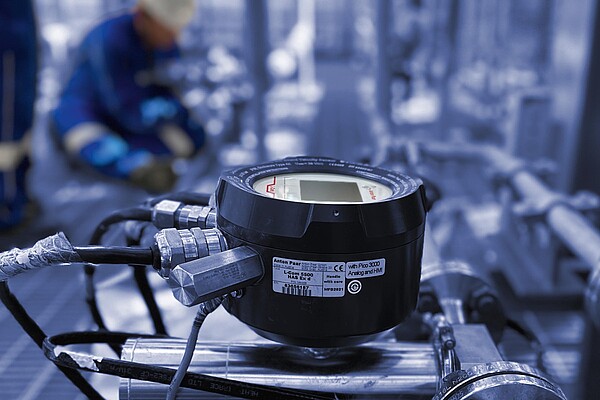
China’s largest acrylonitrile producer, which operates three sulfuric acid regeneration (SAR) plants using Worley’s Chemetics® technology, sought a high-precision alternative to refractive index measurement. Anton Paar’s L-Sonic 5100, L-Dens 7400, and L-Com 5500 sensors now provide them with continuous, highly accurate inline concentration measurement. This prevents unconverted SO3 emissions, helping to eliminate pollution risks and financial losses. Since installing Anton Paar’s sensors, the company has experienced zero measurement errors.
AGRANA sugar plant: Optimizing °Brix monitoring in sugar production
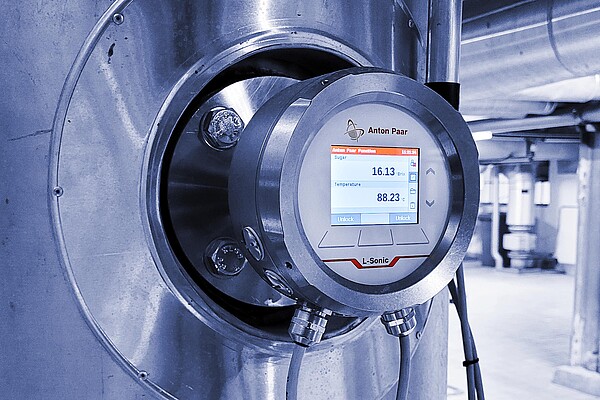
AGRANA, a leading sugar producer, implemented L-Sonic 5100 for inline °Brix measurement to ensure continuous monitoring and improved product consistency. The sensor’s hygienic design and automated integration eliminated manual sampling errors, reduced downtime, and improved efficiency. The result: cost savings, regulatory compliance, and high-quality sugar production.
Budweiser Budvar brewery: Improving the lager fermentation process
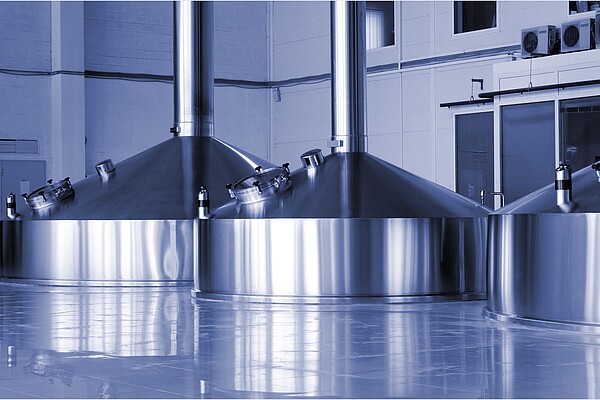
At the Budweiser Budvar brewery in the Czech Republic, Anton Paar’s Fermentation Monitor 5100 enables precise, real-time control of fermentation by measuring key parameters like extract, alcohol, and fermentation speed. Mounted via a Varivent® flange, it helps determine CO2 purity for reuse in beer carbonation. Within three years of installation, the brewery achieved a 20 % ROI from CO2 recovery, reduced the need for one to two lab operators, automated tank temperature control, and enabled remote data access – boosting efficiency and sustainability.
TAB Ensures Battery Quality with Anton Paar Sensors
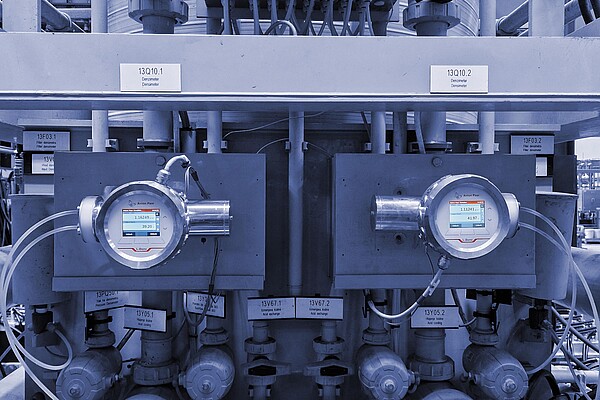
As a global leader in battery production, TAB has revolutionized its manufacturing process using Anton Paar’s L-Dens 7400 inline density meter. This cutting-edge sensor solved longstanding challenges with clogging and drifting readings, enabling fully automated, precise inline concentration measurement of electrolyte density during battery formation. The result: streamlined operations, higher product quality, and confident scale-up across multiple sites. For TAB, the sensor isn’t just a tool, it’s a competitive edge. As Technology Manager Rok Korošec puts it: “This is the Ferrari of density meters. If quality matters to you, this is what you want.”
Inline concentration measurement technologies
Anton Paar relies on advanced sensor technologies to ensure highly accurate real-time monitoring of liquid composition.
Depending on the fluid being measured, Anton Paar experts select the best technology for your inline concentration measurement. For specific applications, such as three-component mixtures, a combination of different sensor technologies is used.
Density measurement
Process density and concentration measurement based on the vibrating U-tube principle is a proven technology, trusted for decades across a wide range of industries. In this method, the liquid flows through a U-shaped measuring tube that vibrates at its natural frequency. As the mass of the liquid changes, so does the frequency, directly indicating the liquid’s density.
A primary application of this technique is concentration determination. Since a fluid’s density often varies significantly with concentration, the method enables highly accurate and stable measurements, even under changing process conditions or when using aggressive liquids in harsh environments. In addition, density sensors can identify products, detect interfaces, and convert between volume and mass flow. The modular, maintenance-free design allows for easy integration into any process system, whether inline, in bypass loops, or in tanks.
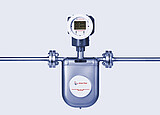
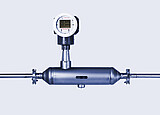
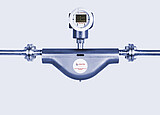
As an alternative, Coriolis flow meters can be used to determine the density or concentration of liquids. While their density accuracy is lower compared to more precise U-tube oscillators, Coriolis flow meters offer a distinct advantage by providing real-time mass- or volume flow data. This makes them a valuable choice for applications where flow and density or concentration information are required in one single device, offering robust performance across a wide range of process conditions including highly viscous or particle-laden liquids.
Sound velocity sensors
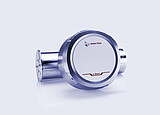
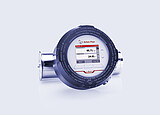
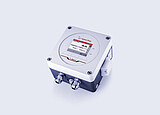
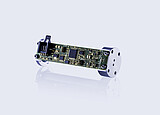
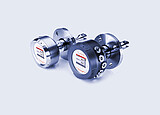
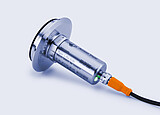
Sound velocity sensors determine the speed of sound in liquids by measuring the travel time of sound waves through the media. Because sound velocity changes with liquid composition or concentration, this proven technology allows for continuous, real-time monitoring directly in the pipeline or tank – without process interruption or limitations.
Sound velocity sensors are widely used in processes involving strong acids (e.g., H2SO4), alkalis (e.g., KOH), oil–water mixtures such as rolling oil emulsions, or sugar-based liquids like hot wort and syrups. With exceptional chemical resistance and accuracy, these inline sensors deliver maintenance-free, 24/7 operation, even under the harshest conditions.
Refractometry
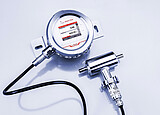
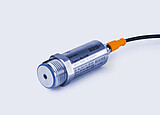
Refractometry measures the refractive index (RI) of a liquid to determine its concentration. As light passes through a sample, it bends depending on the liquid's composition. This method is widely used in the food, beverage, and pharmaceutical industries – for example, to measure °Brix in juices, sugar content in syrups, or solvent concentrations. It is highly accurate for clear liquids and integrates easily into process control

Combined methods
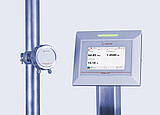
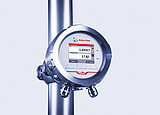
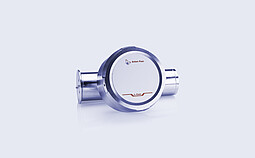
For three-component mixtures, combined measurement methods are used to determine the concentrations of all components. By analyzing multiple physical properties simultaneously, these systems provide accurate and reliable results even in complex mixtures. Available sensor solutions integrate different methods into one instrument – such as density and sound-velocity measurement. Common applications include chemical blending, cleaning solutions, and process control in the pharmaceutical and food industries.
Conductivity
Conductivity sensors measure the electrical conductivity of dissolved ions of a liquid to determine concentration. When combined with other sensor technologies, they can be used to resolve three-component mixtures. However, they have several drawbacks, including cross-sensitivity – which limits selectivity – reversal points in the concentration curve, and slow temperature measurements due to sensor coatings.
Ready to enhance your process with Anton Paar’s industry-leading solutions?