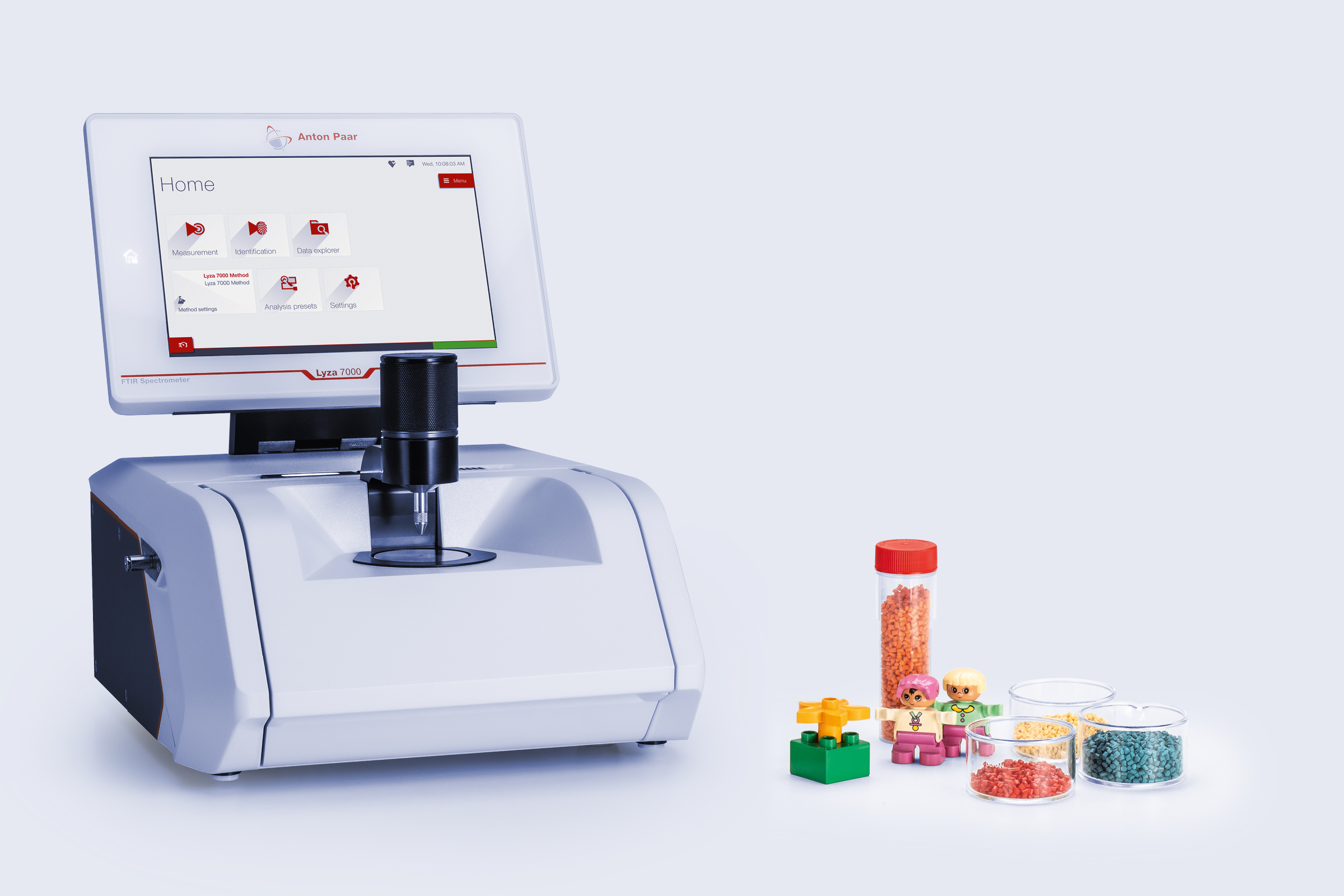
Polymer analysis should keep production moving, not slow it down in the lab.
Anton Paar’s Lyza series FTIR plastic analyzer enables fast polymer identification and dependable plastics quality control for polymer manufacturers, compounders, master-batchers, converters, and recyclers.
With the Lyza series plastic analyzer, you can match spectra to your libraries for clear pass/fail decisions, verify identity and composition, and detect contamination early to accelerate release and ensure quality at every step. To ensure consistent results with minimal training, Lyza 7000 features intuitive embedded software that guides users from measurement to result.
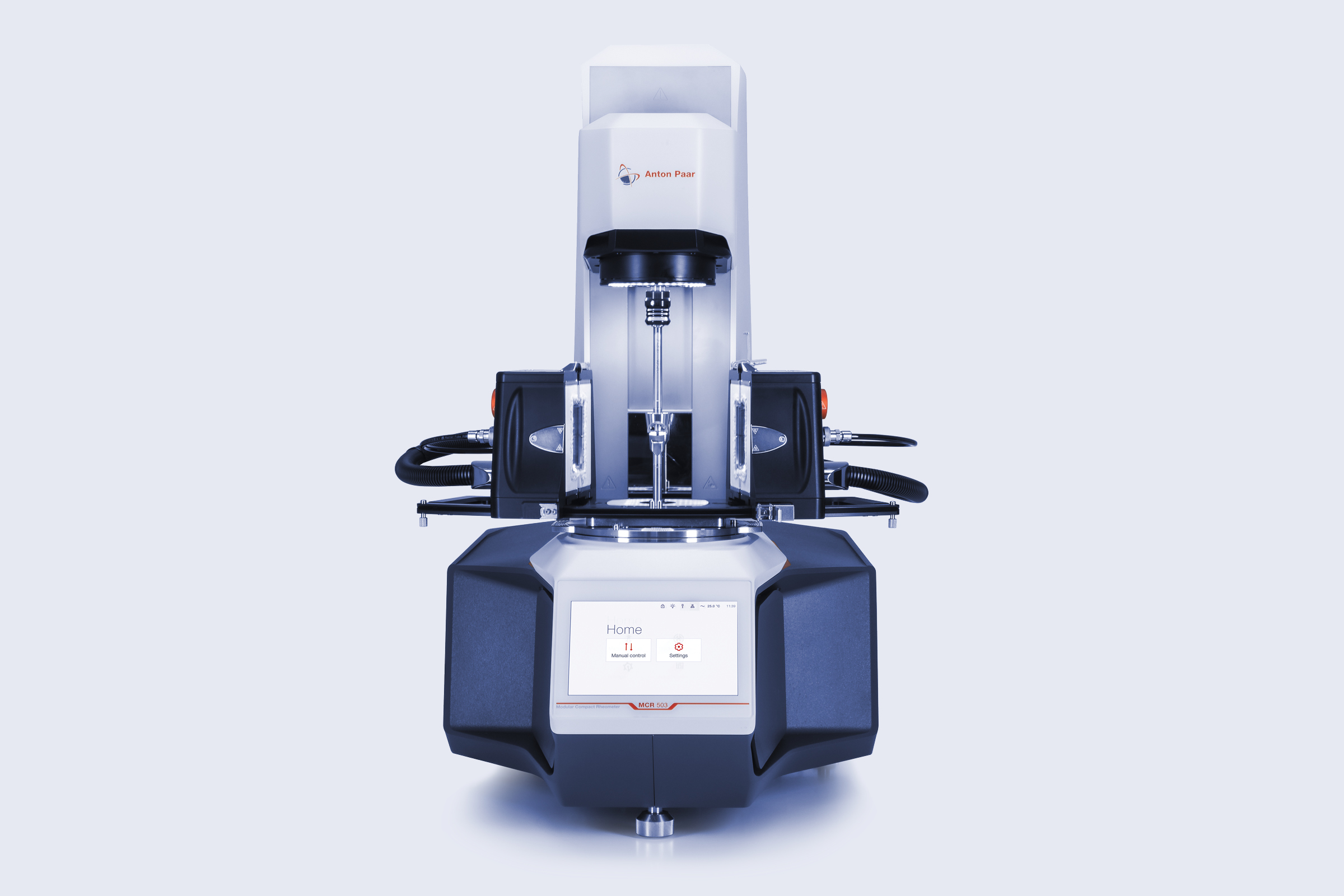
For broader plastic analysis, Anton Paar also offers a range of complementary solutions beyond the Lyza series FTIR plastic analyzer – from differential scanning calorimeters and rheometers to gas pycnometers.
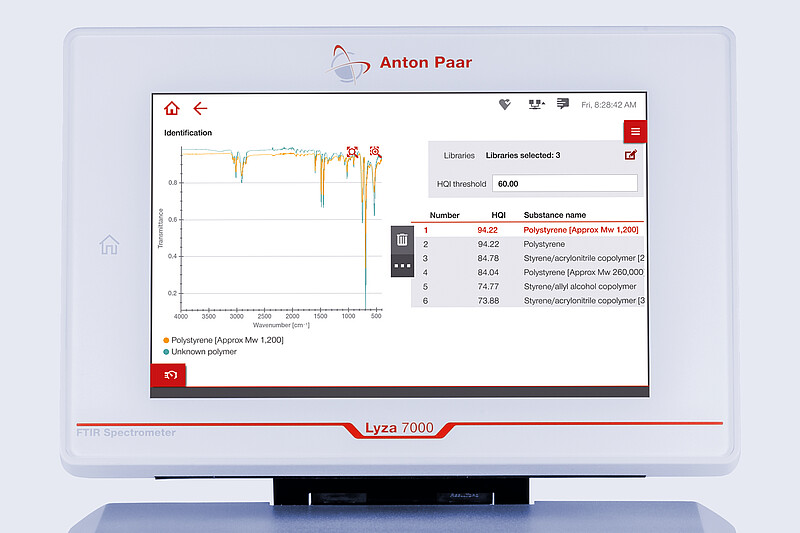
The Lyza series plastic analyzer identifies polymers quickly by reading each material’s unique IR fingerprint.
Place a film, pellet, or powder on the ATR cell, measure within seconds, and match the spectrum to a library to confirm the polymer and uncover mix-ups.
With a guided identification workflow, new users can be trained in minutes to produce reliable results.
Plastics verification
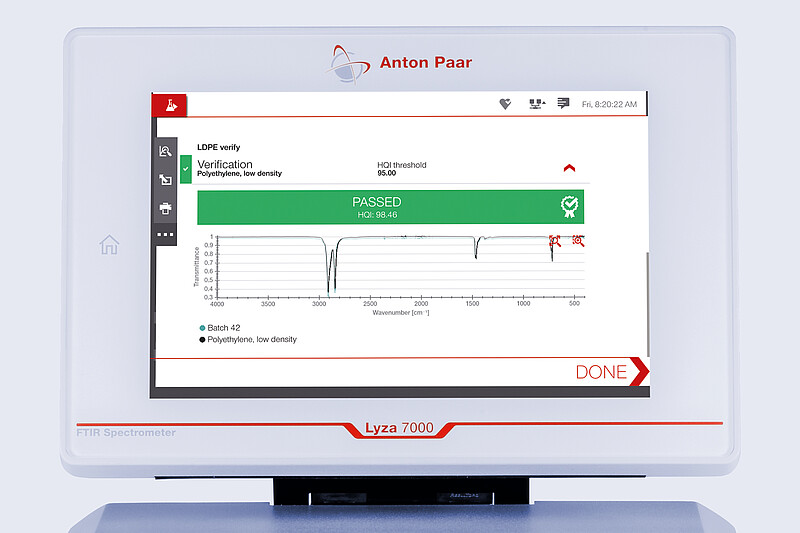
Verification confirms that incoming materials and finished parts meet your specifications.
Compare the measured spectrum with an approved reference to run clear pass/fail checks and identify off-grade batches, incorrect additives and fillers, oxidation, or contamination early. In under a minute, the built-in HQI algorithm compares the match automatically and delivers a pass/fail decision.
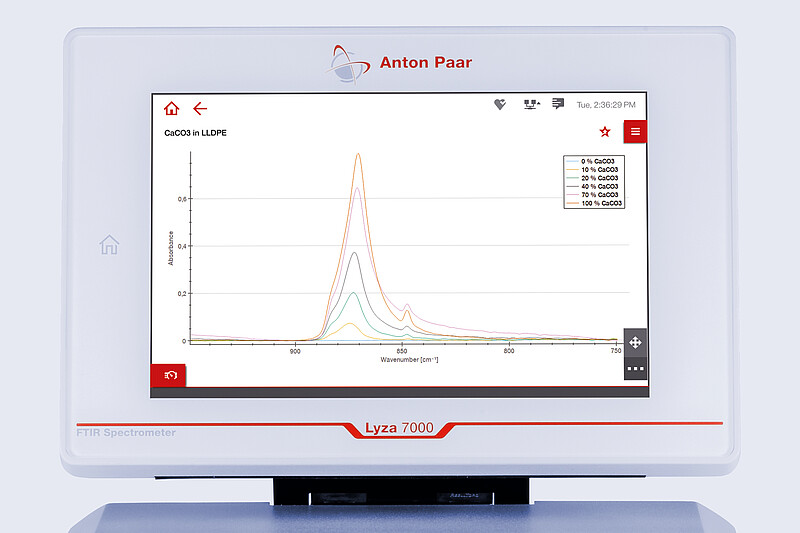
Create a calibration once, then apply it routinely to new samples to reduce operator influence and speed up results. This supports formulation and recipe development by verifying composition against targets and enabling confident adjustments.
Three reasons to use an FTIR plastic analyzer
Consistent plastics QC
Lyza series offers streamlined plastics quality control with clear pass/fail results using guided workflows. Verify incoming raw materials and monitor batches with reduced operator influence. To ensure repeatable results, Anton Paar offers a 15-year warranty on the IR source, laser, and interferometer.
No sample preparation
FTIR with attenuated total reflectance (ATR) is essential in the polymer industry as it delivers fast results with no sample preparation for solids, liquids, and powders.
The right library for you
Use the Anton Paar factory libraries for polymer identification of common polymers, plasticizers, and UV/ClO2-degraded plastics, build your own references, or purchase an extended spectra database for more polymers, additives, and specific materials.
Ready for the next step? Discover product highlights, application examples, and instrument options on the Lyza series FTIR plastic analyzer product page.
Dynamic mechanical analysis (DMA) is a key technique in polymer characterization, measuring mechanical properties as a function of temperature, time, and frequency. In the polymer industry, it evaluates viscoelastic behavior and reveals processing effects on end-use performance. DMA determines glass transition (Tg), secondary transitions, curing, crystallization, orientation, and filler effects. Analysis of force, displacement, and phase shift delivers values for storage modulus, loss modulus, and tan δ, for advanced material insights.
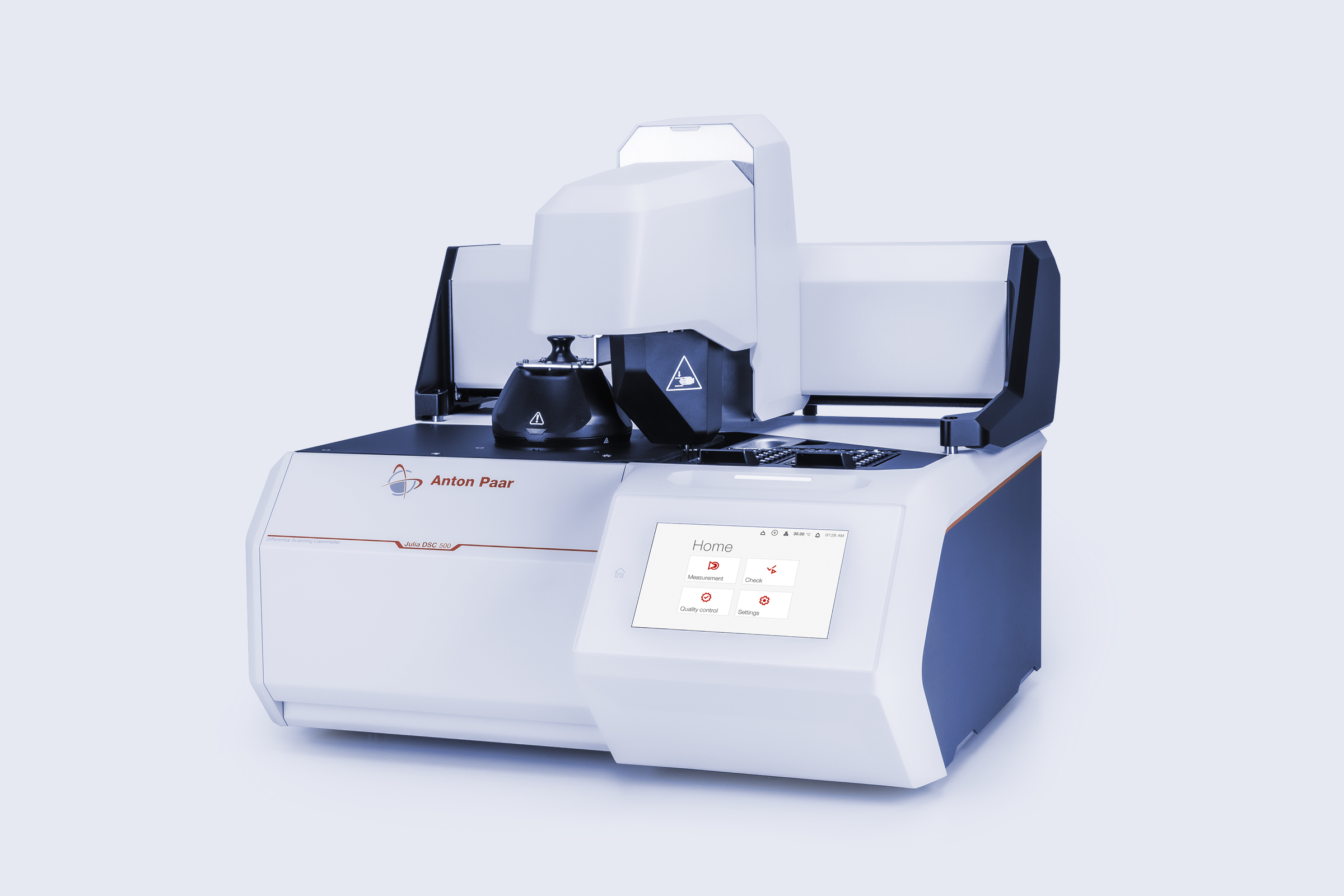
Differential scanning calorimetry: Julia DSC series
Differential scanning calorimetry (DSC) is a key technique in polymer characterization, measuring temperatures and heat flows linked to thermal transitions. In the polymer industry, DSC supports material selection, formulation development, quality control, and process optimization. It determines glass transition (Tg), melting and crystallization characteristics, and curing behavior and cure kinetics, as well as thermal and oxidative stability. These insights are essential for defining processing windows and ensuring consistent product performance.
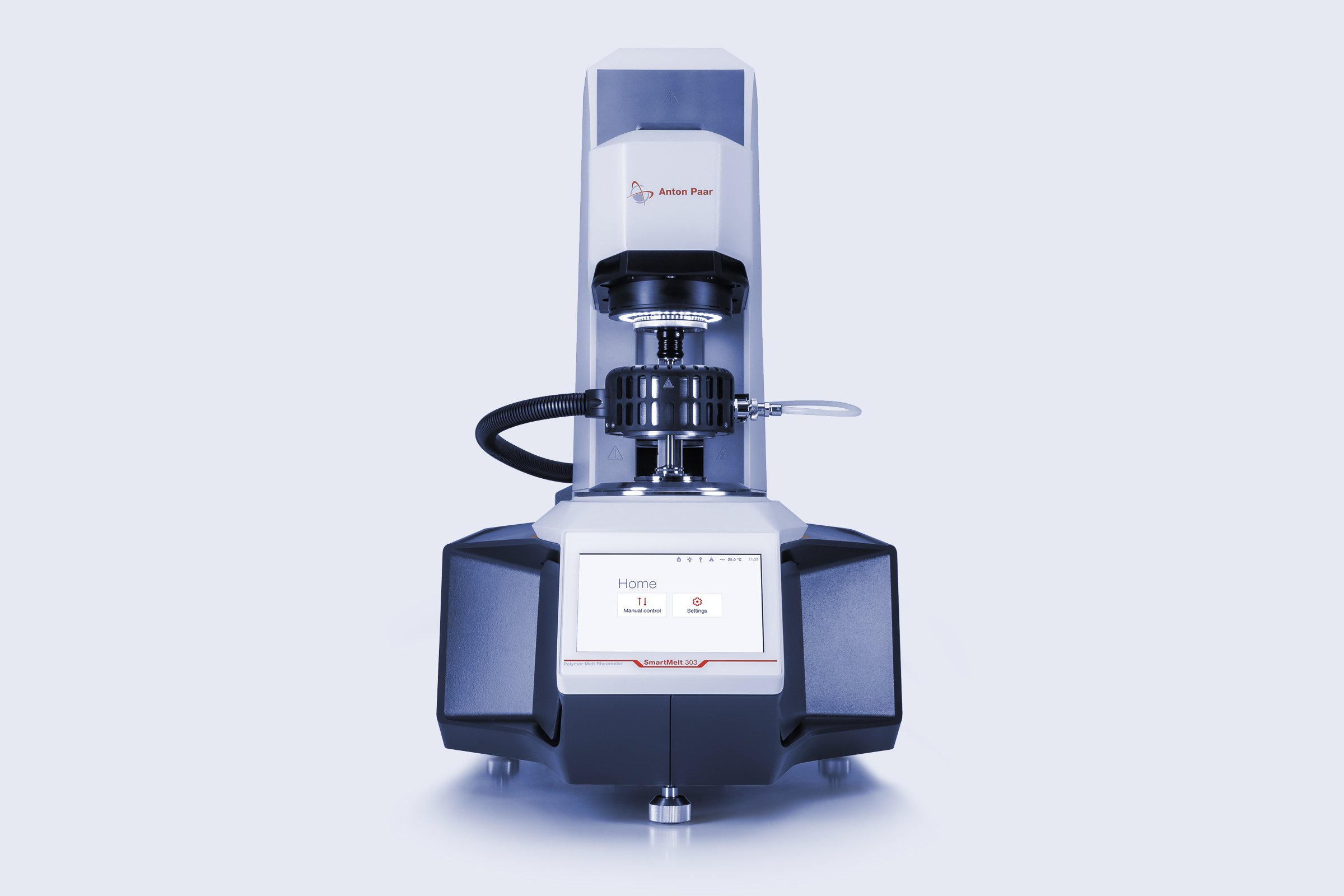
Polymer melt rheology is a key technique in polymer characterization. It involves analysis of the viscoelastic flow behavior of polymer melts under shear and dynamic deformation. In the polymer industry, polymer melt rheology supports material development, formulation, quality control, and process optimization. It determines viscosity, shear thinning behavior, melt elasticity, yield stress, and viscoelastic properties such as storage and loss modulus, helping define processing windows and predict extrusion and injection molding performance.
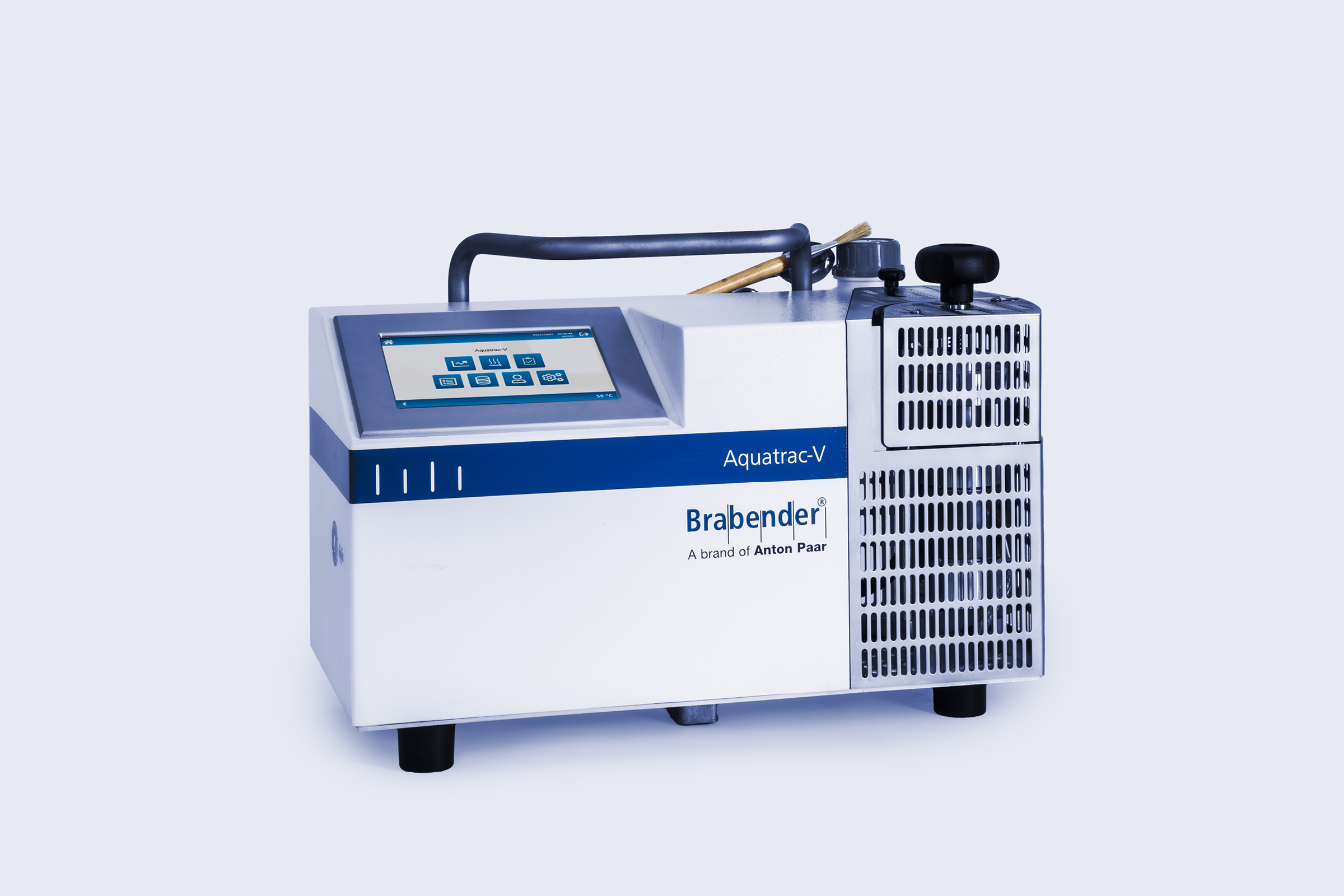
Moisture content in plastic pellets must be tightly controlled to ensure high-quality polymer processing. Proper moisture levels enable stable compounding and injection molding, smooth surface finishing, and optimization of mechanical properties of molded parts. Excess moisture can cause defects, degradation, and processing issues. Accurate, water-selective moisture determination using the calcium hydride method provides reliable quality control and supports consistent production performance. A plastic analyzer for moisture determination documents moisture levels prior to processing.
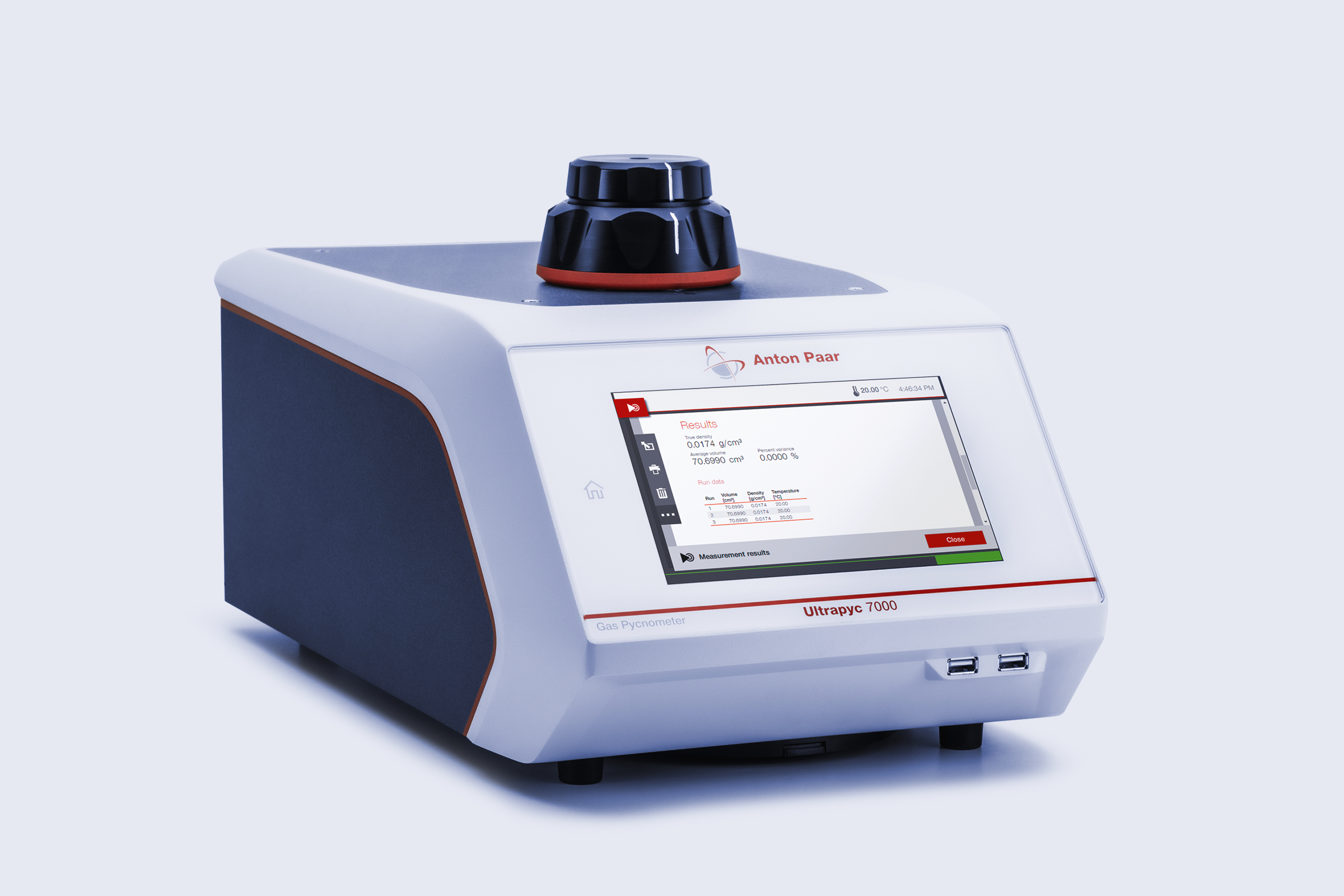
Density is a critical parameter in polymer production, impacting physical characteristics and mechanical performance. Even minor deviations can signal formulation or processing variations in crystallinity, porosity, and filler content. Gas pycnometry determines true (skeletal) density using nitrogen displacement, providing faster and more precise results than traditional water displacement. It eliminates wetting errors, trapped air, and moisture absorption, ensuring reliable, reproducible quality control.
Do you need deeper insight into your plastic analyzer results? Visit our polymer characterization and polymer processing pages for practical guidance on measurement techniques and production workflows.
We use cookies on our website. Some of them are necessary (e.g. for the shopping cart), others help us make our online content better and easier for you over the long term via analysis, external media, and marketing services. We also use third-party cookies from providers in the USA like Google or Facebook if provided with your consent (Art. 49(1)(a) GDPR). Your data may be transferred to the USA which does not have a data protection level comparable to GDPR. In this case your data may potentially be accessed by US Authorities for surveillance purposes and you may not be able to exercise effective legal remedies. You can accept or reject all cookies by clicking on the respective button or define your cookie settings using the link "Customize your cookie settings".
If you reject all cookies, only technically required cookies will be used. You can also withdraw your consent at a later time by accessing the Cookie Settings.
Marketing cookies are used by third parties or publishers to show you personalized advertising. They do this by tracking which websites visitors go to.
Content from video platforms and social media platforms is blocked by default. If you accept cookies from external media, accessing these contents no longer requires giving manual consent.
After being informed of potential risks for my data (including transfer to the USA and potential access by US authorities) in the Cookie Banner and Privacy Policy I accept the cookies from US-providers.