Laboratory automation systems help R&D and QC teams handle growing sample volumes, stricter documentation requirements, and rising pressure to deliver results faster.

Anton Paar systems standardize sample preparation, measurement, cleaning, and data transfer, reducing manual effort and operator influence. The result: safer operation, higher throughput, reproducible and traceable data, and more time for your experts to focus on analysis, innovation, and product quality. 

Get in touch

Lab Automation by Anton Paar – Where Precision Meets Performance

  • Achieve highly reproducible and traceable results 
  • Improve lab safety and minimize human interaction with solvents or hazardous samples
  • Digitalize your lab and production – so you can focus on data analysis and modelling
  • Reduce time-to-market for new products – leave the competition behind
  • Benefit from global support and a three-year warranty

Key benefits of laboratory automation systems

Laboratory automation systems aren’t just about faster measurements. They help standardize critical workflows, reduce operational risk, improve data quality, and create the foundation for more efficient, connected, and scalable R&D and QC labs.

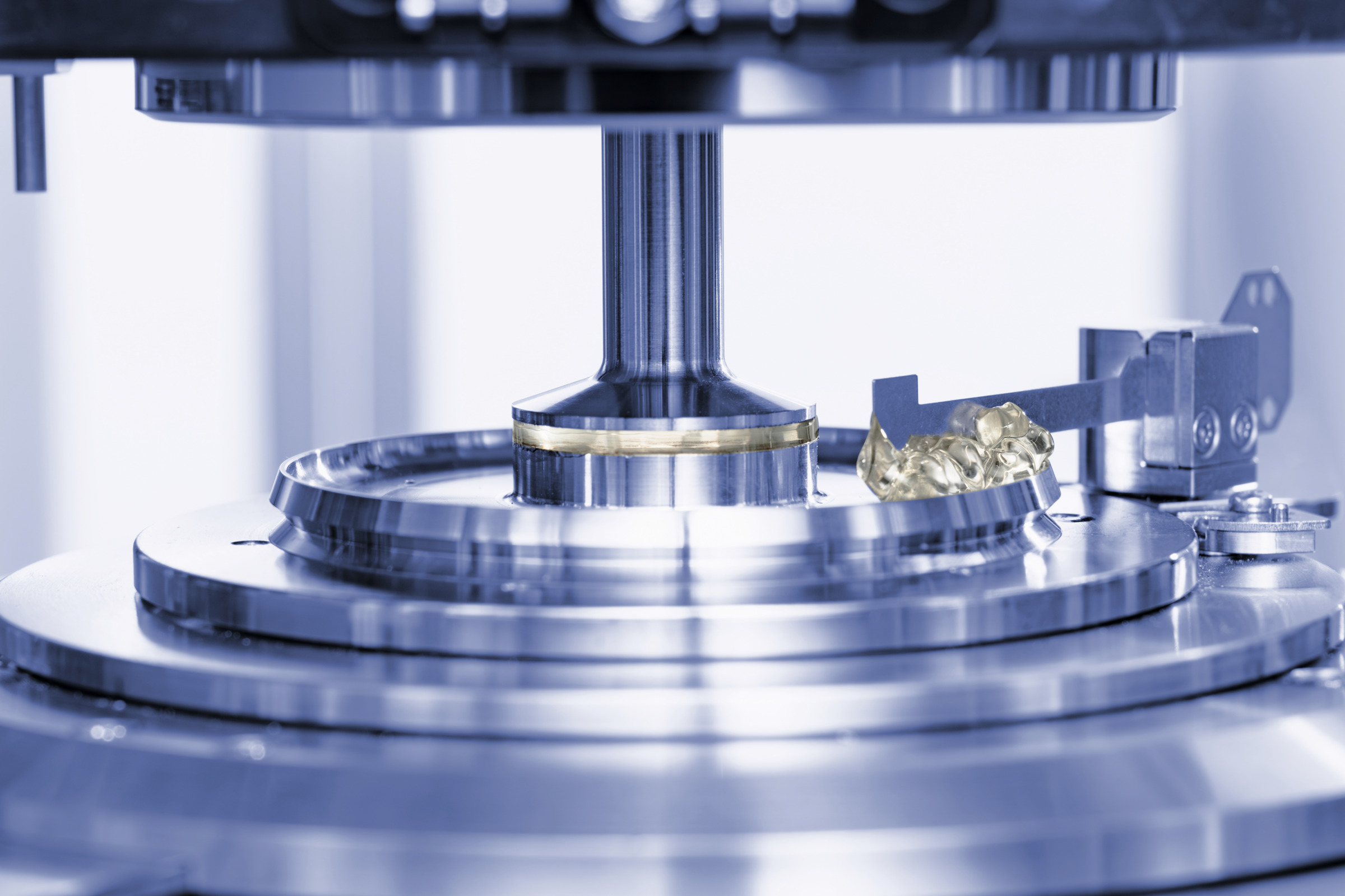
Close-up of Anton Paar HTR 7000 automated testing system measuring soft gel capsules with integrated compression fixture

Highly reproducible and fully traceable results

Laboratory automation systems reduce user-dependent variation and deliver highly repeatable results by standardizing workflows and sample handling – supporting consistent datasets for AI model training. End-to-end sample traceability, structured data capture, and full process transparency ensure compliance and enable consistent comparison of results across time, users, and locations. Optional bidirectional LIMS integration allows seamless data exchange and centralized data management. 

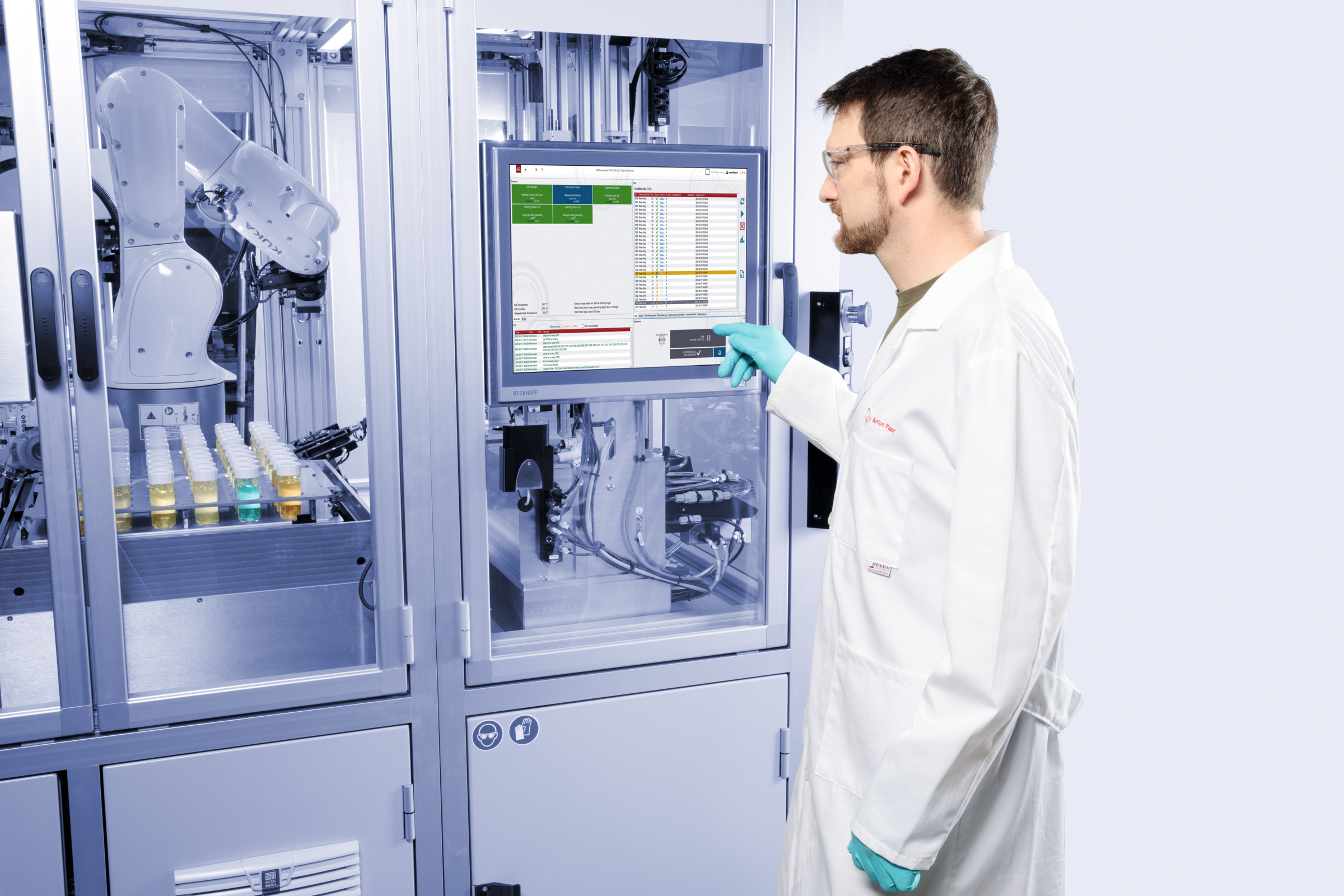
Laboratory technician operating Anton Paar HTR 7000 automated laboratory system with robotic arm and sample bottles in enclosed workspace

Improved lab safety with minimal human interaction

Minimize operator exposure to hazardous samples, solvents, and high-temperature components through automation and enclosed system design. Integrated safety features and automated cleaning reduce risk and human error while ensuring consistent operation. The result: safer, more reliable rheology with simplified handling and broader accessibility.


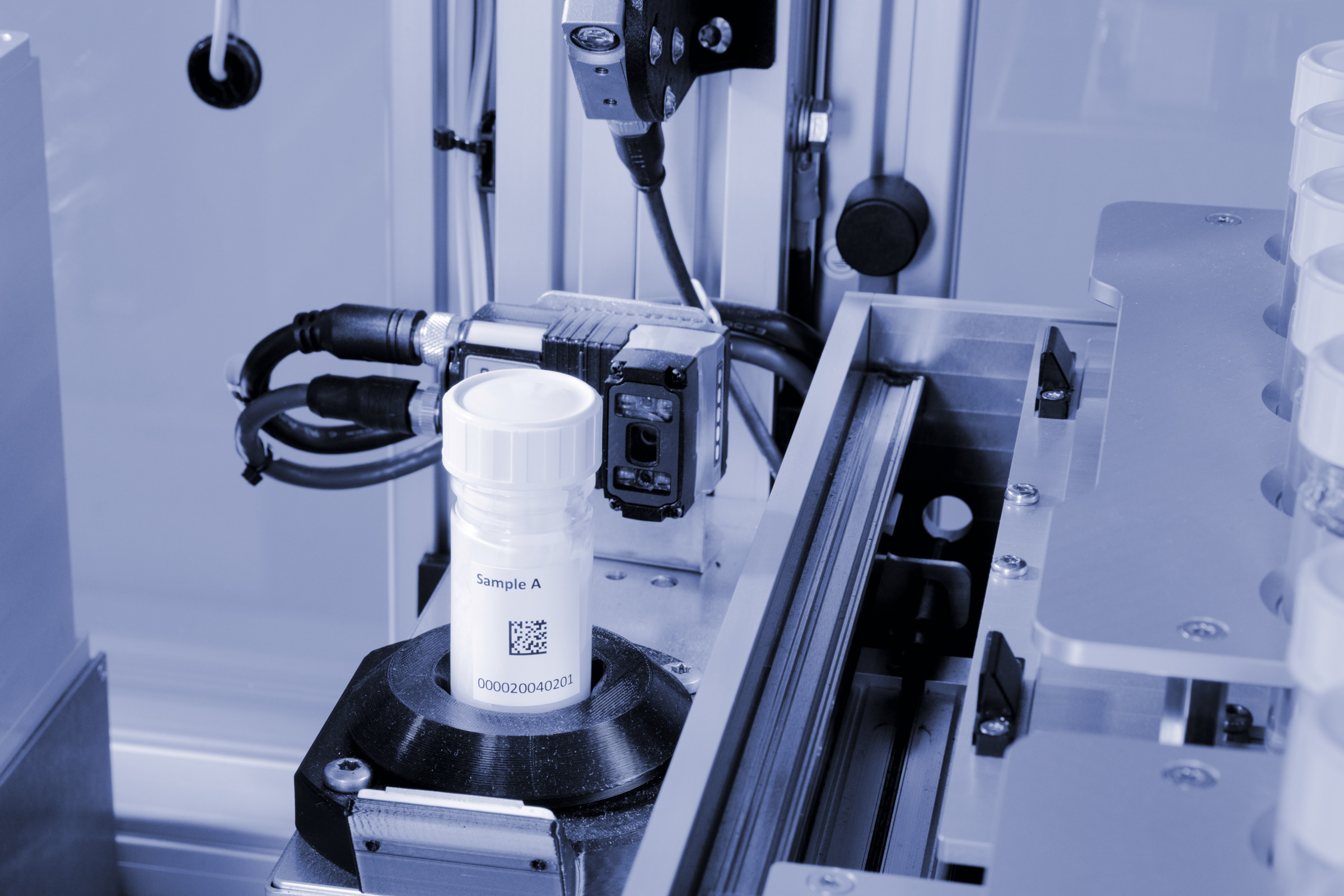
Close-up of Anton Paar HTR 7000 automated sample handling system scanning a labeled sample vial with barcode reader

Digitalize now: Unlock advanced data utilization

Unlock the full potential of your lab data with laboratory automation systems that enable automated data capture and seamless integration into your digital ecosystem. Centralized data access supports advanced analytics, modeling, and AI-driven insights together with high-quality data and high reproducibility, all of which accelerates decision-making and optimizes processes. Optional bidirectional LIMS integration enables continuous data exchange and synchronized data management across systems.

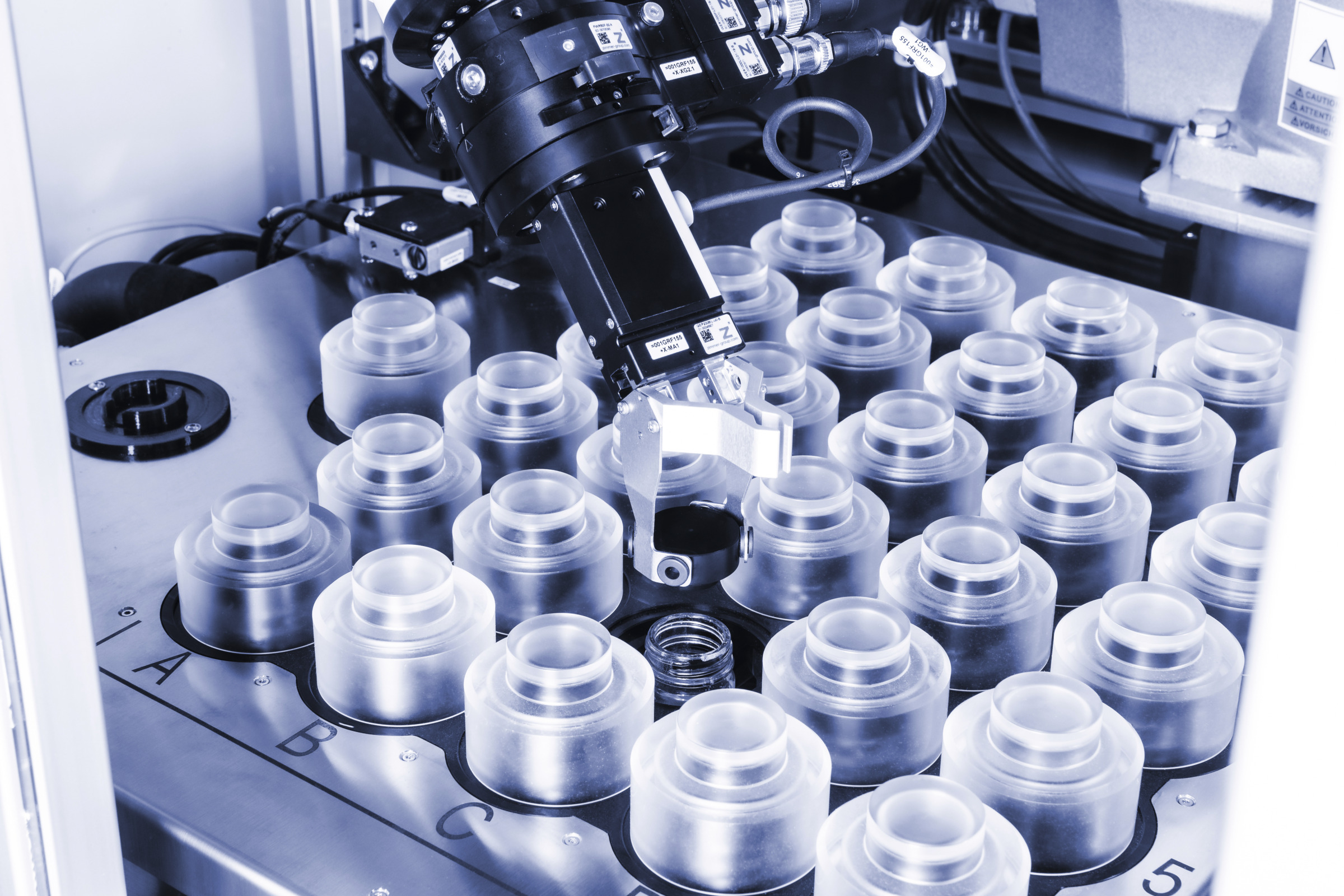
Close-up of Anton Paar HTR 7000 robotic gripper handling sample containers in an automated laboratory tray system

Accelerate time-to-market 

Increase throughput and efficiency with automated workflows, from sample preparation to measurement and cleaning, enabling true 24/7 operation. Faster, more reliable results enable quicker development cycles and help you stay ahead in competitive markets.

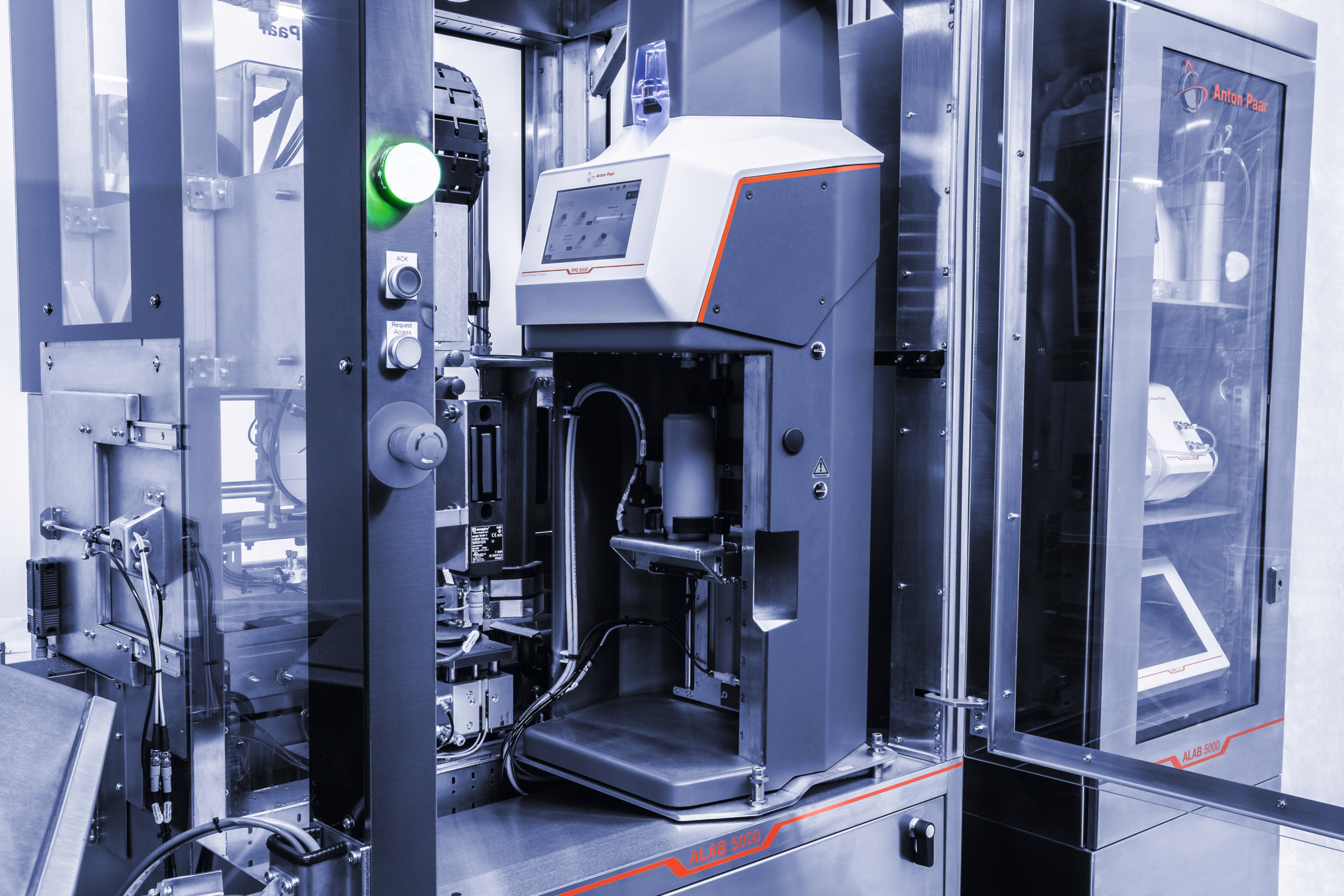
Anton Paar ALAB 5000 automated laboratory system with integrated analytical module and enclosed robotic sample handling area

Global support and long-term reliability

Anton Paar laboratory automation systems are backed by expert support throughout the entire automation journey, from workflow evaluation and system configuration to installation, training, and service. A global service network and long-term product reliability help ensure maximum uptime, consistent performance, and confidence in daily R&D and QC operations.

Laboratory automation systems for various applications

Across hazardous chemicals, personal care formulations, perishable foods, beverages, and coatings, each industry faces distinct automation challenges. Anton Paar laboratory automation systems combine safe sample handling, standardized preparation, automated cleaning, traceable data capture, and LIMS connectivity to support reliable workflows across diverse applications.

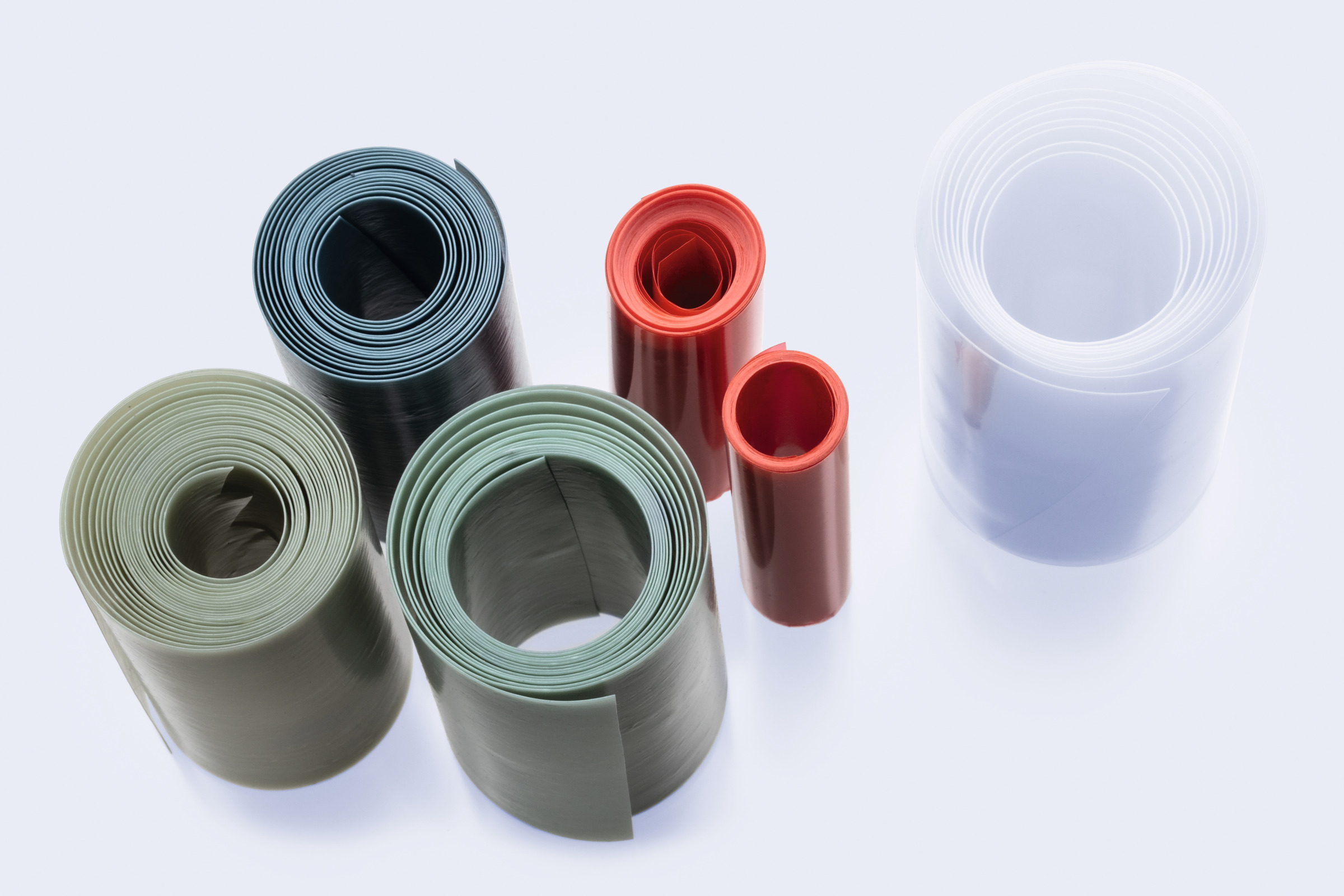
Rolled polymer and plastic film sheets in different colors and thicknesses arranged on a laboratory surface for material testing

Chemical industry

Chemical-industry samples span a wide range of materials, including adhesives, polymers, and agrochemicals. Some require additional safeguards due to their hazardous properties. Laboratory automation systems can reduce direct human interaction with these substances by standardizing handling steps within controlled workflows. 

Key features for these applications

  • Monitored ventilation to help protect operators 
  • Waste unit with integrated collection of sample waste and residues 
  • Advanced cleaning unit to support reliable, repeatable handling between samples 
  • Code reader for sample identification and tracking 
  • pH station for automated pH-related workflow steps 

Outcomes

  • Full traceability through end-to-end sample tracking
  • Improved operator safety through automated sample handling and advanced safety features
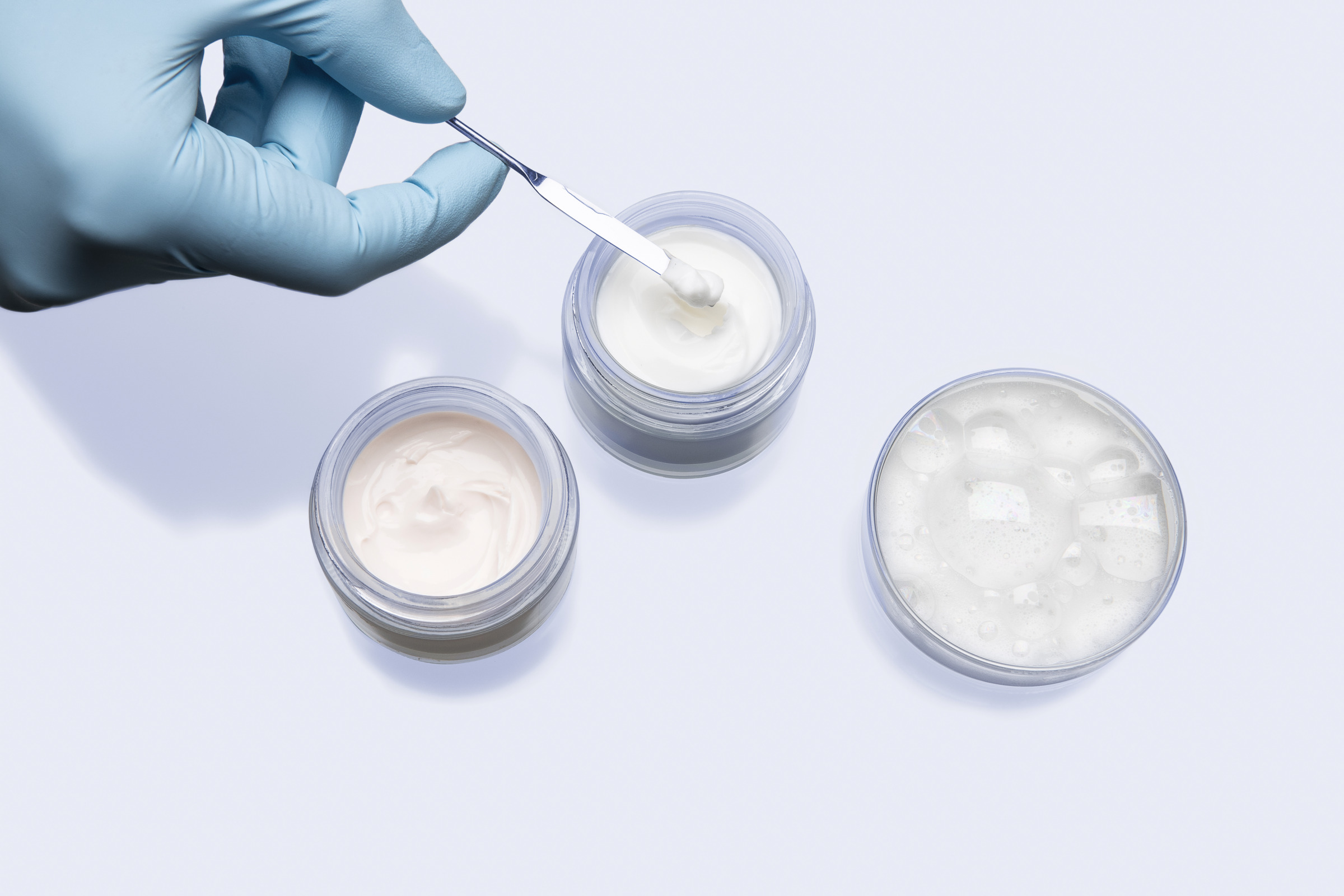
Gloved hand using a spatula to sample cosmetic cream from open jars beside a transparent gel container on a laboratory surface

Personal Care Industry

Personal care testing (e.g., shampoo, conditioner, toothpaste, and skin care) often involves high sample throughput during formulation, strong traceability requirements, and significant effort spent on repetitive cleaning. Laboratory automation helps standardize these tasks to support consistent datasets, including those used for AI model training. 

Key features for this application

  • Code reader for sample identification and tracking 
  • pH station for automated pH measurements
  • Drawer for high-priority samples to support fast handling of urgent runs 
  • LIMS connection for secure data exchange and documentation 

Outcomes

  • SOP-compliant sample preparation (e.g., homogenization) 
  • Reproducible, user-independent results through standardized trimming, dispensing, and cleaning routines 
  • End-to-end process and secure data integration into the customer’s data network (e.g., LIMS)
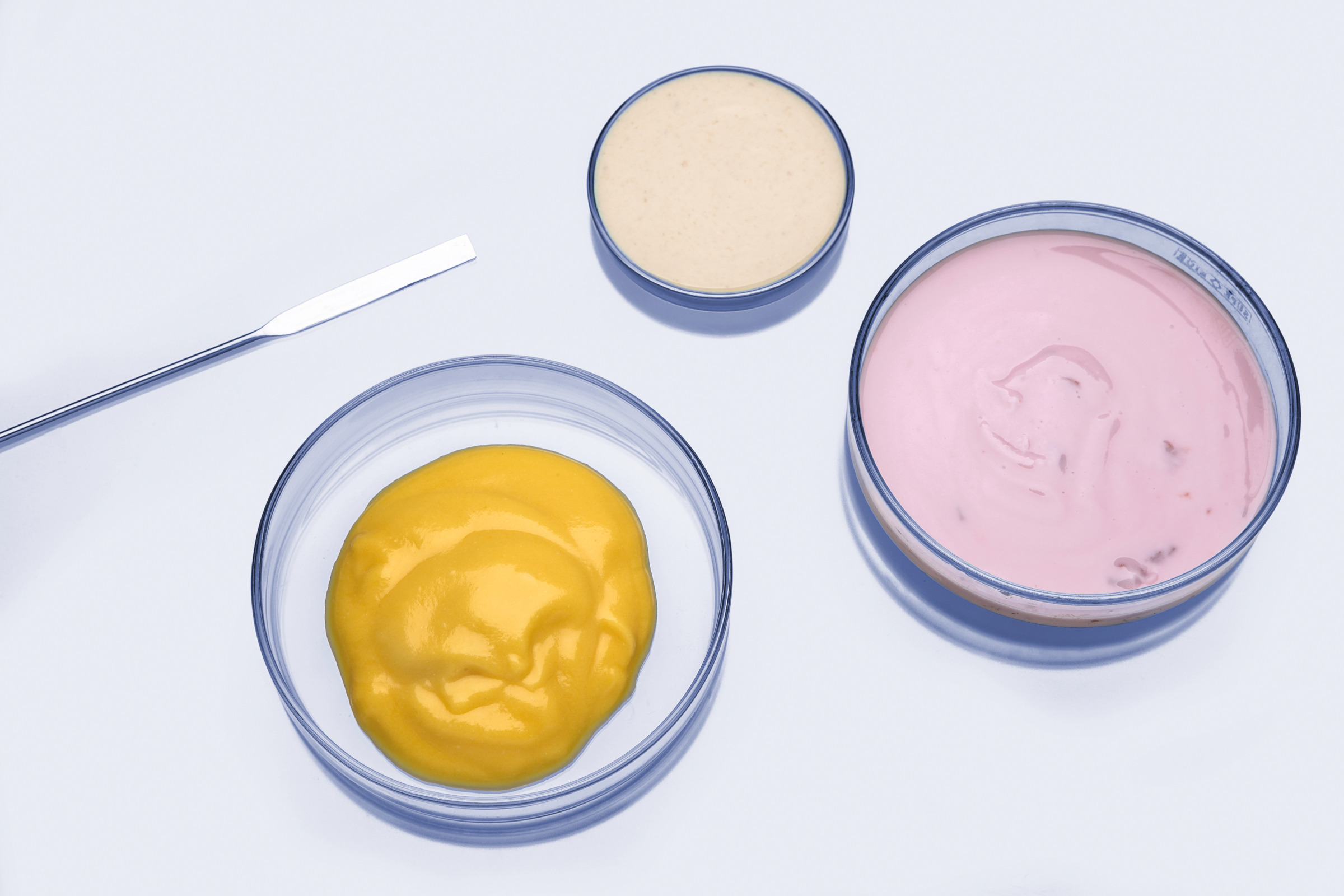
Petri dishes containing yellow, pink, and beige semi-solid food or cosmetic samples with a laboratory spatula on a clean surface

Food Industry

Food-industry samples cover a broad range of applications, including dairy, plant-based products, novel foods, chocolate, and sugar (e.g., beet sugar). Many of these materials are perishable and require controlled handling, especially during formulation development. Automated laboratory workflows help maintain consistent conditions and reduce the risk of sample degradation. 

Key features for these applications

  • Temperature-controlled rack to help protect perishable samples during storage and handling 
  • Advanced cleaning unit to support reliable results with hard-to-clean samples 
  • Code reader for sample identification and tracking 
  • pH station for automated pH-related steps 
  • LIMS connection to enable traceability and documentation 

Outcomes

  • Protection of sensitive samples through controlled storage conditions 
  • Improved robustness for challenging matrices through standardized, validated cleaning routines 
  • Full traceability of results through integration with LIMS systems
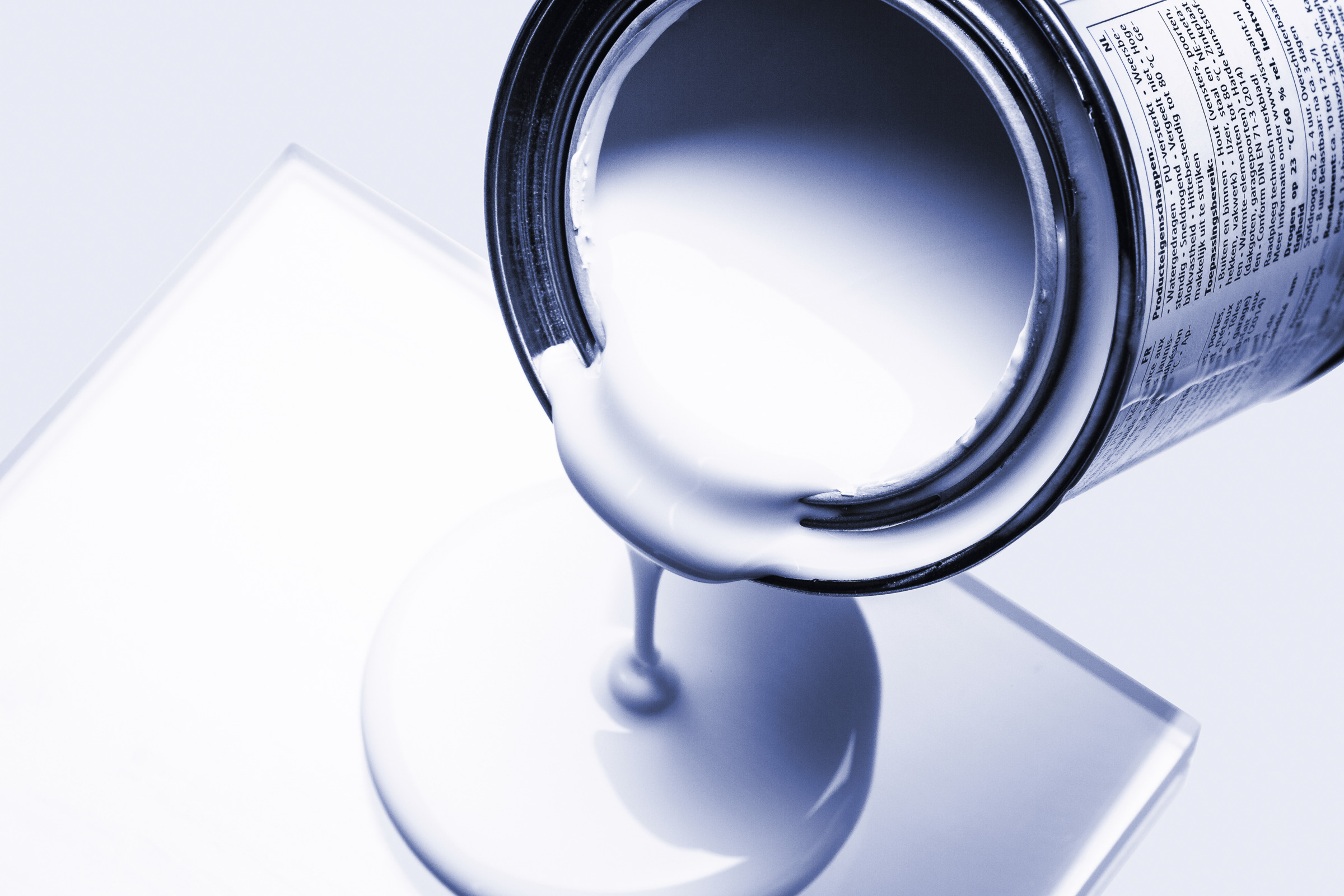
Close-up of white coating material pouring from an open container onto a flat surface during viscosity or formulation testing

Paints and Coatings

Samples from the paints and coatings industry cover a wide range of formulations, including varnishes and functional coatings. Many labs run high-throughput quality control to maintain consistent application performance, where deviations can lead to rework, scrap, and extensive documentation. Automated laboratory systems support reliable, repeatable measurements while reducing manual workload. 

Key features for these applications

  • Rheometer with temperature control unit 
  • Automated cleaning of rheometer measurement system

Outcomes

  • High-throughput testing of up to 20,000 samples per year (approximately 5–6 minutes per sample) 
  • Walkaway operation of more than eight hours, freeing up operator capacity for higher-value tasks 
  • Time and cost savings, particularly through reduced cleaning effort and improved process efficiency


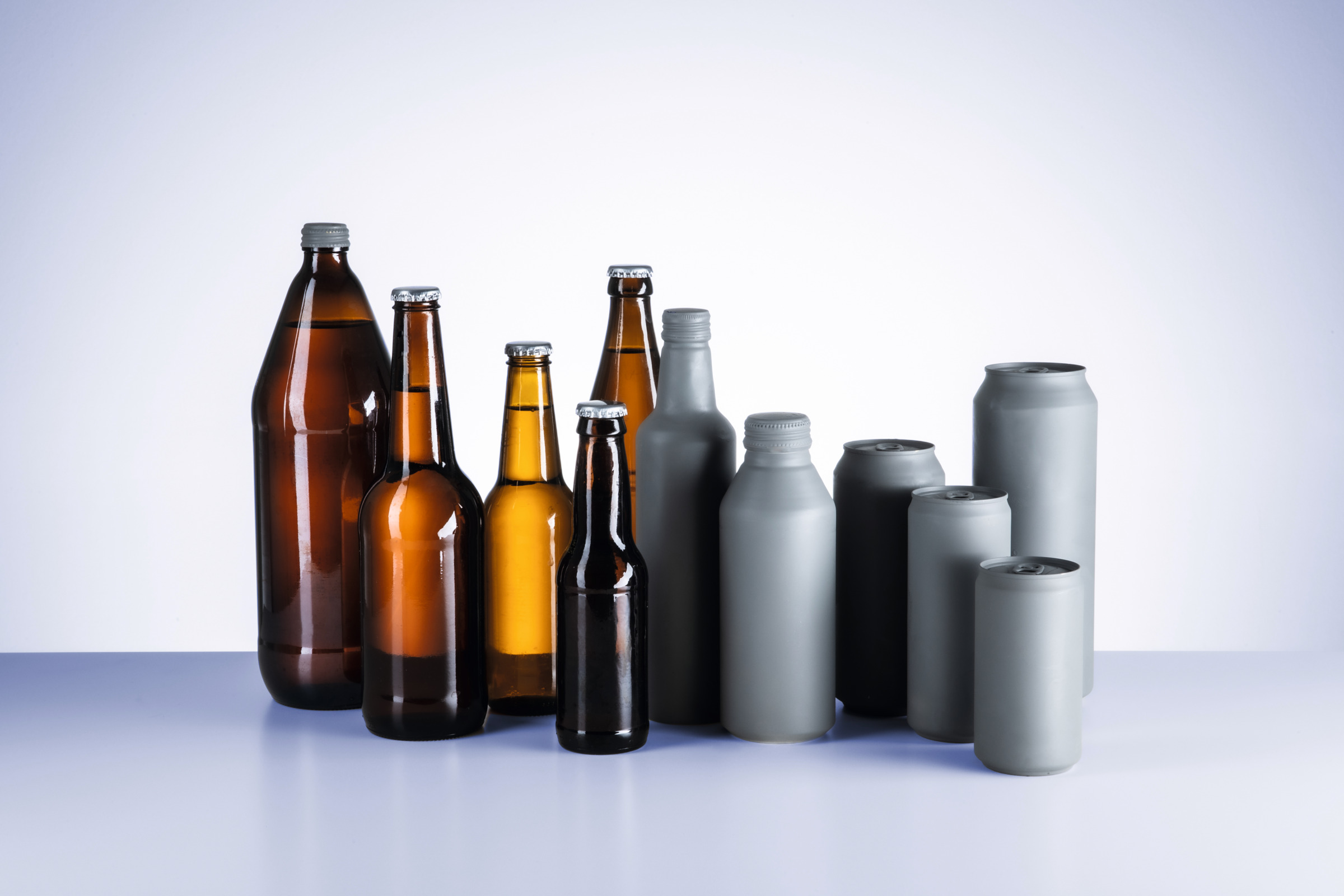
Assorted glass beer bottles and aluminum beverage cans arranged on a laboratory surface for automated container analysis with ALAB 5000

Beverage Industry

The beverage industry covers a broad spectrum of samples, including soft drinks, alcoholic beverages, and bottled water. These products require precise and consistent analysis to support product quality, taste stability, and regulatory compliance. With strict quality standards and high throughput, automation supports reliable, efficient QC workflows.

Outcomes

  • Real-time results at the production line help prevent costly out-of-specification production
  • Standardized sample preparation reduces operator influence and supports precise, reproducible gas analysis for parameters such as TPO and CO₂
  • Simplified routine checks reduce reliance on specialized QC teams, enabling trained production staff to respond quickly to deviations

Automated Solutions for the Laboratory

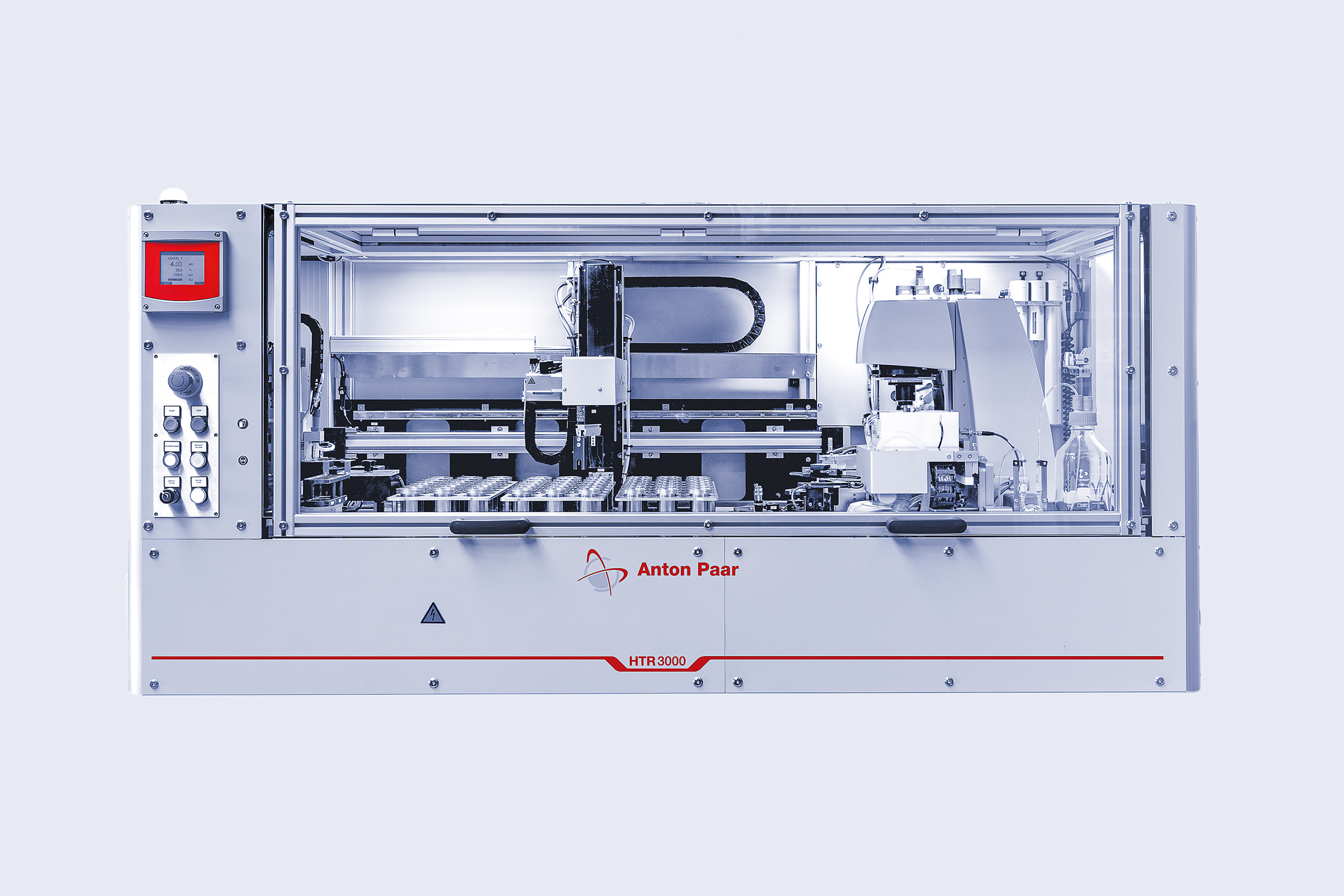
Anton Paar HTR 3000 automated laboratory system with robotic sample handling, vial trays, and integrated analytical modules

HTR 3000

HTR 3000 is a fully automated rheometer system designed for high-throughput rheological measurements using Anton Paar’s MCR series. It processes up to 250 samples per day, eliminating multiple manual steps to maximize repeatability, productivity, and safety. The system is optimized for concentric cylinder and related geometries, enabling standardized, efficient, and low-interaction operation.

Learn more

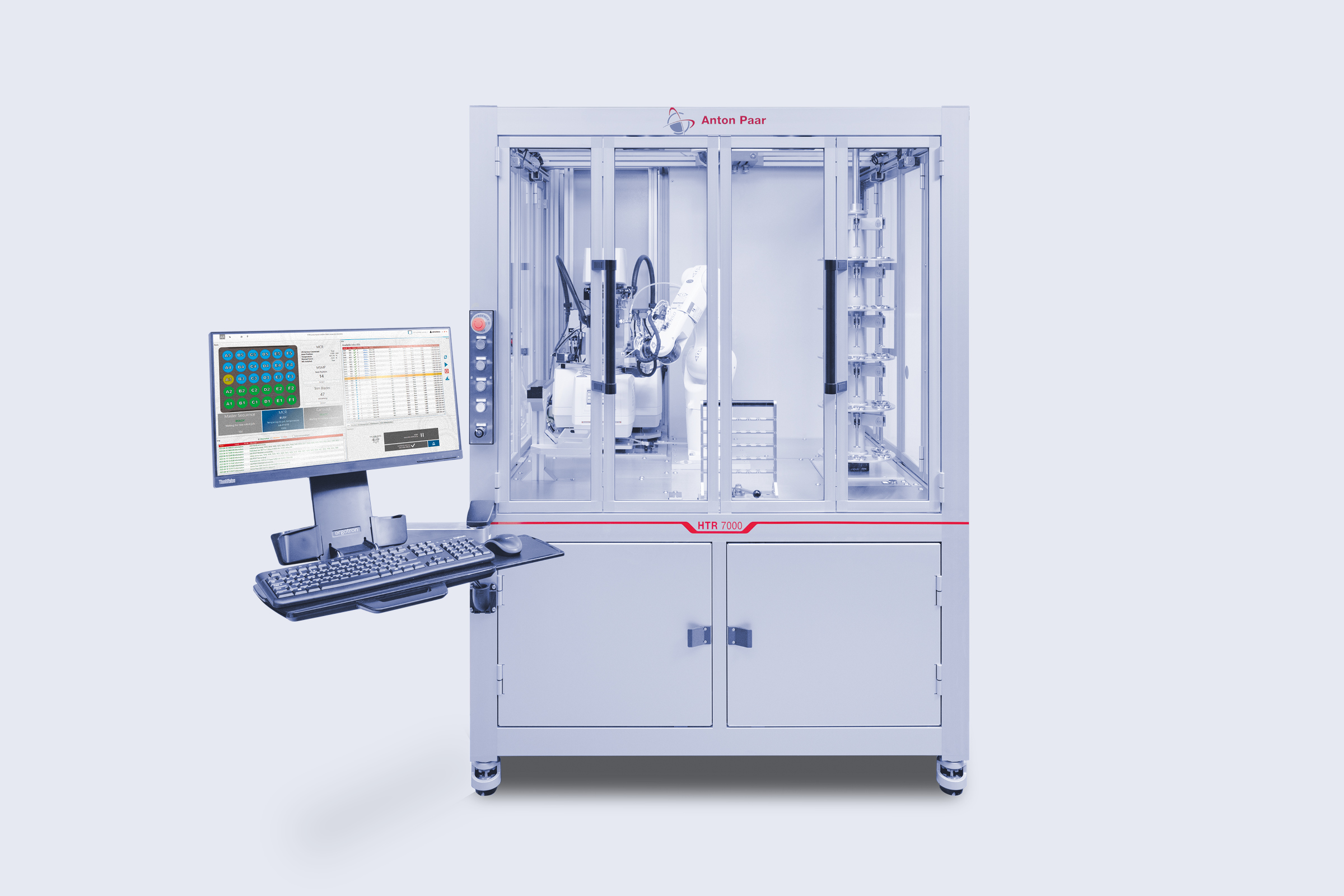
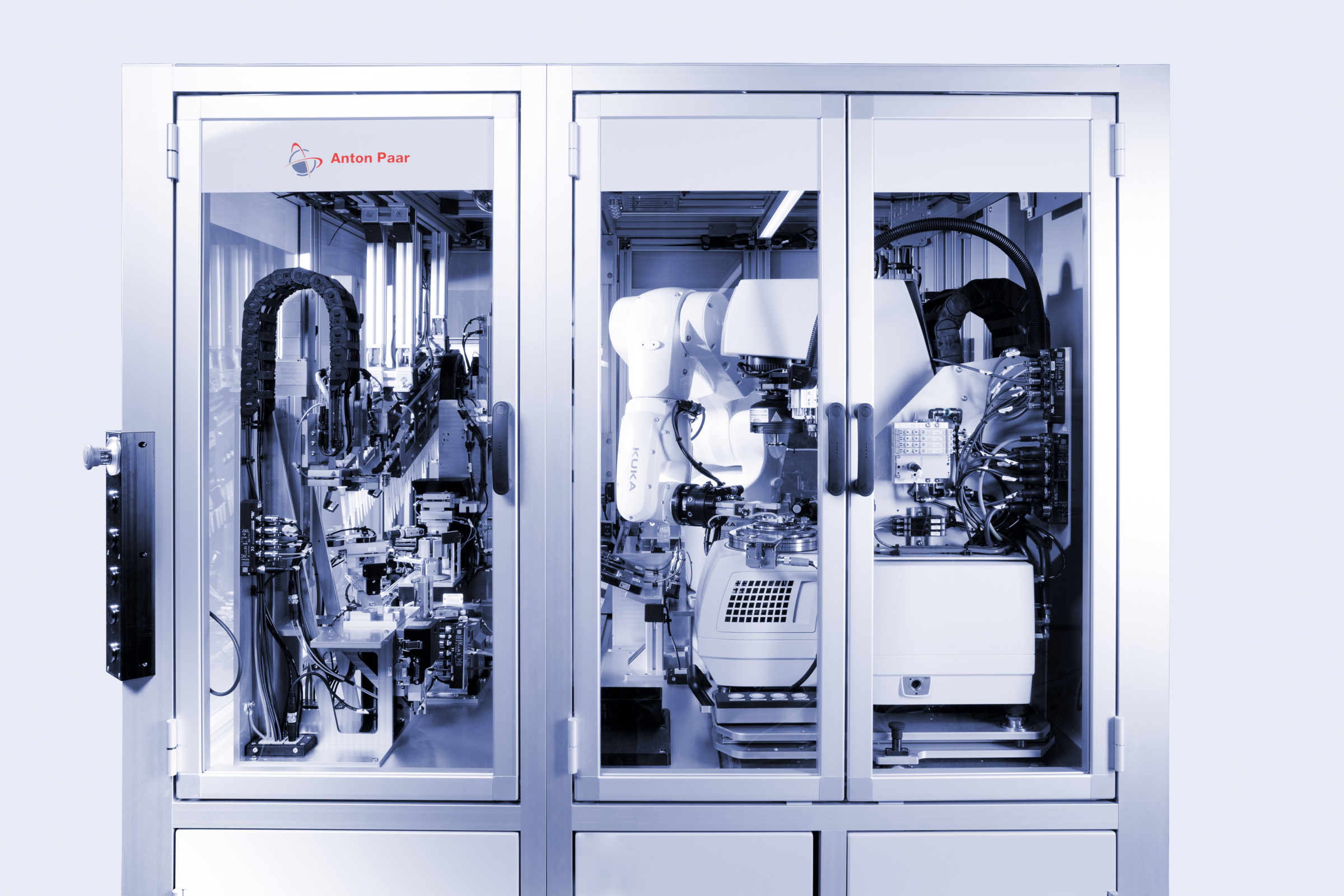
Anton Paar HTR 7000 automated laboratory system with robotic arm, enclosed sample handling modules, and integrated analytical instrumentation

HTR 7000

HTR 7000 is an automated rheometer platform designed for fully traceable measurements of solid, paste-like, and low-viscosity samples using plate-plate and cone-plate geometries. It integrates automated sample loading, trimming, positioning, and cleaning, supporting up to two rheometers in parallel. The system accommodates complex sample handling workflows and configurable modules such as temperature-controlled racks and cleaning stations, enabling precise, reproducible rheological characterization across diverse sample types.

Learn more

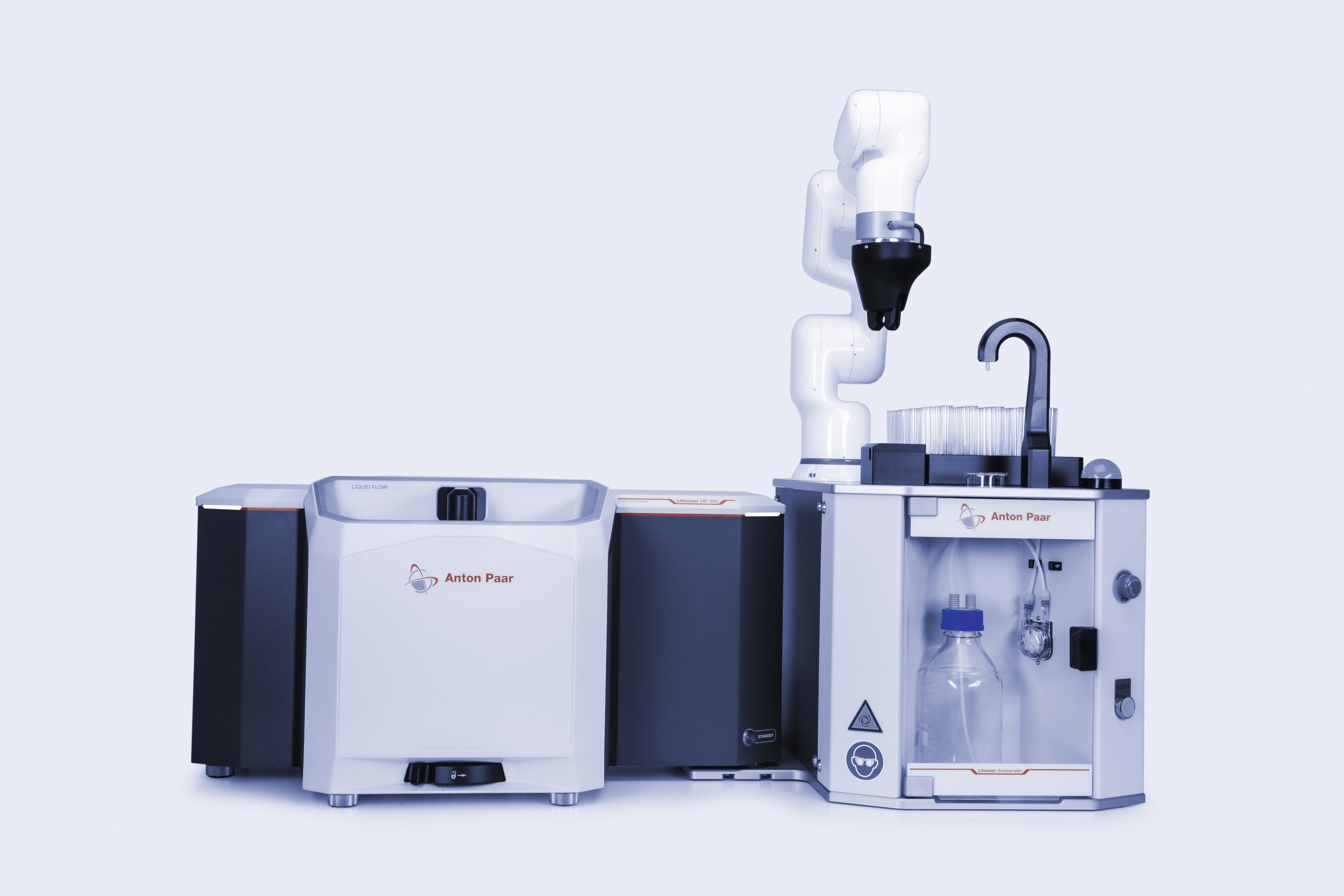
Anton Paar Litesizer DIF 500 with Litesizer Autosampler and robotic arm for automated liquid sample preparation and analysis

COBOT Series

Anton Paar’s Cobot solutions integrate collaborative robotic automation with analytical instruments to enable standardized sample handling and measurement workflows. The systems support automated sample loading, transfer, and preparation for liquid and solid samples, and are available for various instrument types. Typical applications include environmental samples, as well as samples from the mining, pharmaceutical, and life-science industry.

Litesizer Autosampler

Litesizer Cuvette Sampler

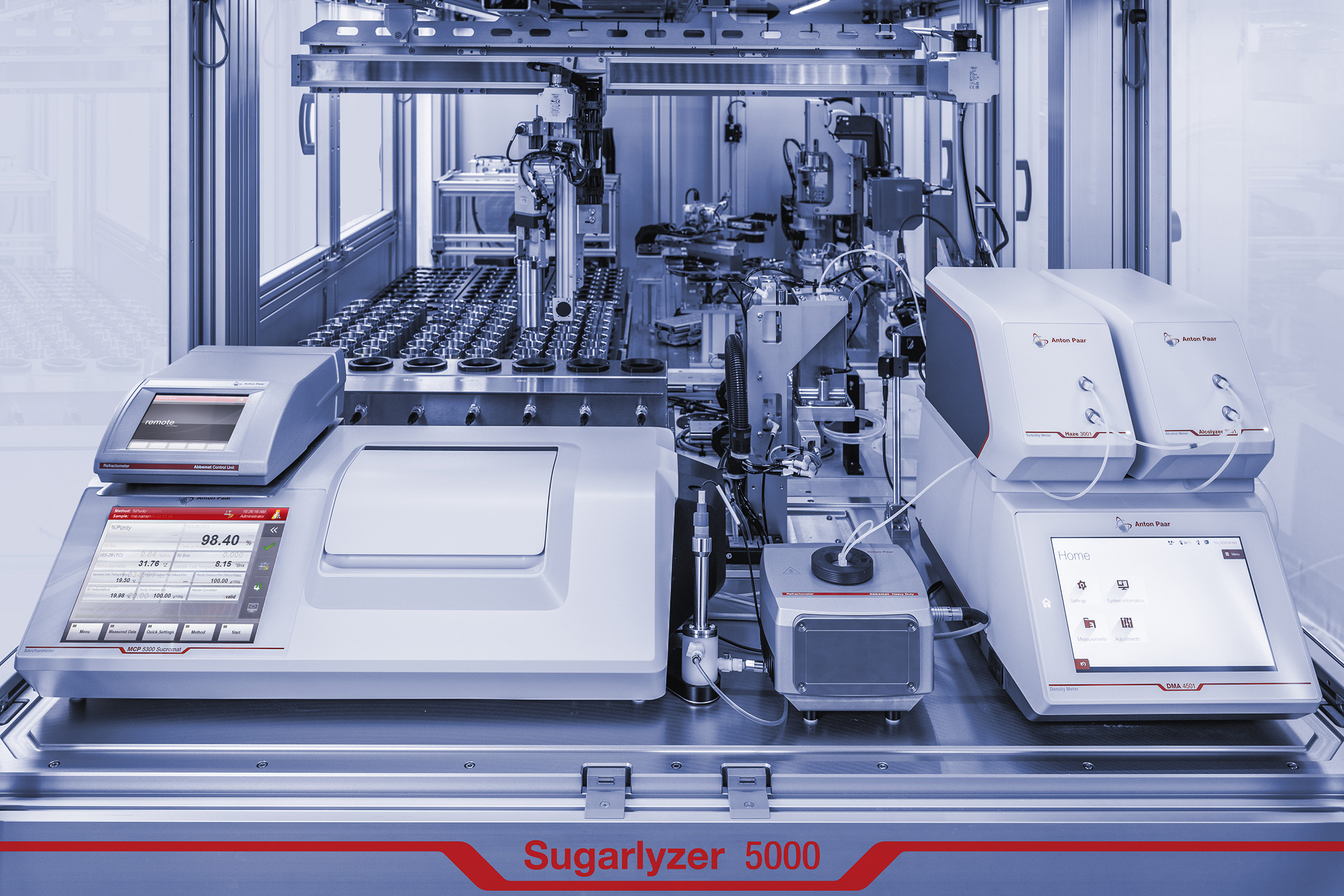
Anton Paar Sugarlyzer 5000 with MCP 5300 Saccharomat, DMA 4501, Xsample 3300, and Abbemat refractometer in an automated laboratory system

Sugarlyzer 5000

Sugarlyzer 5000 is a fully automated lab analysis solution for the sugar industry combining sample preparation, high-precision measurement, and data handling in a single platform. It unifies multiple analytical instruments to process liquid, syrup, molasses, and crystalline sugar samples. The system executes predefined SOPs, including dilution, clarification, filtration, and temperature control, ensuring standardized and traceable results.
 

Learn more

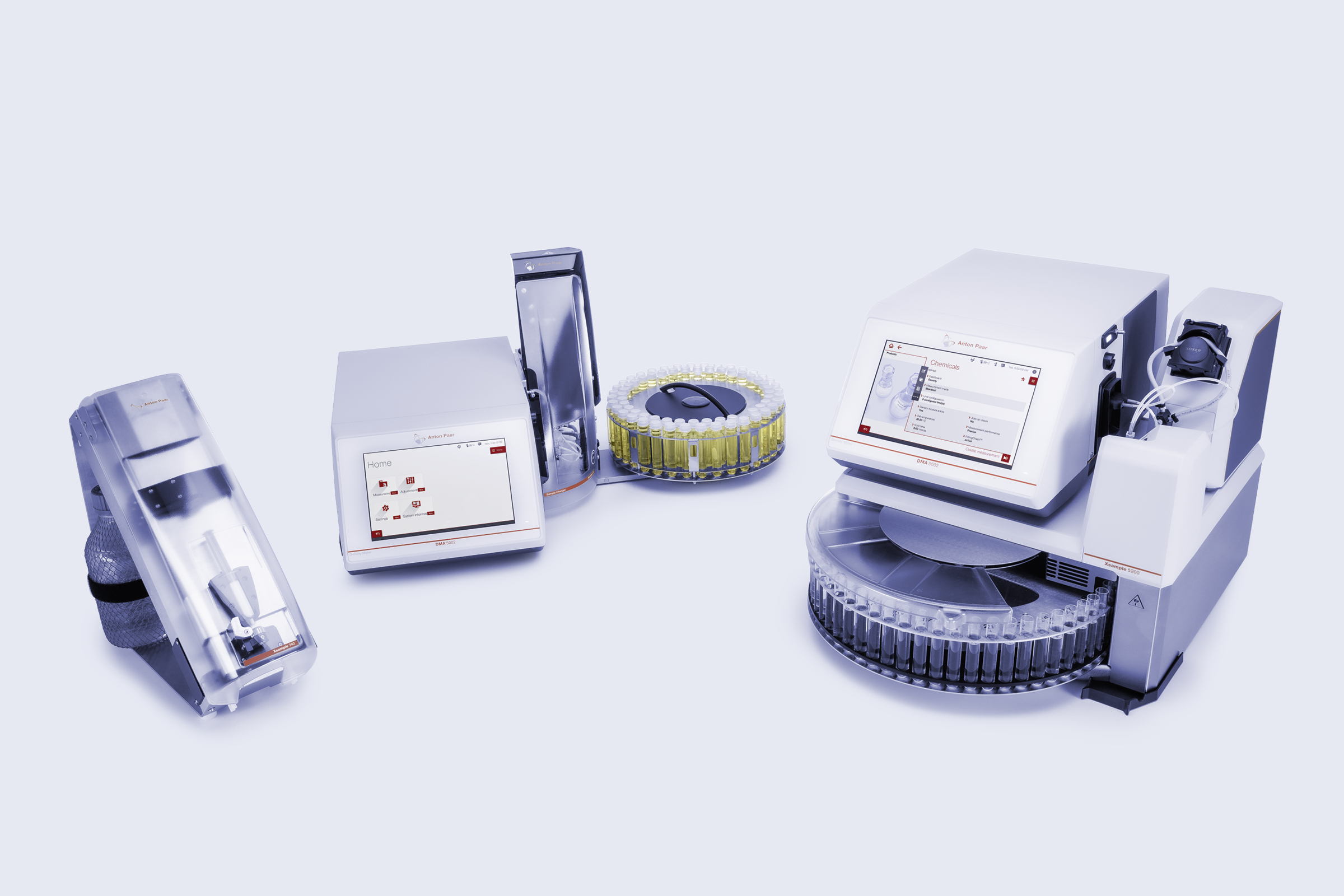
Anton Paar Xsample series sample changers with DMA 5002 and Xsample 520 automated vial handling systems

Xsample

Anton Paar's Xsample series is a modular automation platform with flexible configuration options. It integrates with density meters, viscometers, and additional instruments, covering low- to high-viscosity samples  - including aggressive media  - and supports both single measurements and high-throughput workflows.
 

Learn more

Automated Solutions for the Production Environment

Anton Paar ALAB 5000 Analytic automated laboratory system with integrated analytical module, touchscreen control panel, and instrument cabinet

ALAB 5000 Analytic

ALAB 5000 Analytic delivers fully automated final quality control of packaged beverages such as beer, wine, soft drinks, and water directly at-line, right after the filler. The system determines the most important physical and chemical parameters from a single package within eight  minutes. Automate calibration and adjustment of your Anton Paar process sensors to support closed-loop quality control.

Learn more

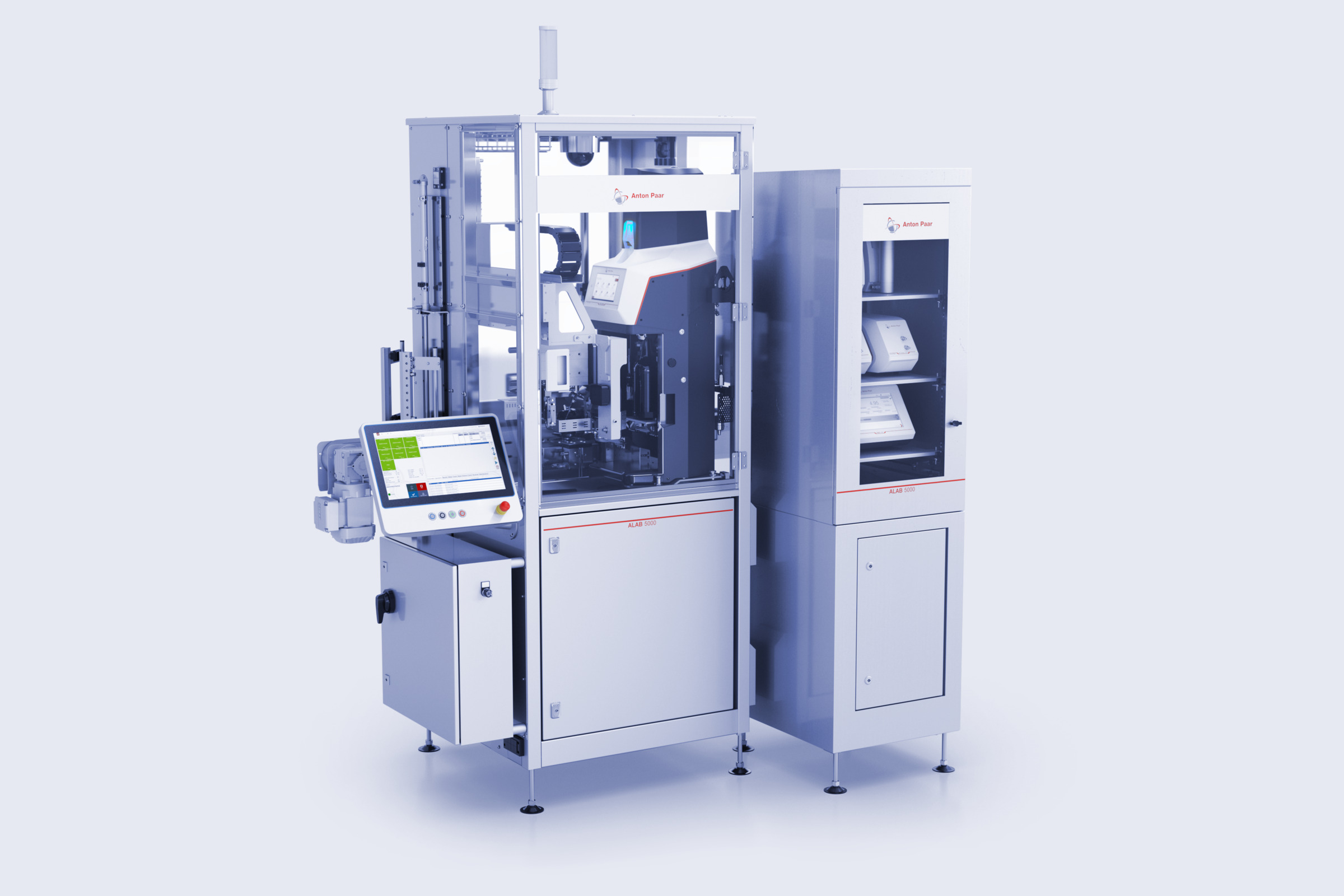
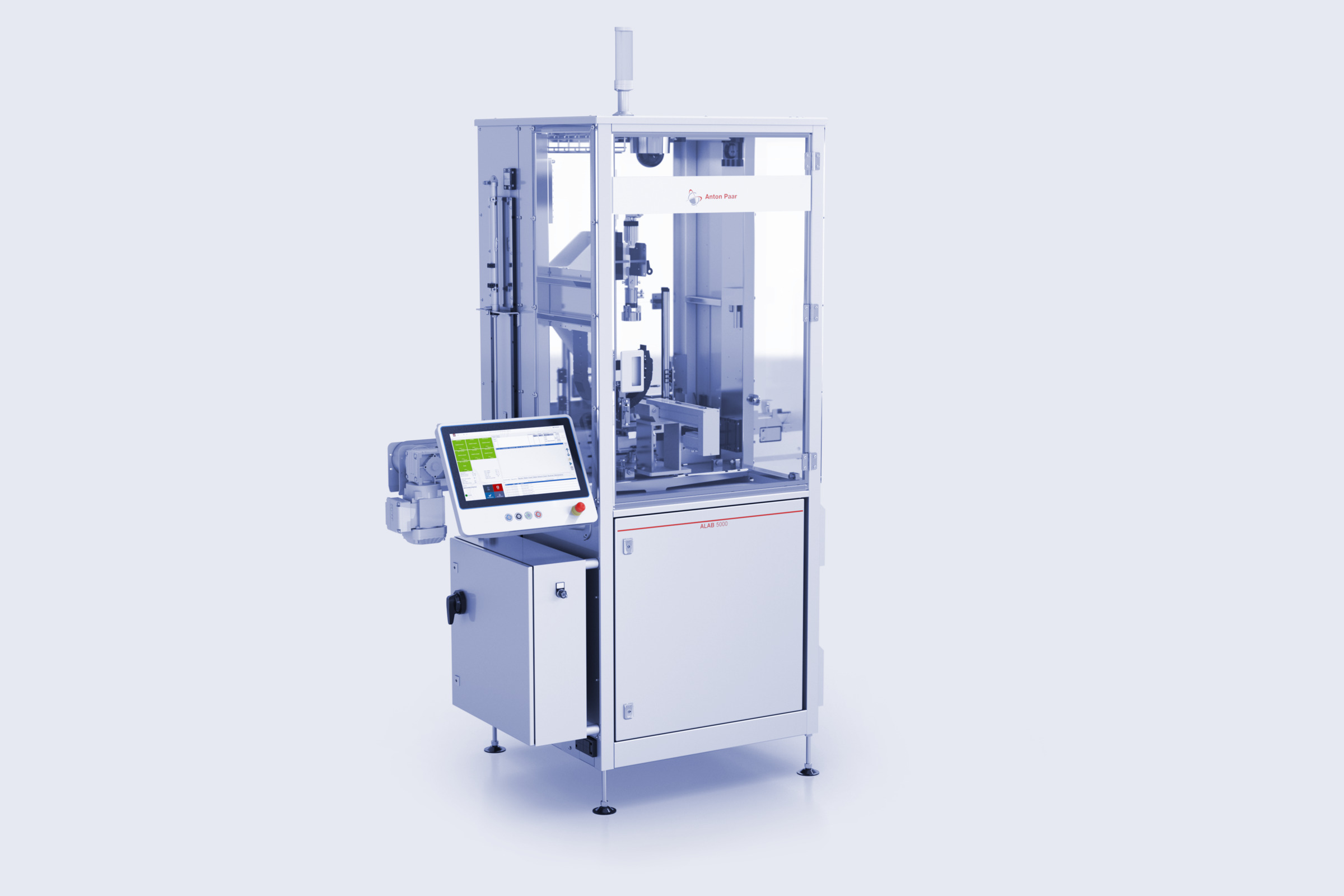
Anton Paar ALAB 5000 Torque automated testing system with enclosed measurement unit and touchscreen control interface

ALAB 5000 Torque

ALAB 5000 Torque measures the opening torque of twist-off caps and crowns for bottles. With its universal adapter for closure diameters, ALAB Torque can measure the opening torque and ring crack torque of cap diameters ranging from 25 mm to 40 mm, no matter the material. With automatic torque verification, you can be confident that your measurement results remain correct.

Learn more

Tell us about your application, sample type, and workflow requirements. Our experts will help you find the right laboratory automation system for your R&D, QC, or production-related testing needs.

Contact us