Choose the Right Low‑Temperature XRD Solution
Precision X-ray diffraction at low temperatures for enhanced material insights
Low-temperature XRD is an essential tool in understanding how materials behave under extreme conditions. Cooling materials to near-cryogenic temperatures may induce the formation of structures that would otherwise be hidden. This is particularly important in fields such as superconductivity, phase transitions, and chemical analysis, where temperature can drastically affect material properties. Studying materials at these temperatures opens doors to innovations in electronics, energy storage, and novel material discovery, providing the precise insights required to push the boundaries of science and technology.
Basic principles of XRD at low temperatures
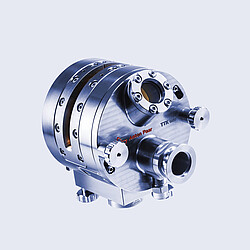
X-ray diffraction (XRD) works by directing X-rays at a material and analyzing the diffracted beams to determine its crystalline structure. For low-temperature XRD, specialized cryostats are used to cool the material while maintaining stability, allowing for precise structural analysis even under extreme conditions.
Impact on material properties
Low temperatures can significantly affect how materials diffract X-rays, revealing subtle changes in crystal structures. Many materials exhibit behaviors such as phase transitions or increased stability only at low temperatures. These changes directly influence the diffraction patterns, providing crucial information about material composition and functionality.
Benefits of low-temperature XRD
Enhanced accuracy
Low-temperature XRD stabilizes samples by reducing thermal vibrations, which can distort diffraction data at higher temperatures. By cooling materials, atoms are held in more defined positions, resulting in sharper and clearer diffraction peaks. This enhanced precision allows for more reliable analysis of crystal structures, ensuring that even subtle changes in the material are detected. For scientists working with sensitive or complex materials, such as superconductors or magnetic compounds, low-temperature XRD provides the level of accuracy required for breakthroughs in material science.
Specific applications
Low-temperature XRD is particularly beneficial in fields where temperature plays a pivotal role in material behavior. In physics, the technique is used to study superconductors, which only exhibit their unique properties under cryogenic conditions. In chemistry, it allows researchers to observe phase transitions that occur only at low temperatures. Material science benefits from low-temperature XRD in the analysis of magnetic materials and temperature-sensitive catalysts, providing insights that drive innovation in energy, electronics, and nanotechnology.
Technical considerations for low-temperature XRD
Low-temperature XRD requires careful planning and the right equipment to ensure accurate results. Achieving and maintaining cryogenic temperatures introduces unique challenges, from handling complex equipment to dealing with potential sample degradation. Below are the essential technical aspects to consider for low-temperature XRD experiments.
Equipment needs
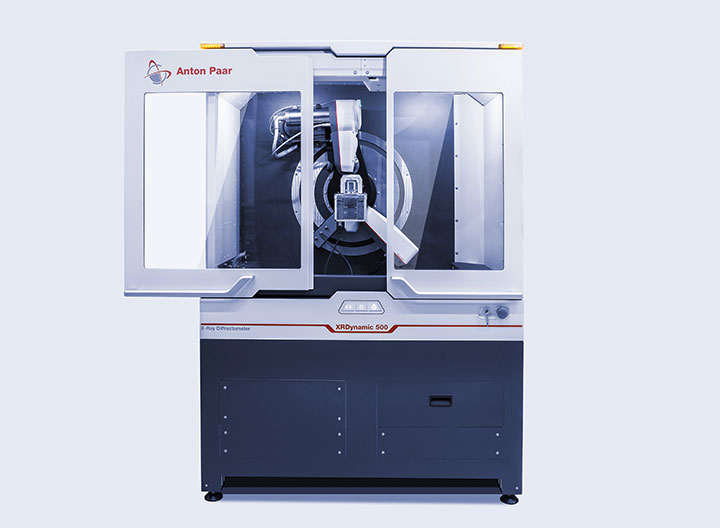
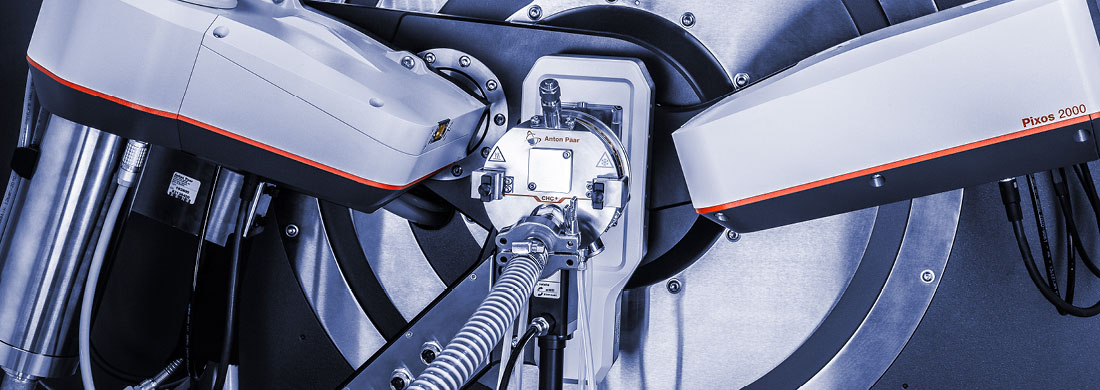
The success of low-temperature XRD depends heavily on specialized equipment such as cryostats, which are designed to cool samples to temperatures as low as a few kelvin. These cryogenic systems must maintain stable temperatures throughout the experiment to avoid fluctuations that could compromise the data. Advanced XRD systems like XRDynamic 500 integrate both cooling systems and high-resolution detectors, making them ideal for precise low-temperature measurements.
Challenges and solutions
Low-temperature XRD presents several challenges, the most prominent being temperature control and sample preparation. Condensation is a major concern, as moisture can interfere with the sample, especially in environments where the temperature changes rapidly. To prevent this, samples are cooled under dry gas atmospheres or vacuum, and advanced cooling systems are used to maintain uniform temperature distribution. Additionally, maintaining a stable cooling process is crucial; even small temperature fluctuations can distort diffraction patterns, making accurate measurements difficult. Using sophisticated cryogenic technologies helps mitigate these challenges by ensuring that data collection remains precise and reliable.
Applications of Low-Temperature XRD
Material science: Investigating superconductors and magnetic materials
Superconductors are materials that exhibit zero electrical resistance at extremely low temperatures. Low-temperature XRD is critical in studying these materials, as their unique properties only emerge under cryogenic conditions. By analyzing the atomic structure at these temperatures, researchers can better understand how electron pairing mechanisms work, which is crucial for developing high-efficiency superconductors used in advanced electronics and magnetic levitation systems. Similarly, magnetic materials also exhibit distinct behaviors at low temperatures, and XRD helps reveal changes in atomic and magnetic ordering that can drive advancements in magnetic storage and energy applications.
Chemical and structural analysis: Monitoring phase transitions
Many materials undergo significant structural changes when cooled, transitioning into new phases with entirely different properties. Low-temperature XRD enables real-time observation of these phase transitions, providing valuable data on how atomic arrangements shift. This is particularly important for industries working with temperature-sensitive compounds, such as pharmaceuticals and catalysis, where even minor structural changes can affect performance. The ability to capture these transformations helps in optimizing material properties for stability and functionality.
Solid-state physics: Analyzing quantum materials
In solid-state physics, low-temperature XRD is instrumental in studying quantum materials that exhibit behaviors like quantum tunneling, charge density waves, and topological phases, which only manifest at near-zero temperatures. For instance, quantum spin liquids and topological insulators have unconventional electronic structures that can only be stabilized and studied under cryogenic conditions. By revealing the underlying atomic arrangements and interactions at these temperatures, low-temperature XRD provides crucial insights into quantum effects, paving the way for advancements in quantum computing and next-generation electronic devices.
Crystallography: Uncovering complex molecular structures
In crystallography, low-temperature XRD is often used to resolve the structures of large and complex molecules, including proteins, catalysts, and polymers. At low temperatures, molecules exhibit minimal thermal motion, which sharpens the diffraction peaks and leads to clearer data on the crystal structure. This is essential for determining the exact three-dimensional shape of molecules, which in turn informs the design of new drugs, advanced materials, and biochemical processes. Low-temperature XRD also prevents structural degradation of sensitive samples during analysis, providing more accurate and reliable results.
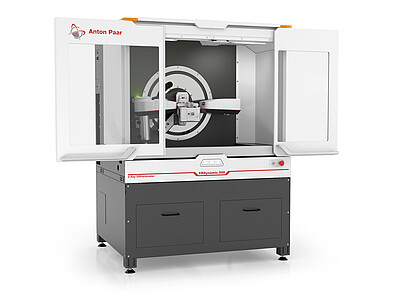
XRDynamic 500: Advanced low-temperature XRD solutions for precise material analysis
XRDynamic 500 from Anton Paar offers a cutting-edge solution for low-temperature XRD analysis. Its large goniometer radius, low temperature chambers, and high-resolution detectors ensure optimal results, even at ultra-low temperatures. The system’s ability to switch between different geometries, including reflection and transmission, provides maximum flexibility for various research needs, while its fully automated features ensure consistent temperature control and data accuracy. For researchers seeking high-quality, reliable results, XRDynamic 500 is the ideal tool for low-temperature XRD experiments.
Discover the power of low-temperature XRD – contact us today to learn more about XRDynamic 500!