
Flour water absorption is a critical parameter that directly affects mixing behavior, dough handling, and final product characteristics such as texture and volume. Accurate measurement of water absorption is essential for quality control, formulation, and process optimization in baking and milling. 

Explore Anton Paar solutions for analyzing flour water absorption properties.

Learn more

What is flour water absorption?

Flour water absorption describes the amount of water required to bring flour to a defined dough consistency under standardized conditions.

It is typically expressed as a percentage and represents how much water flour can bind during mixing. This property is influenced by the composition and quality of the flour, particularly protein content, protein quality, starch characteristics, and damaged starch.
In practice, water absorption determines how dough behaves during mixing, fermentation, and baking.

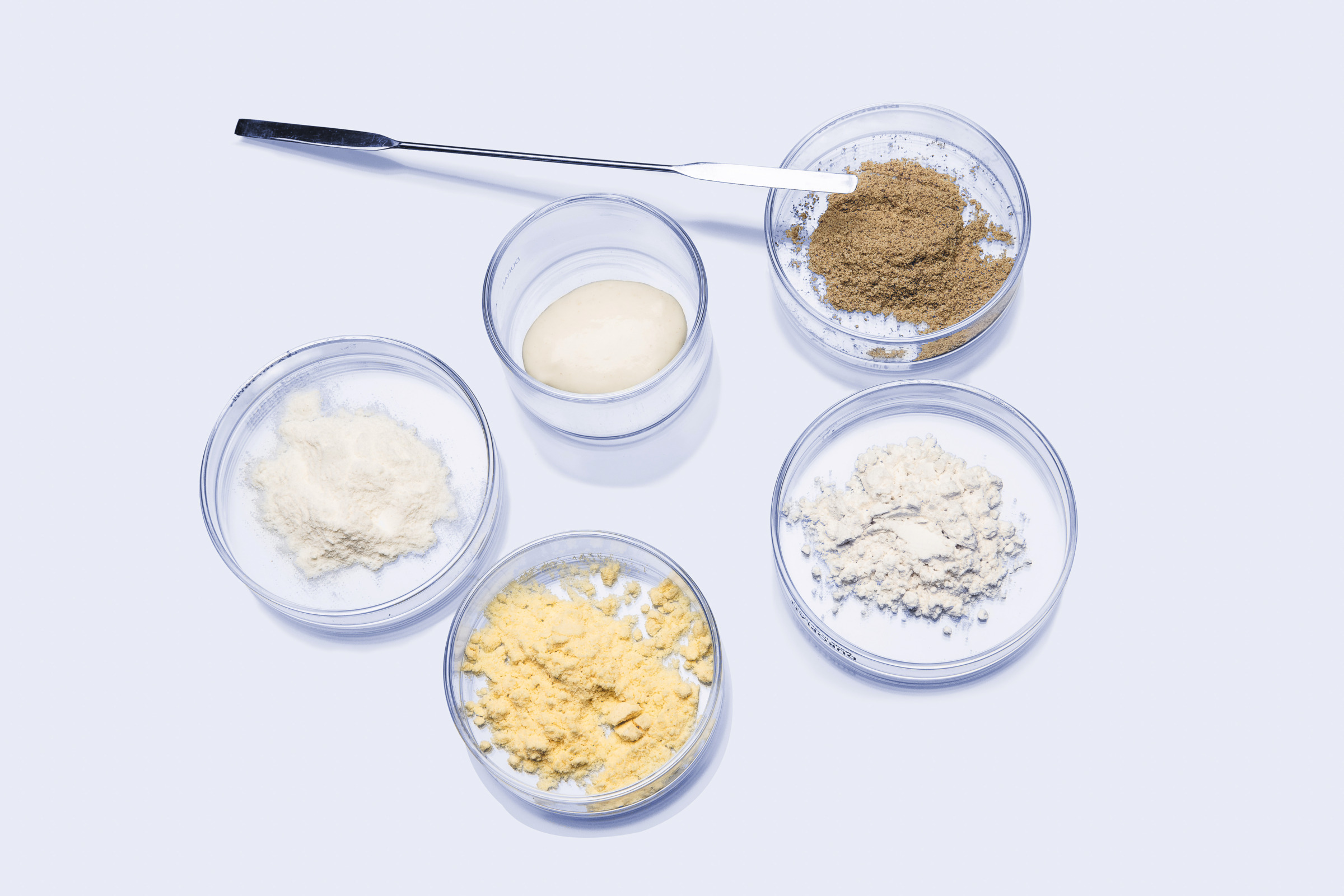
Petri dishes with dough and powder samples arranged with a laboratory spatula on a white surface.

Why flour water absorption matters

Water absorption is not just a number on a specification sheet. It has direct consequences for both processing and product quality:

- Dough consistency and handling: Too little water leads to stiff dough, while too much results in sticky, difficult-to-process dough 
- Yield and economic efficiency: Higher water absorption increases dough yield, which directly impacts production costs
- Final product quality: Influences crumb structure, softness, and shelf life
- Process stability: Ensures consistent mixing times and reproducible results in industrial production

Because of these factors, water absorption is one of the most important quality parameters in flour analysis.

Lab technician reviews a dough graph beside a Brabender FarinoGraph, with Aqua-Inject in the background.

How is flour water absorption measured? Farinograph method (industry standard)

The most widely used method for determining flour water absorption is the Farinograph test. Instruments such as the Brabender FarinoGraph measure the resistance of dough during mixing. Water is added until a defined dough consistency (typically 500 FU) is reached.

Key outputs include:

- Water absorption (%)
- Dough development time 
- Dough stability 
- Mixing tolerance

This method provides both water absorption and a broader understanding of dough behavior.

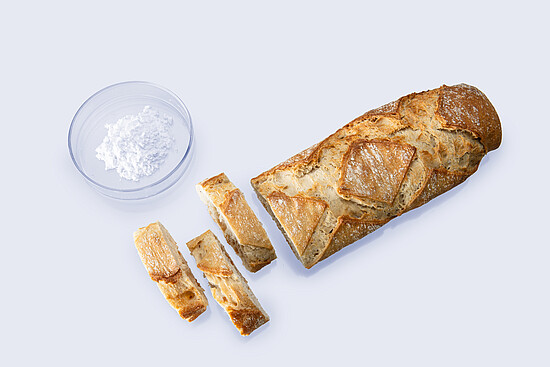
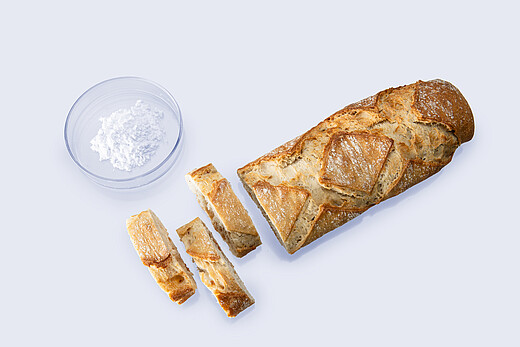
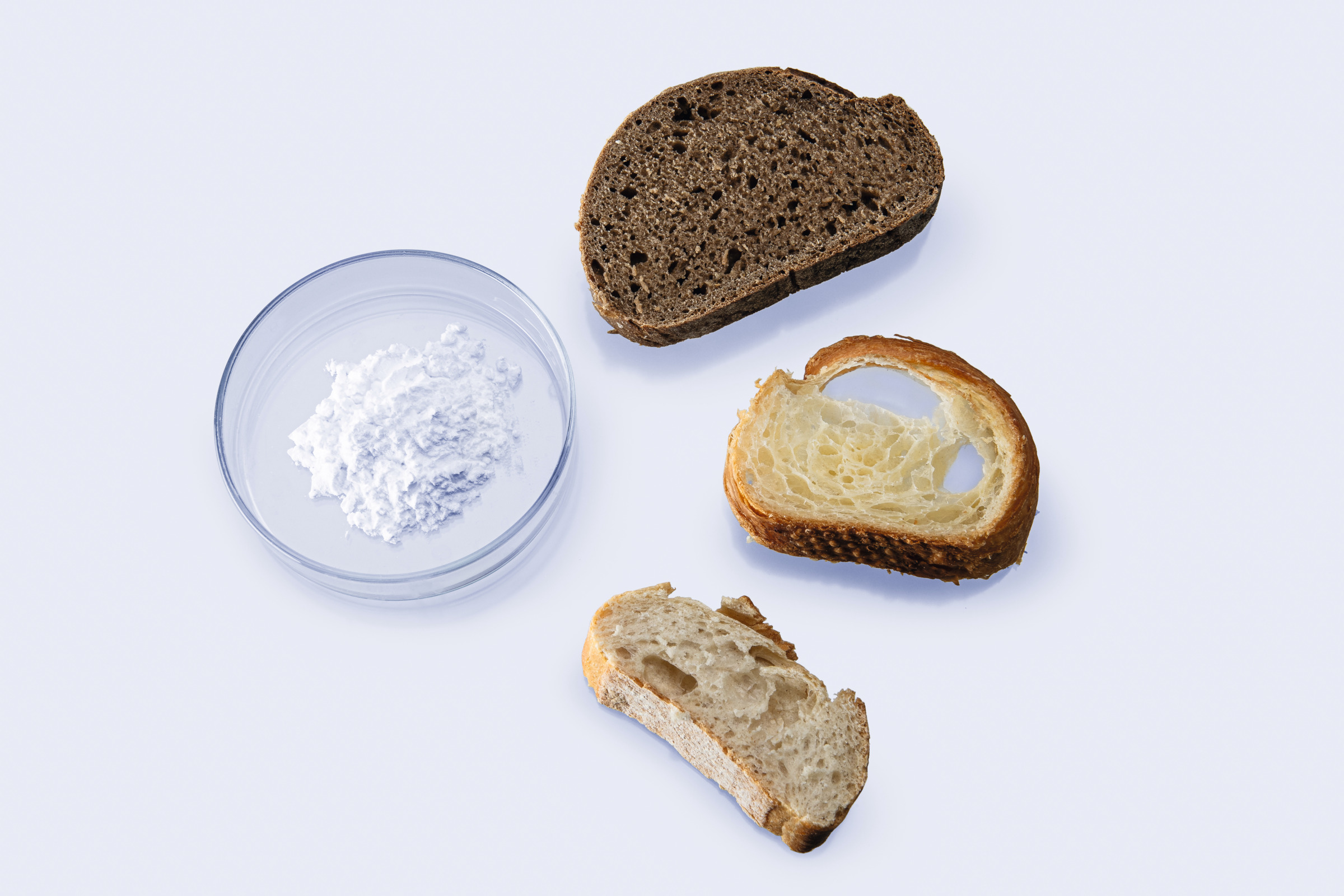
Bread slices and white powder in a petri dish arranged on a white surface for bakery sample testing.

Factors influencing water absorption

Flour water absorption depends on several key factors:

- Protein content and quality: Higher protein levels generally increase water absorption
- Damaged starch content: Damaged starch absorbs more water at room temperature than intact granules.
- Flour particle size: Finer flours tend to absorb more water
- Moisture content of the flour: Drier flour can absorb more additional water
- Additives and ingredients: Enzymes, emulsifiers, and other components can significantly influence water binding

Understanding these factors helps optimize formulations and maintain consistent product quality.

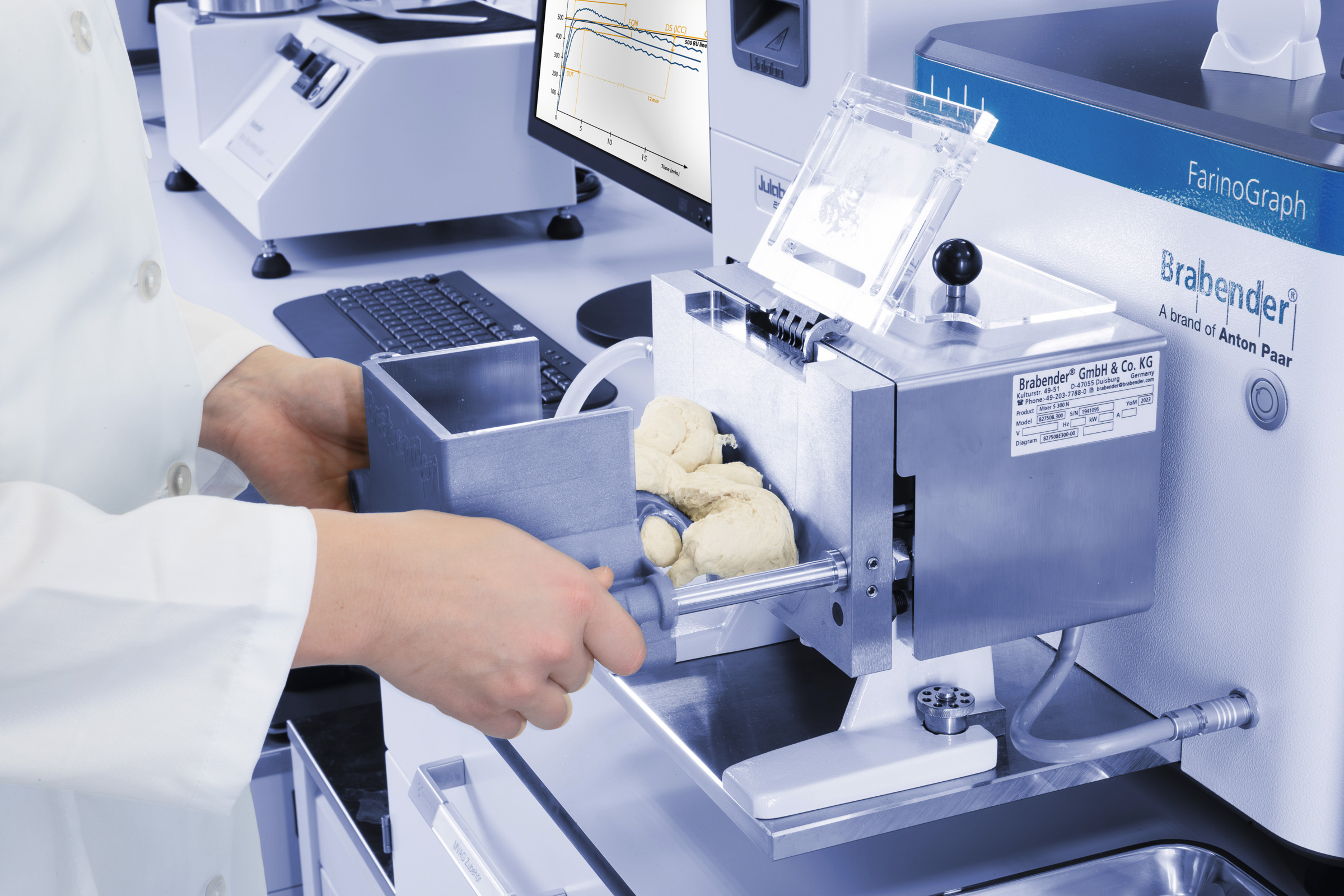
Technician places dough in the measuring mixer of a Brabender FarinoGraph in a laboratory.

Flour water absorption and process optimization

By controlling water absorption, manufacturers can:

- Optimize mixing times and energy input 
- Improve dough machinability 
- Increase product yield 
- Reduce variability in production

This makes water absorption a key parameter not only for quality assurance but also for operational efficiency.

A small parameter with big impact

Flour water absorption may seem like a simple metric, but it has far-reaching effects on dough behavior, processing performance, and final product quality. Using established methods such as the Brabender Farinograph provides a comprehensive understanding of flour functionality.


Explore Anton Paar solutions for analyzing flour water absorption properties.